Closed systems, boxes and organisers in linen, felt and wood — how decorative storage tidies an interior and creates a sense of visual calm at home in 2026.
Decorative storage is an approach in which the systems that organise our belongings are themselves part of the decor, not just a function. Boxes, organisers and closed cabinetry in linen, felt and wood reduce visual noise and create a sense of calm in an interior. In 2026 the home is increasingly designed as a place of visual quiet, and demand for closed storage systems is clearly rising.
The psychology of order and visual calm
The home has stopped being merely a place to live and has become a space for regeneration and rest from an excess of stimuli. Visual noise — scattered objects, open shelves full of trinkets, a chaos of colours and textures — burdens the mind much like audible noise. Orderly, closed storage reduces this load and lets an interior breathe.
According to industry estimates, demand for closed storage systems has grown by around 20%, reflecting a rising need for calm at home. Residents increasingly choose solid fronts over open shelving, hiding everyday clutter behind an aesthetic, uniform surface.
Visual calm does not mean emptiness or minimalism at any cost. It is about consciously managing what is visible and what is hidden. Well-designed storage lets us surround ourselves with what we truly need while concealing what generates chaos.
Boxes and organisers as decor
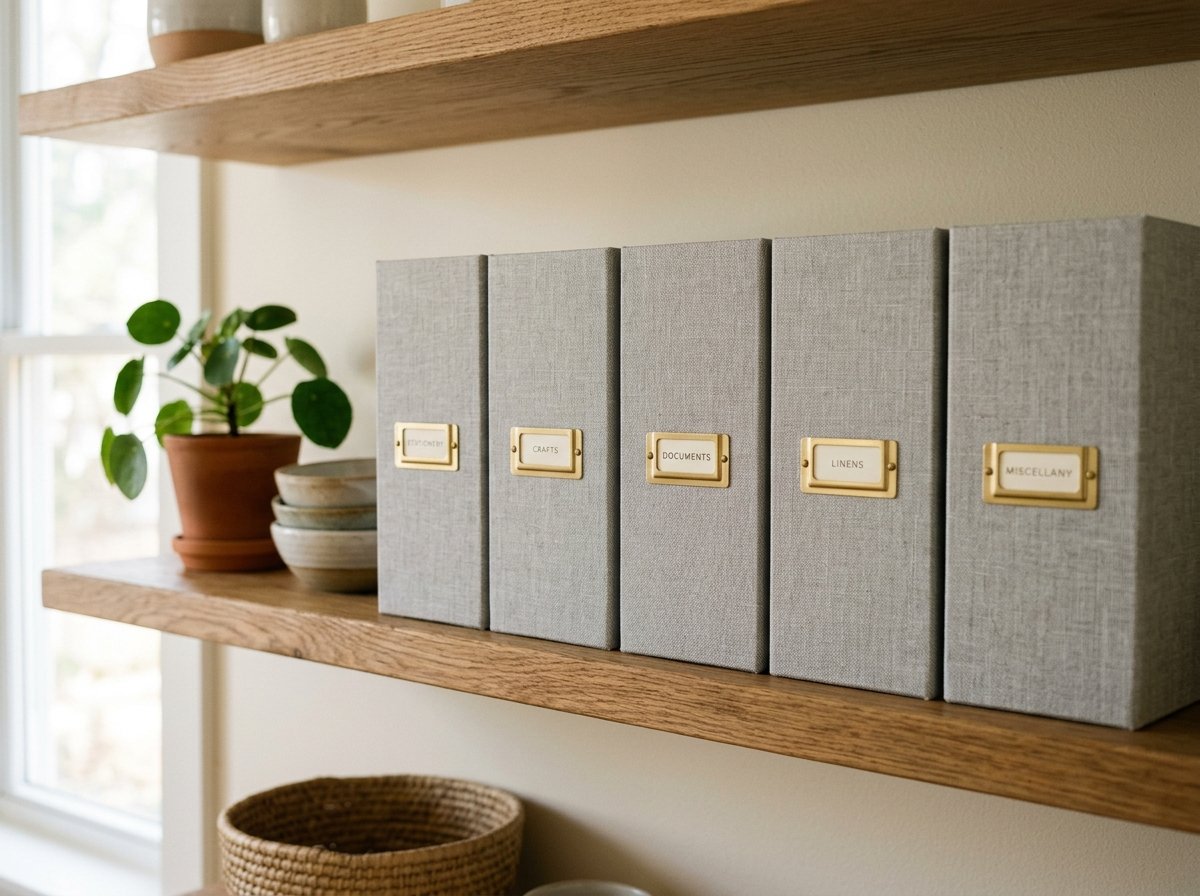
Boxes and organisers have stopped being purely practical add-ons and become part of the decor. Materials such as linen, felt and wood bring warmth and natural texture into an interior while serving an organising function. Instead of plastic containers hidden in a wardrobe, they become a visible, deliberate accent.
Linen gives a soft, natural aesthetic and works well in textile organisers. Felt dampens sound and protects stored items, while wood adds durability and warmth. Combining these materials creates a coherent, cosy composition in which storage harmonises with the rest of the interior rather than contrasting with it.
Closed custom cabinetry
The most effective tool for visual calm is custom cabinetry with solid fronts. It hides whole storage systems behind a uniform surface fitted to the available space to the centimetre, so that even a large quantity of belongings does not visually burden the interior.
Custom cabinetry uses spaces wasted in off-the-shelf furniture: alcoves, slopes and corners. This matters especially in smaller flats where every centimetre counts. Handleless fronts that open on push-to-open reinforce the effect of a calm, uniform surface.
Open vs closed storage
Choosing between open and closed storage is a decision about how much to show and how much to hide. The table compares both approaches from the perspective of visual calm and daily use.
| Feature | Open shelves | Closed systems |
|---|---|---|
| Visual calm | lower | higher |
| Dust and upkeep | more work | less work |
| Display of items | full | selective |
| Sense of order | depends on discipline | lasting |
How to plan a storage system
An effective system starts with an inventory of what actually needs storing and how often it is used. Everyday items should be easy to reach, while seasonal ones can go higher or deeper. Only then do you choose the size and type of compartments.
The list below shows principles worth following when planning decorative storage at home.
- Sort items by frequency of use and match compartment access accordingly.
- Combine closed cabinetry with decorative boxes for small items.
- Choose natural materials — linen, felt, wood — for a coherent interior.
- Use alcoves, slopes and corners with custom cabinetry.
- Limit open displays to items genuinely worth showing.
- Plan reserve space for belongings yet to come.
If you want to bring order to your interior, see our home projects and fill in a short form — we will propose a storage system tailored to your space.
Natural materials and their role
The choice of materials decides whether storage becomes part of the decor or stays purely functional. Natural materials bring warmth, texture and authenticity that synthetic substitutes struggle to match, in line with the wider trend of returning to nature in interiors.
Wood builds a durable base in cabinetry and fronts, linen and cotton suit soft organisers, and felt combines aesthetics with practical damping and protection. A coherent material palette makes the storage system look like a considered whole rather than a collection of random containers.
Storage in small flats
In small flats visual order matters even more, because an excess of visible objects quickly makes a space feel cramped and overwhelming. Closed storage systems let you fit more while keeping a sense of lightness and calm.
Floor-to-ceiling custom cabinetry, use of space above doors or under windows, and fronts in the wall colour visually enlarge the interior. This is an approach in which storage does not compete for attention with the rest of the room but stays discreet and invisible until it is needed.
Case study: a flat in Ursynów
A family in an Ursynów flat found that open shelves and scattered objects created a constant sense of disorder despite regular tidying. The goal was to achieve visual calm without giving up functionality and storage space.
We designed custom cabinetry with solid fronts, complemented by decorative linen and felt organisers for small items. Everyday items stayed within easy reach, while the rest disappeared behind a uniform surface. According to the residents, the interior began to feel calmer and more orderly, and daily upkeep became simpler.
Storage trends 2026
In 2026 home storage shows several clear directions. The first is the dominance of closed systems over open displays, driven by the need for visual calm. The second is a return to natural materials that combine aesthetics with function and fit the trend of sustainable interiors.
The third is personalisation: custom cabinetry tailored to a specific lifestyle rather than universal ready-made solutions. Residents increasingly treat storage as an integral part of the interior project rather than an add-on bought at the end. Decorative storage unites these directions into a coherent philosophy of the home as a place of calm.
Frequently asked questions
What is decorative storage?
It is an approach in which organising systems are themselves part of the decor. Boxes, organisers and closed cabinetry in natural materials combine function with aesthetics, reducing visual noise in an interior.
Why are closed systems more popular?
According to industry estimates, demand for them has grown by around 20%, driven by the need for visual calm. Solid fronts hide everyday clutter behind a uniform, aesthetic surface.
Which materials suit organisers?
Natural ones are best: linen gives a soft aesthetic, felt dampens sound and protects items, and wood adds durability and warmth. Together they create a coherent, cosy composition.
Does custom cabinetry work in a small flat?
Yes, especially. It uses alcoves, slopes and corners, and uniform fronts visually enlarge the interior, fitting more without a cramped feel.
How do I start planning storage?
With an inventory of items and how often they are used. Everyday items should be easy to reach and seasonal ones can go deeper; only then do you choose compartments.
Is it worth combining open and closed storage?
Yes. Limit open displays to items genuinely worth showing and hide the rest in closed cabinetry. This balance gives order without a sense of emptiness.
Article last updated: 20 May 2026.