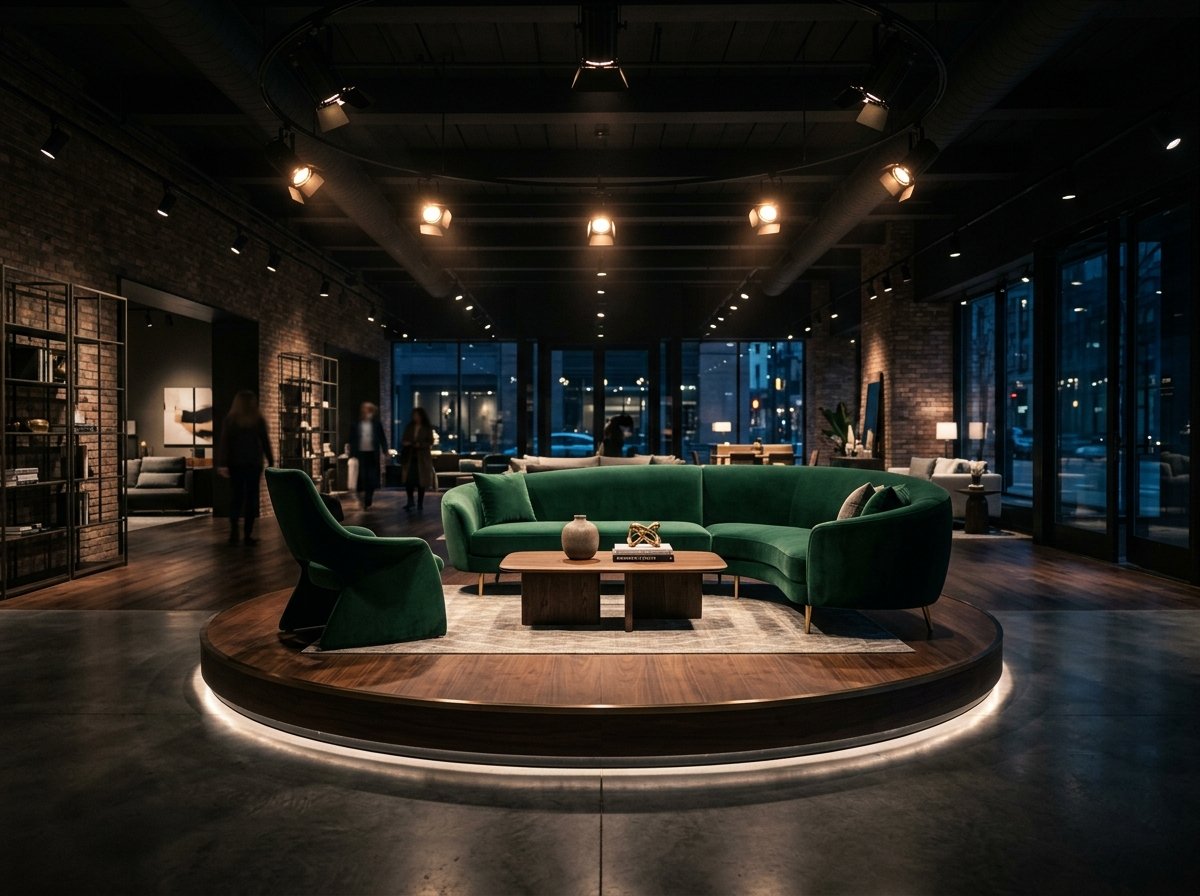
Hero zones, accent lighting and level dynamics — how furniture retail scenography extends dwell time, raises brand prestige and lifts conversion in 2026.
Retail zone scenography means designing a store space like a theatrical stage in which the product becomes an exhibit. Polish furniture retail is moving towards theatricalisation: instead of rows of shelving, Hero zones are created where a single product is presented like a work of art. Well-designed scenography extends customer dwell time by as much as 40%, lifts conversion and strengthens brand prestige.
Furniture as an exhibit
Modern retail in Poland is moving away from the logic of a warehouse full of goods towards a concept of theatricalisation. At the centre stand Hero zones, where one product is presented like an exhibit in a gallery. The shopfitting concept shifts from rows of racks towards creating scenography that builds an experience.
This change stems from the role a physical store now plays alongside the online channel. Since a customer can buy everything online, the physical space must offer something more: emotion, context and the experience of engaging with the product. A piece shown in scenography gains a narrative that a catalogue photo cannot give.
For furniture brands this means redesigning the sales space so that every key product has its stage. This is not only aesthetics but strategy: thoughtful scenography directs the customer's attention, builds desire and translates into measurable sales results.
The Hero zone: product as art
A Hero zone is a distinct space in which a single, key product is exhibited with care for light, background and context. Instead of competing for attention with dozens of other pieces, the flagship product gets a space in which it can fully resonate.
The function of a Hero zone goes beyond presenting one piece. It builds the image of the whole brand, communicating its level and aesthetics. A customer entering a well-arranged Hero zone perceives the brand as more prestigious, which affects how they view the entire offer, not just the exhibited product.
Three rules of an ideal Hero zone
An effective Hero zone rests on a few proven rules that combine aesthetics with the psychology of customer behaviour. The list below presents three pillars of a well-designed product stage.
- Accent lighting: narrow-beam fittings highlight the texture of wood and the soft folds of fabric, drawing the eye to detail.
- Level dynamics: placing furniture on platforms of varying height makes the customer change viewing angle and lengthens time spent in the zone.
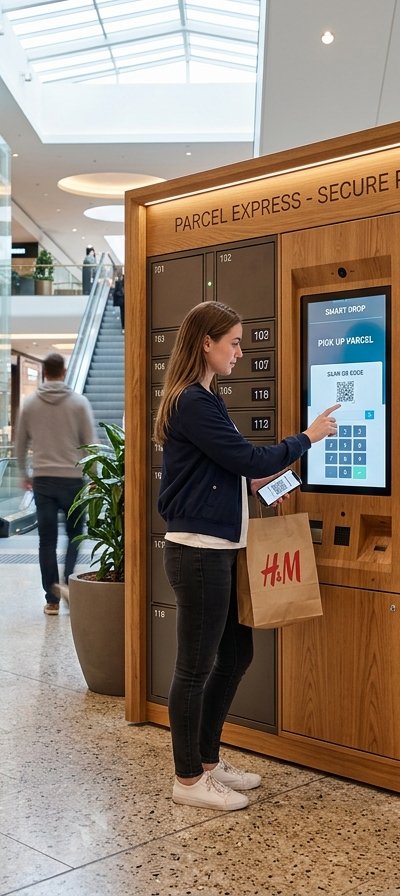
- Digital integration: QR codes by the flagship product allow instant access to a 3D configurator where the customer tries other colours and variants.
Combining these three rules creates a zone that not only attracts the eye but engages the customer for longer. If you are planning a retail space, see our commercial projects.
Accent lighting and product perception
Lighting is one of the strongest tools of scenography. Narrow-beam fittings aimed at the product build contrast between the exhibit and its surroundings, highlighting texture, colour and form. Well-set light can turn an ordinary piece into an object of desire.
Colour temperature and how light interacts with the material also matter. Wood, fabric and lacquered fronts react differently to lighting, so scenography should be designed with a specific product in mind. Professional accent lighting is an investment that directly affects the perceived value of a piece.
Level dynamics and the customer path
Placing furniture on platforms of varying height is a deliberate way of directing movement and attention. Changing levels forces a change of viewing angle, slows the passage through the space and lengthens engagement with the product. The longer a customer stays in a zone, the greater the chance of a purchase.
Level dynamics also build a visual rhythm that makes the space more interesting than a flat display. Platforms, raised areas and varied heights create scenography through which the customer moves as through an exhibition. This is designing an experience path, not just arranging furniture.
Digital integration: from display to configurator
Combining physical display with digital tools is a key direction of 2026 retail. A QR code by the flagship product lets the customer instantly access a 3D configurator, where they try other colours, materials and variants without needing every option physically present in the store.
This integration combines the strengths of both channels: the emotion of contact with the product in physical space and unlimited personalisation in the digital environment. The customer sees and touches the piece live, then adapts it to their needs online, shortening the path from interest to decision.
Traditional display vs Hero scenography
The table compares classic furniture display with a scenographic approach based on Hero zones.
| Feature | Traditional display | Hero scenography |
|---|---|---|
| Presentation | rows of furniture | product as exhibit |
| Dwell time | baseline | up to +40% |
| Brand perception | standard | prestigious |
| Digital integration | rare | QR and 3D configurator |
Business effect: dwell time and conversion
The right scenography increases customer dwell time in the flagship zone by as much as 40%, which by industry observation leads to higher conversion and strengthens brand status. The longer a customer engages with a product in a thoughtful context, the stronger the attachment built and the greater the willingness to buy.
It should be stressed that this effect depends on execution quality and the whole offer, not an automatic guarantee. Scenography is a tool that amplifies a good product but does not replace it. A well-designed Hero zone works when real product value stands behind it, which scenography only exhibits and amplifies.
How to design retail scenography
Designing scenography starts with choosing the products that deserve to be heroes of the space and planning the path the customer will take. Then lighting, levels and digital integrations are chosen to form a coherent narrative rather than a set of striking but random elements.
- Choose hero products that best represent the brand.
- Design the customer path using level dynamics.
- Apply accent lighting matched to the materials.
- Integrate the display with a 3D configurator via QR codes.
- Ensure scenography is coherent with the brand identity.
- Design custom cabinetry to fully use the space.
If you are planning a sales space, fill in the B2B brief — we will design scenography matched to your brand and product.
Case study: a Mokotów showroom
A furniture brand planning a Mokotów showroom wanted to move away from classic row display towards a space that builds experience and prestige. The goal was to extend customer dwell time and position the brand more strongly in the premium segment.
We designed Hero zones with accent lighting, level dynamics and QR integration leading to a 3D configurator, in coherent custom cabinetry. By the brand's observation, customers began to spend more time with flagship products, and the space strengthened the premium image. Scenography became a sales tool rather than mere decoration.
Furniture retail trends 2026
In 2026 furniture retail is dominated by several directions. The first is the theatricalisation of space, in which a store becomes a stage that builds experience rather than a warehouse of goods. The second is the integration of physical and digital channels, combining the emotion of product contact with online personalisation.
The third is design oriented towards dwell time and conversion, in which every element of the space has a business purpose. Retail scenography unites these directions, making a store a tool for both brand-building and selling. For furniture brands this is an advantage that cannot be reproduced online alone.
Frequently asked questions
What is retail zone scenography?
It is designing a store space like a theatrical stage in which the product becomes an exhibit. Instead of rows of shelving, Hero zones are created that build experience and brand prestige.
What is a Hero zone?
It is a distinct space in which a single, key product is presented like a work of art, with care for light, background and context, building the image of the whole brand.
How much does scenography extend dwell time?
The right scenography increases dwell time in the flagship zone by as much as 40%, which by industry observation leads to higher conversion. This effect depends on execution quality, not an automatic guarantee.
How does digital integration work in scenography?
QR codes by the flagship product give instant access to a 3D configurator where the customer tries other colours and variants, combining product contact with online personalisation.
Will scenography replace product quality?
No. Scenography amplifies a good product but does not replace it. It works when real product value stands behind it, which it only exhibits and amplifies.
Is scenography designed to measure?
Yes. Custom cabinetry lets you fully use the space and create coherent scenography matched to the brand, product and customer path.
Article last updated: 20 May 2026.