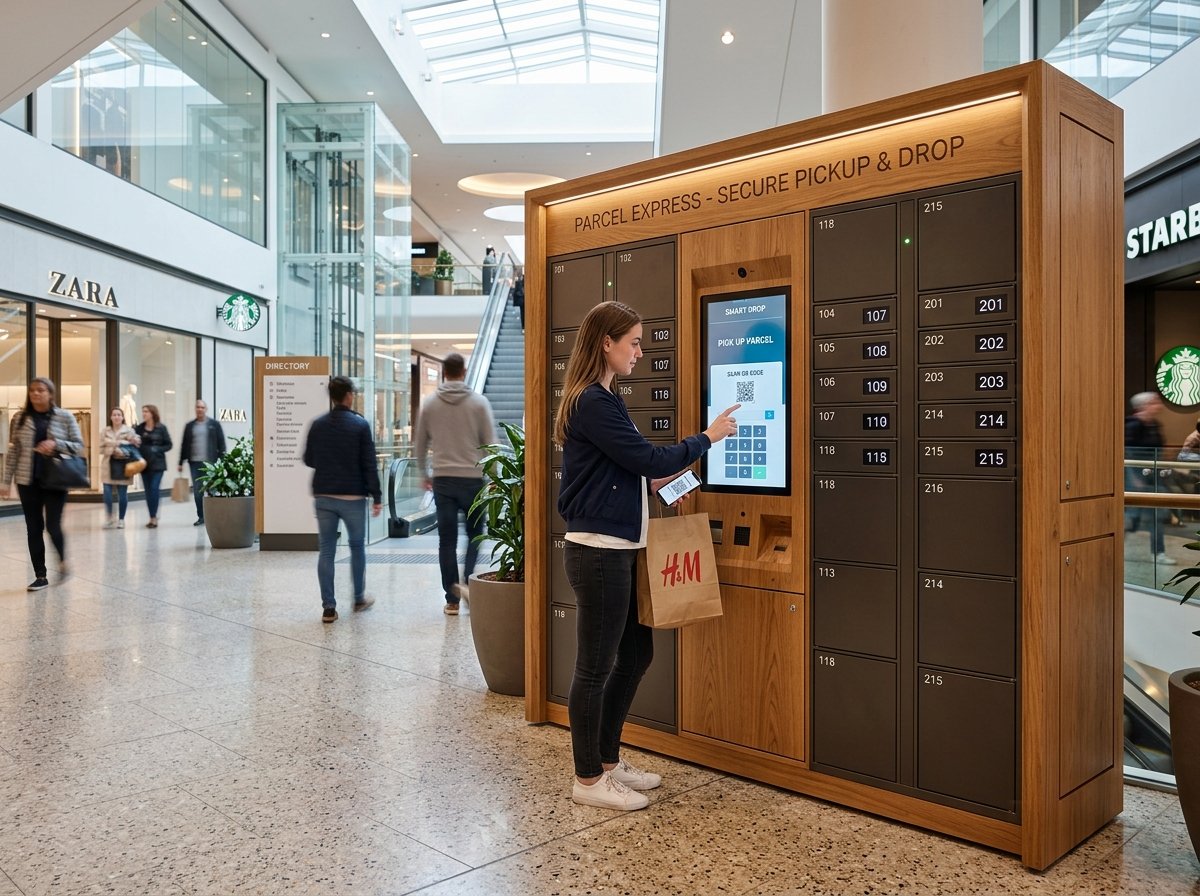
E-commerce growth demands new ways to receive parcels. How built-in lockers and pickup zones in custom furniture organise logistics in apartments and offices.
Built-in parcel lockers in furniture are delivery pickup zones integrated into joinery in apartments, common areas of developments and offices. In response to e-commerce growth they are becoming a reality in new projects: they tame parcel chaos, increase pickup security and raise the usable value of a space. A well-designed pickup zone combines logistics with interior aesthetics rather than being a foreign add-on.
Why parcel pickup became important
The rise of online shopping has made daily parcel collection a permanent part of life in apartments and work in offices. Parcels pile up at receptions, in corridors and by doors, creating clutter and the risk of loss or theft. The problem affects both residents of new developments and companies handling dozens of parcels a day, and traditional workarounds no longer suffice.
What a built-in parcel locker is
A built-in locker is a cabinet or set of compartments integrated into the joinery for parcels, often secured with a lock or code. Unlike a freestanding machine, it is designed as part of the interior: it aligns with the rest of the fit-out and matches the available space. In apartments it can be a dedicated hallway module; in developments, a set of lockers assigned to units; in offices, an organised pickup zone by reception.
Benefits for apartments and developments
For residents the key benefits are security and order: the parcel goes into a locked zone rather than being left at the door. For a developer, an organised pickup zone is a sales argument that answers a real, daily need. Built-in zones in common areas raise the standard of a development without harming the aesthetics of the lobby, increasingly appearing in new residential projects.
Benefits for offices
In offices, parcels include not only employees' private purchases but also documents, samples and company materials. Without an organised pickup zone, parcels pile up at reception and waste staff time. A built-in locker system organises this process, relieves reception and improves how the space looks to visiting clients and partners.
Freestanding vs built-in
The table compares a freestanding machine with a solution integrated into custom joinery.
| Feature | Freestanding machine | Built-in furniture zone |
|---|---|---|
| Interior integration | foreign element | aligned with joinery |
| Fit to space | standard sizes | made to measure |
| Aesthetics | technical | matched to interior |
| Application | public spaces | apartments, offices, lobbies |
Security and privacy
The core value of a pickup zone is security. Locked compartments reduce the risk of theft and loss, and well-designed access lets a courier leave a parcel without entering the private space of an apartment or office. For multi-user solutions such as developments or offices, an access-management system based on keys, codes or electronics matters and is best decided at the design stage.
Case study: a Mokotów office
A company with a Mokotów office had parcels — both corporate and employees' private items — piling up at reception, burdening staff and spoiling the look of the entrance. We designed a zone of locked compartments integrated into the reception joinery, sized for typical parcels and flush with the rest of the fit-out. The client observed fewer parcels left at reception and less staff time spent handling them.
Designing a pickup zone: what to consider
An effective pickup zone starts with analysing the real volume of parcels and the available space. A module for a single flat is designed differently from a set of lockers for a development, and differently again from an office zone handling dozens of parcels a day. The size and number of compartments should follow actual needs.
- Number and size of compartments matched to typical parcel dimensions.
- A security system: key lock, code or electronic solution.
- Courier access without intruding on the interior's privacy.
- Visual integration with the rest of the joinery.
- Materials resistant to intense daily use.
- Ability to expand as parcel volume grows.
Materials and durability
A pickup zone is used daily, so materials must withstand intense use. We use moisture- and abrasion-resistant U2/E1 laminated boards and contract-grade fittings that endure many times more opening cycles than home solutions. For common areas and offices, resistance to mechanical damage and ease of cleaning matter especially; surfaces should stay clean without aggressive chemistry while the structure keeps its stability under repeated use by many people.
Last-metre logistics in interiors
E-commerce growth has carried last-mile logistics challenges down to the level of the individual flat and office — a kind of last-metre logistics. More interior projects treat parcels as a permanent part of everyday life rather than an exception. In 2026 a pickup zone is becoming a standard in new developments and modern offices, much as fitted wardrobes or kitchenettes did before. Custom furniture lets this function be built into the space elegantly and durably rather than as a temporary improvisation.
A pickup zone and property value
A functional parcel pickup zone genuinely affects the perceived value of a flat or office. For buyers and tenants, secure, organised parcel collection is a concrete convenience appreciated in daily use, setting an offer apart from units without such a solution. For developers it is a marketing argument that answers a changing lifestyle, while in offices it fits the trend of creating spaces convenient for employees.
Integration with existing joinery
A pickup zone can be designed not only in new developments but also fitted into existing interiors during renovation. In custom furniture we match the module to the available space, style and materials of the current fit-out, so the new element looks like a natural part of the interior rather than an add-on. This is especially valuable in offices that want to organise parcel collection without a full renovation of the entrance area.
Frequently asked questions
How does a built-in locker differ from a freestanding machine?
A built-in zone is made to measure and integrated into the joinery, so it aligns with the interior. A freestanding machine has standard sizes and remains a foreign, technical element.
Can a pickup zone be designed for a single apartment?
Yes — as a hallway module where a courier leaves the parcel without entering, matched to the available space and interior aesthetics.
How are parcels secured?
Compartments can have key locks, codes or electronic solutions depending on scale; a locked zone reduces the risk of theft and loss.
Does it work in offices?
Yes — it organises corporate and private deliveries, relieves reception and improves the look of the space, integrating with reception joinery.
Article last updated: 20 May 2026.