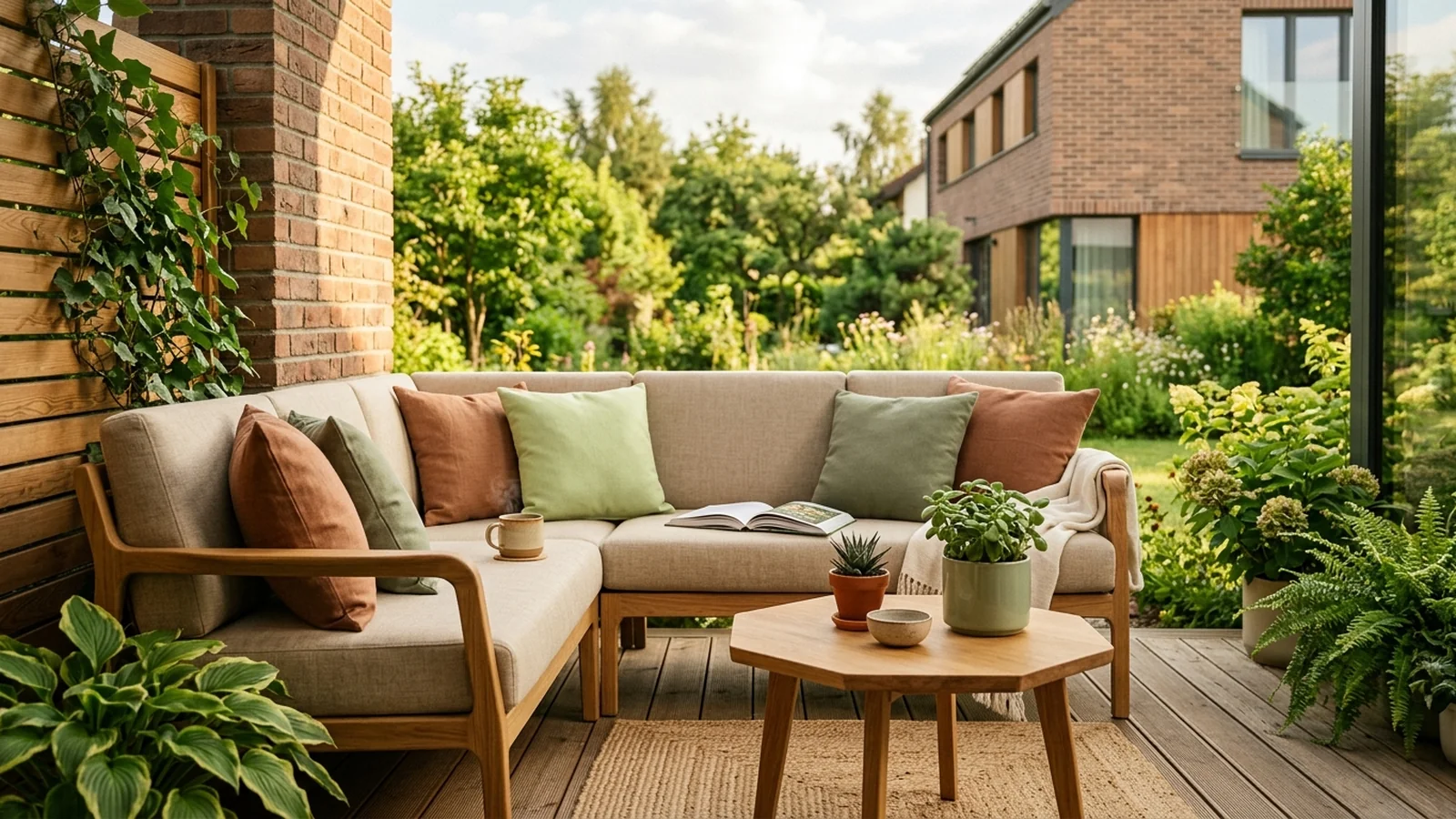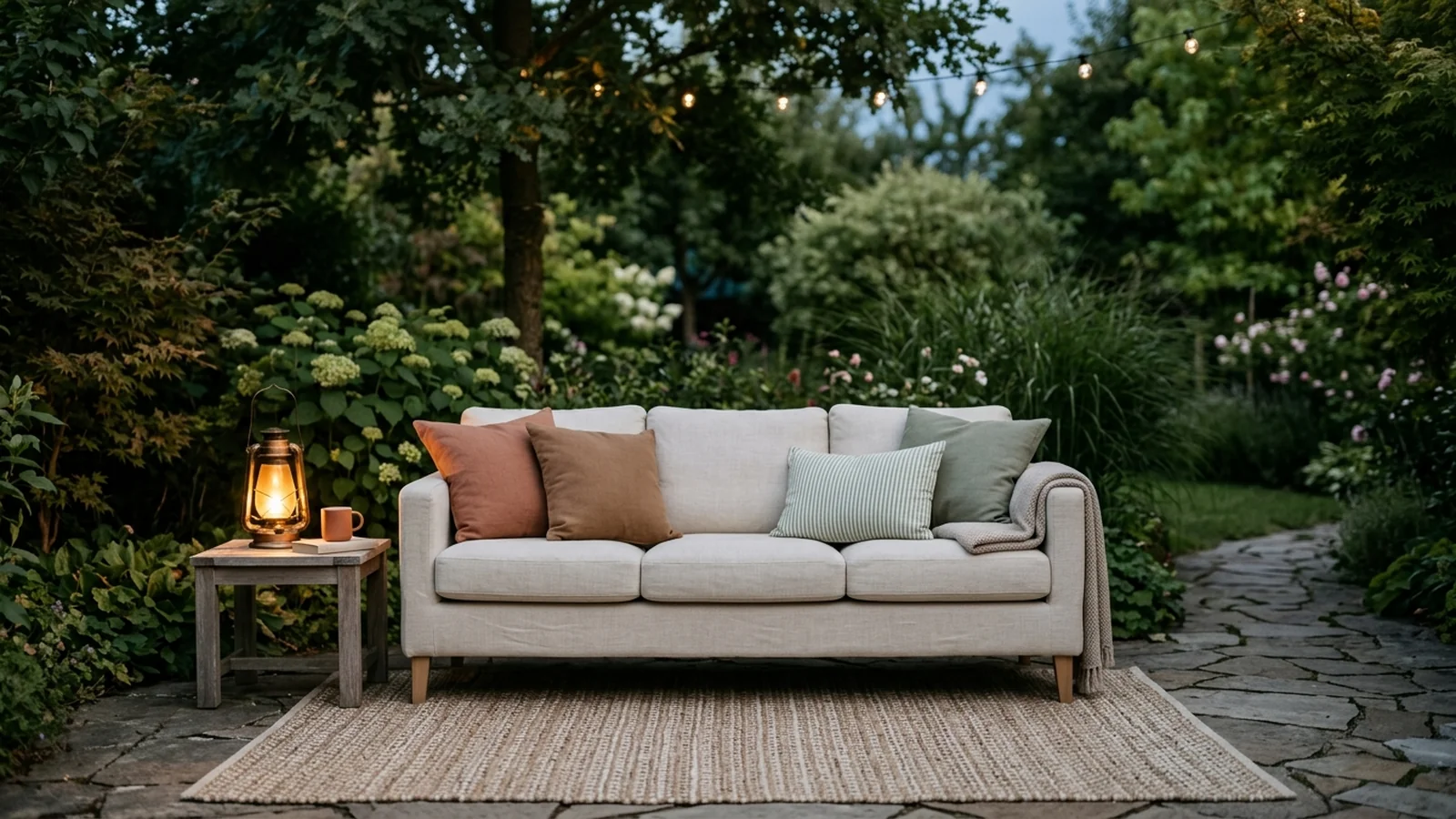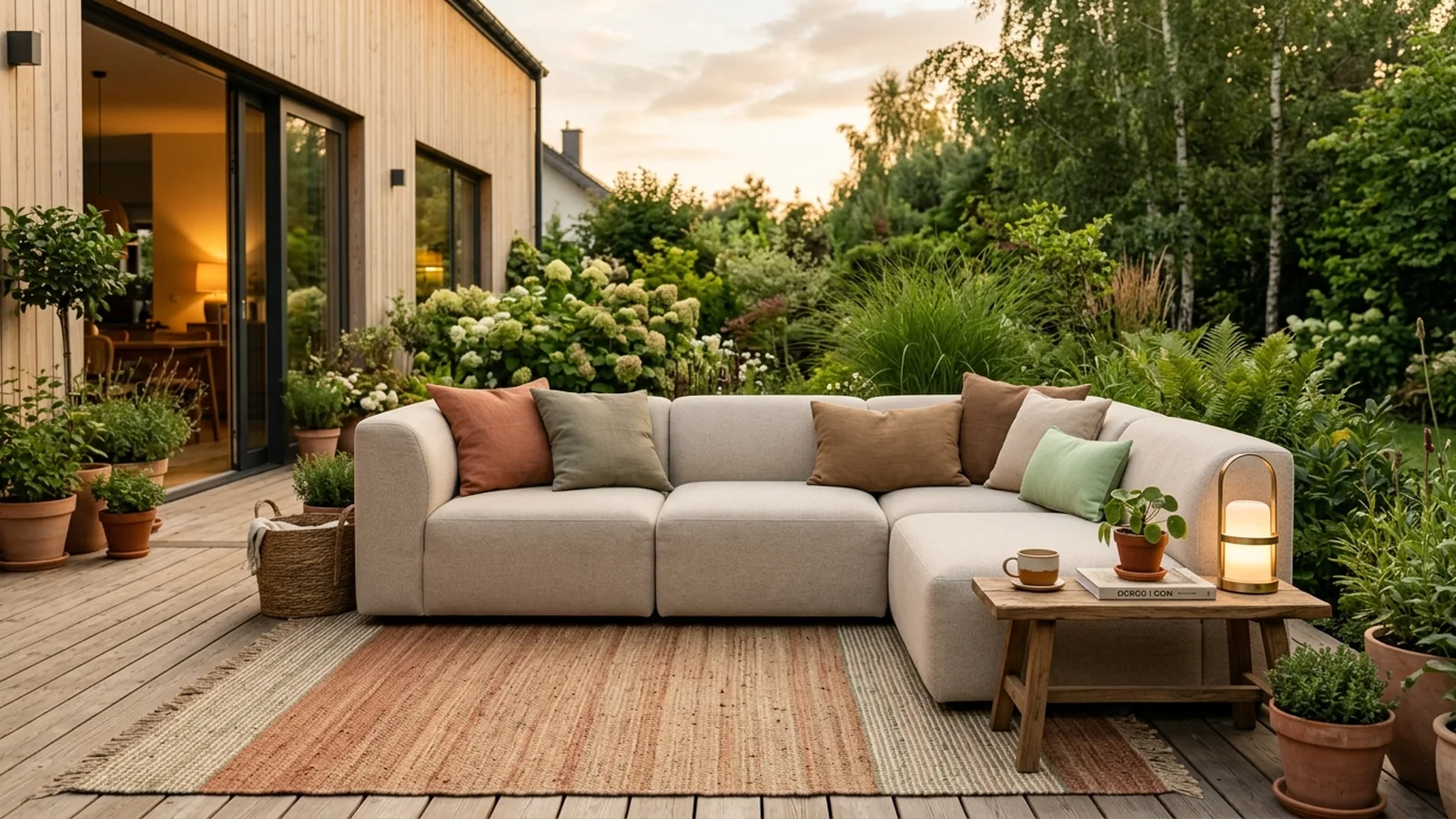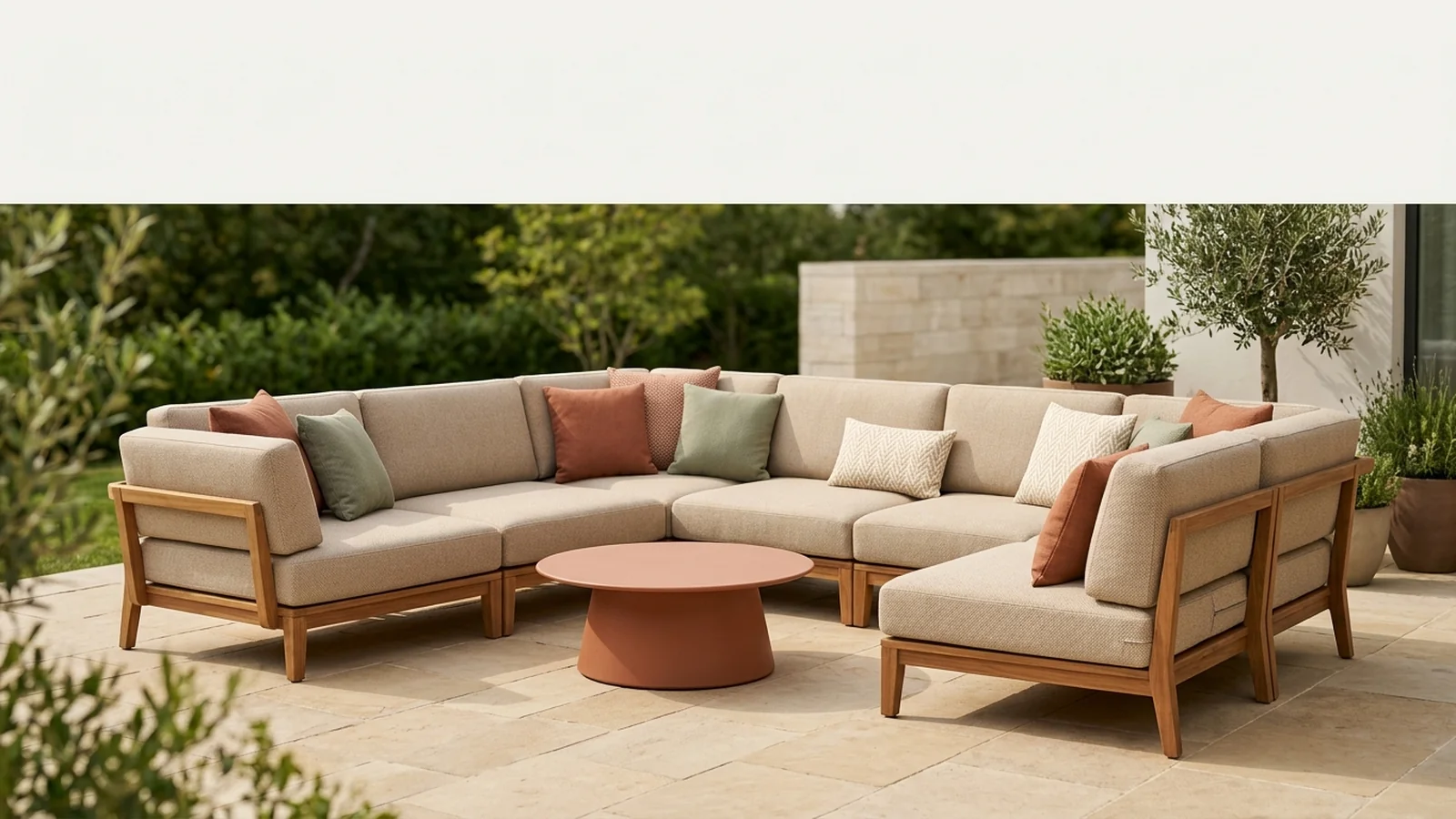
Over half of Poles prefer to relax on the terrace or in the garden. See why outdoor space became a second home and how to arrange it to last for years.
More and more people treat the balcony, terrace and garden not as an add-on to the apartment, but as a fully fledged living space. Survey data from 2024 shows that this is not a passing trend, but a lasting change in the way we rest. In this article we explain what stands behind this shift and how to translate it into a comfortable, durable relaxation zone tailored to a specific space.
Over half of Poles choose to relax at home and in the garden
According to a 2024 survey, on a sunny day more than half of Poles prefer to relax on the balcony, terrace or in the garden rather than anywhere else. This figure says a lot about changing priorities. A few years ago a good day off was associated with going into town, a restaurant or a trip out of the city. Today, for most people the destination becomes their own space right next to home.
This change has concrete consequences. Since we spend more and more time in the garden and on the terrace, expectations toward this space grow as well. A random set of furniture bought for a single season is no longer enough. There is a need for a place that is comfortable, visually coherent and resistant to daily use over many months of the year.
It is worth noting that the season itself is getting longer. Early spring and warm autumn increasingly belong to the outdoor space, not only to the interior. This means furniture has to withstand changing weather for a larger part of the year, not just for a few summer weeks.
The need for calm and an escape from crowds
The second observation that brings order to the picture is the motif of avoiding crowds. A significant share of respondents indicate that they choose their own outdoor space precisely in order to rest away from crowded places. This is an important signal. Resting in the garden or on the terrace is not only a matter of comfort, but also of the need for control over one's surroundings.
In our own zone we decide when it is quiet, who is nearby and what the space around us looks like. That is hard to achieve in a crowded park, on a beach or in a venue during the season. This need for privacy and calm explains why so many people invest time and attention in arranging a place that will truly be theirs.
A well-designed relaxation zone can cut off the outside noise more effectively than many a trip. Simple measures help: placing seats with their backs to the street, a green screen on the neighbours' side, soft fabrics that dampen sound and warm light in the evening. All of this adds up to the feeling that your own garden is a place you escape to, rather than one you merely look out from.
Residents of big cities want outdoor space the most
The need for one's own piece of outdoor space resonates most strongly in the largest cities. Research shows that it is residents of big centres who most often declare a desire to own their own outdoor space. This is understandable. The denser the development and the more intense the rhythm of the day, the greater the value of a square metre where one can sit away from the street.
In urban reality, that space is often a balcony measured in single metres, a small terrace or a fragment of a yard. The limited area does not reduce the need, but changes the way it is met. Here it especially matters to make thoughtful use of every centimetre, to fit furniture to unusual dimensions and to choose materials that will cope with city dust, sun and rain.
City living also has its structural constraints. A balcony has a defined load capacity and shape, often with a bay, a column or an unusual corner. A ready-made set rarely matches such dimensions, which is why more and more people in urban developments reach for solutions designed for a specific footprint. See how such projects look in our portfolio.
From an add-on to a fully fledged room
When we put these observations together, a coherent picture emerges. Outdoor space has stopped being a seasonal add-on and has become an extension of the home. It serves functions that previously played out in the living room or dining room: here we eat breakfast, work on a laptop, read and host guests.
Since we treat the garden and terrace as another room, it is worth arranging them with similar care. Indoors we rarely settle for random furniture in random sizes. We expect the sofa to fit a given recess and the table to match the number of household members. The same logic increasingly applies to outdoor space, where the dimensions of a balcony or terrace are often unusual and rarely match the standard sizes of off-the-shelf furniture.
An approach known from interior design helps here: dividing the space into zones. Even a small terrace gains when we clearly set apart a place to sit, to eat and to rest lazily. The boundaries need not be literal — they are marked by an outdoor rug, a planter or a change in furniture arrangement. A legible space tells you on its own where to eat and where to relax.
Durability that pays off over the years
Outdoor furniture works in harsher conditions than that in the living room. Sun, temperature swings, moisture and dust test the materials every day of the season. That is why investing in a durable relaxation zone is above all a decision about the quality of materials and solid workmanship.
A considered choice of resistant fabrics, wood and construction means furniture serves for many seasons while keeping its look and comfort. This is the difference between a space that has to be renewed every year and one that is simply ready as soon as it gets warm. Over the longer term, a durable solution turns out to be more sensible than a series of cheaper purchases for a single season.
Durability begins at the stage of selecting components. Aluminium frames do not rust and are light, good-class synthetic rattan does not crack in frost and fades slowly, and fabrics resistant to UV radiation keep their colour saturation far longer. In European-class furniture the combination of these elements is chosen deliberately, for the specific conditions in which the piece will be used, rather than from a random set.
A made-to-measure fit as an answer to real needs
The greatest gains come when the relaxation zone answers the concrete needs of a concrete space. A balcony of an unusual shape, a terrace with a recess, a garden with a change in levels — each of these places has its own dimensions. Ready-made furniture often forces a compromise: either space is left unused, or some functions have to be given up.
Furniture designed to measure lets you skip that compromise. The relaxation zone is built around the real proportions of the place, the way it is used and materials chosen for the conditions. The starting point is the space, not the catalogue: we begin with measurement and an analysis of how the sun falls, where the shade is and how movement runs, and only then comes the layout of zones and individual pieces.
The result is a space that truly deserves to be called a second home, because it was conceived exactly around the way we want to rest in it. If you are arranging a space by your house, check our offer for home; owners of premises, hotels and restaurants will find solutions in the for business section.
How to plan your own second home step by step
A well-arranged outdoor zone comes together in several stages worth spreading over time instead of acting under the pressure of the start of the season. The first step is to define the main function: whether it is to be a place for morning coffee, a dining area for the family or a zone for hosting friends. A small area cannot hold everything, so one leading function brings order to the remaining decisions.
The second step is a reliable measurement and assessment of conditions: sun exposure, wind direction, proximity of planters and exposure to rain. This data determines the choice of materials and where to place shade. The third step is choosing the core of the space — the main seats and table in the right proportions — which will work throughout the season. Only at the end come the additions: cushions, lighting, greenery, which are easy to replace the following year.
This approach helps avoid the most common mistake, namely buying furniture that looks good in a photo but does not fit the real space. When the core is durable and well fitted, the space is easy to develop and refresh over the coming years without replacing everything at once.
Frequently asked questions
Why are the garden and terrace called a second home?
Because more and more people spend time there just as they do indoors: eating meals, working, reading and hosting guests. A 2024 survey shows that over half of Poles prefer to rest on the balcony, terrace or in the garden rather than anywhere else, which makes the outdoor space a full extension of the apartment.
Can a comfortable relaxation zone be created on a small balcony?
Yes. A limited area forces better planning rather than giving up on comfort. Slim seats, furniture that combines functions, light colours and use of height let you arrange a cosy corner even on a few square metres. Solutions tailored to specific dimensions work best here.
Which materials best withstand outdoor conditions?
Aluminium, which does not rust and is light, good-class synthetic rattan resistant to sun and frost, and fabrics with UV protection that fade more slowly all perform well. In European-class solutions these components are selected for the specific exposure and way of use.
How does made-to-measure furniture differ from a ready-made set?
Made-to-measure furniture is designed from a measurement of the space, not from a catalogue. As a result it uses every centimetre of an unusual balcony or terrace, eliminates dead zones and gives full control over dimensions, materials and the layout of zones. A ready-made set usually forces a compromise between the available sizes and the real space.
Is made-to-measure furniture a worthwhile investment?
Over the longer term, usually yes. A durable construction and resistant finishes mean the solution serves for many seasons rather than requiring replacement every year. Adding up successive cheaper purchases, you often spend more than on a single solid, well-fitted solution.
Where to start arranging a relaxation zone?
By defining the main function of the space and taking a reliable measurement. Then it is worth choosing a durable core — the main seats and table — and adding extras gradually. The simplest start is a free consultation and quote. Fill in the short quiz and we will propose a solution tailored to your space.