A practical guide to caring for garden furniture at season start: technorattan, aluminium, wood and fabrics. Concrete steps to keep your furniture looking new.
The start of the season is the moment furniture returns to the terrace and balcony after several months of storage. How you handle care at the outset shapes the entire period of use, from April through September. A properly treated set survives for years without losing colour or stability, while a neglected one can lose its form after a single summer. Below we have gathered concrete steps grouped by the materials outdoor furniture is most often made from, along with habits that genuinely extend its lifespan.
Where to start the inspection
Before reaching for cleaning agents, examine each piece up close. Check screw joints, the stability of the legs, the condition of the frame and the upholstery. Minor loosening of fittings is easy to tighten at the start of the season, before it turns into a real problem during use. A wobbly chair or unsteady table is not only uncomfortable but also risks uneven load distribution that accelerates wear on the structure.
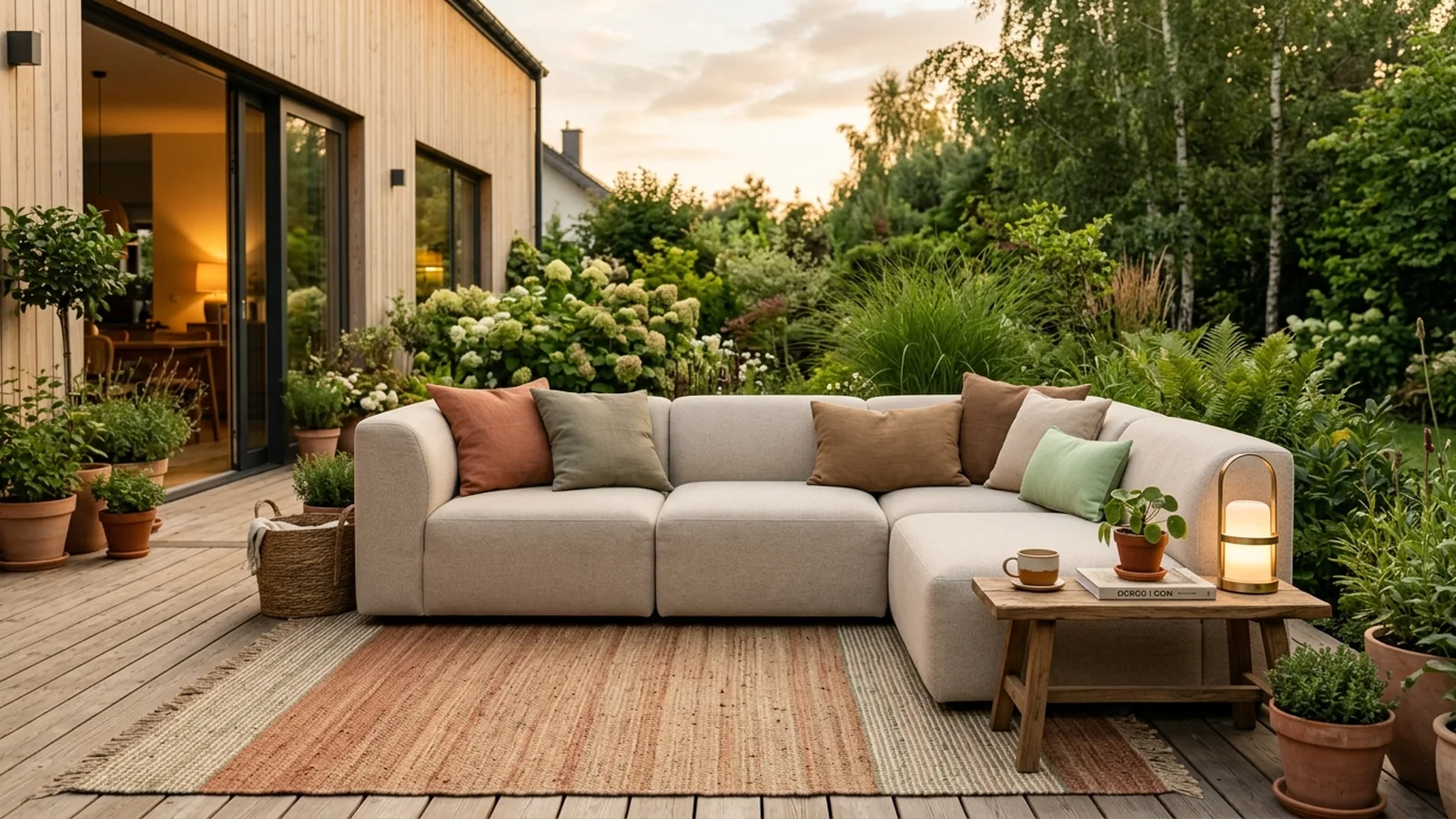
While you are at it, assess where the furniture stood over winter and where it will stand for the coming months. Exposure to sun, proximity to watered planters and nearness to a gutter all affect how quickly surfaces get dirty and how often they will need cleaning. A piece placed under an eave that drips after rain will need more attention than one in a dry, shaded corner. With made-to-measure furniture designed for a specific space, this inspection usually takes only minutes, because the construction is simpler to handle and free of incidental parts.
Technorattan — cleaning and seasonal upkeep
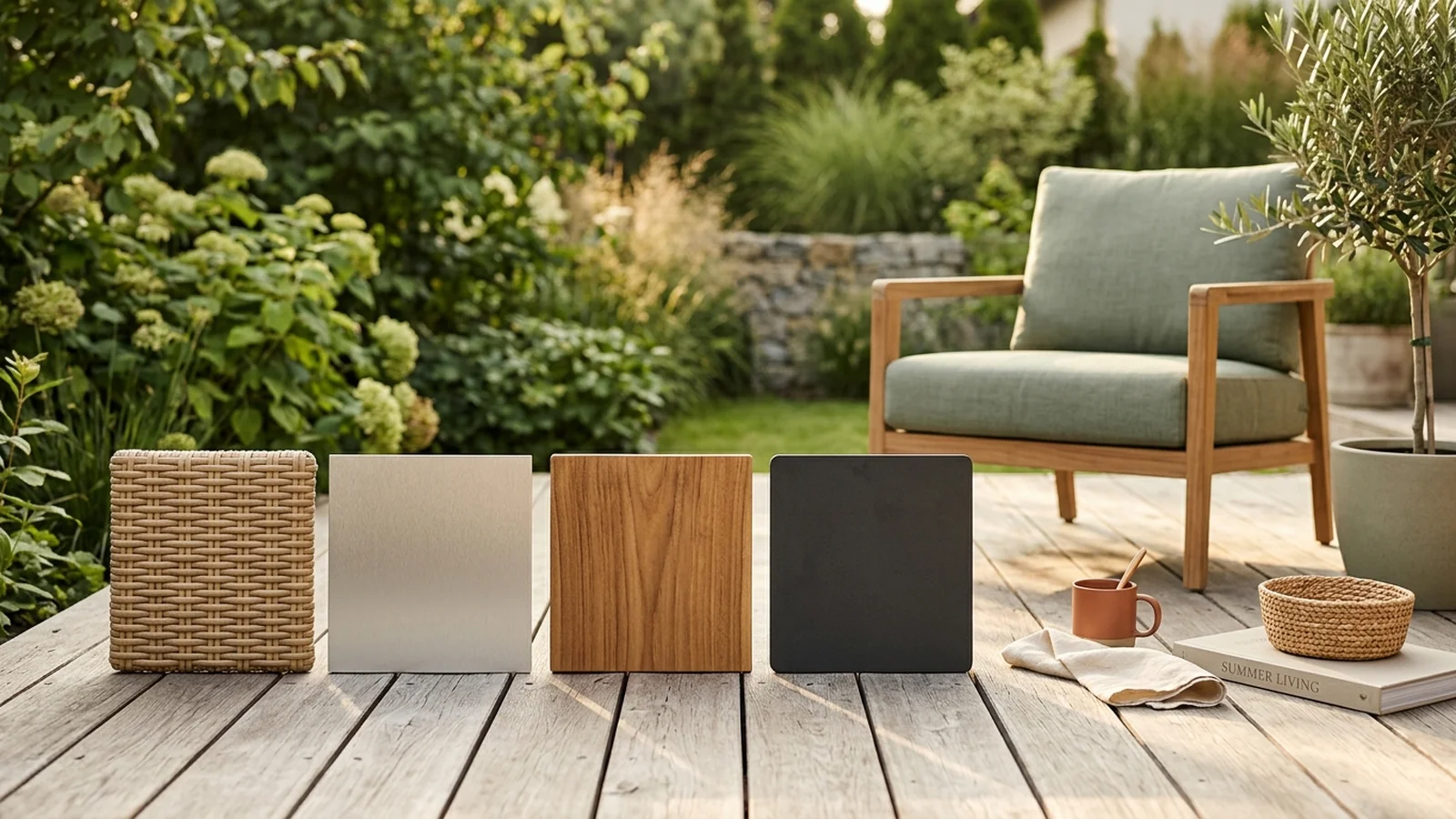
Technorattan, a weave of polyethylene fibre over an aluminium frame, is among the least demanding materials. At the start of the season it is enough to wipe the weave with a soft cloth or sponge dipped in lukewarm water with a mild detergent. Dust likes to gather in the nooks of the weave, so a soft brush with gentle bristles helps, reaching between the strands and lifting dirt out of the deeper layers.
Avoid harsh scouring agents and stiff wire brushes, which can scratch the fibre surface; once damaged, the weave dirties and fades faster. After washing, rinse the weave with clean water and leave it to dry completely, preferably in the shade, since drying a wet weave in full sun encourages streaking. During the season, a quick wipe every two or three weeks is entirely enough to keep the weave's colour and structure. Good-quality, UV-resistant technorattan withstands this treatment for many seasons without visible change.
Aluminium — light frame, simple upkeep
Aluminium frames are valued for corrosion resistance and low weight, which makes furniture easy to reposition around the terrace depending on the time of day and the sun. Care comes down mainly to washing surfaces with water and a mild detergent, then drying with a soft cloth. Powder coatings, used on European-class frames, withstand everyday use well, but it is worth protecting them from mechanical knocks that can expose the metal, where discolouration sets in more easily.
If minor deposits or rain marks appear during the season, they usually come off with ordinary washing. From time to time, check that the foot caps are in place; they protect the terrace surface from scratches and the frame itself from moisture drawn up from below. Aluminium requires no oiling or impregnation, which makes it one of the most convenient options in terms of effort across a season.
Wood — the upkeep that truly matters
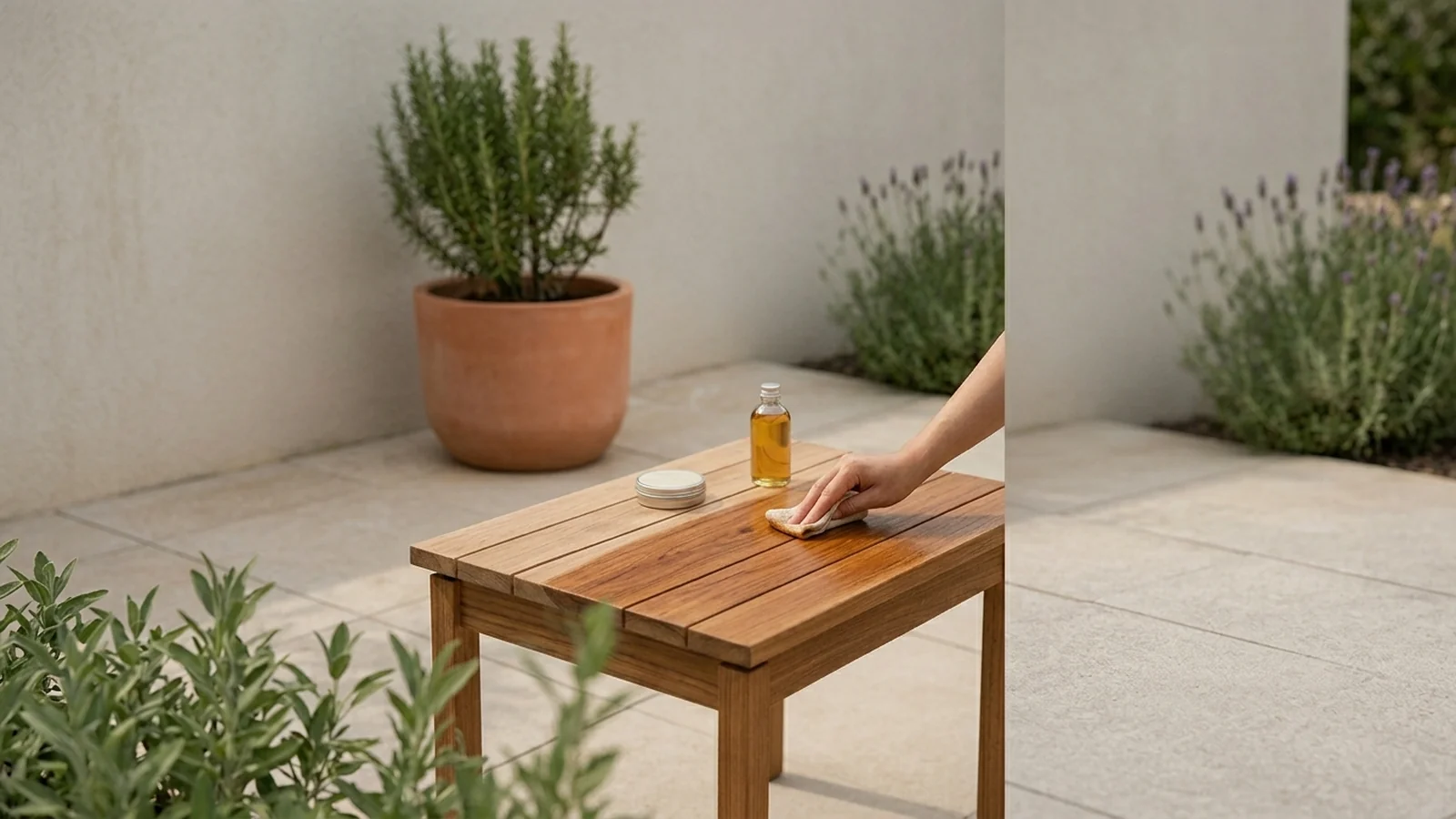
Wood demands the most attention, but it repays you with a natural character that cannot be imitated. Caring for garden wood at the start of the season begins with cleaning the surface of dust and any greening that may appear in damp, shaded spots. Once dry, assess whether the oil or lacquer coating needs refreshing; dulling, greying and raised grain are signs the wood needs care.
Exotic species and some domestic ones respond well to periodic oiling. Oil nourishes the fibres, deepens the colour and reduces water absorption, so the surface dirties more slowly and moves less under the influence of moisture. Apply oil thinly, along the grain, and collect the excess with a cloth after a dozen or so minutes, before it begins to set and form sticky patches. Over the season it is worth repeating this once or twice, especially on tabletops and surfaces exposed to direct sun. Wood naturally changes shade under UV — this is a normal process, and regular oiling helps preserve the desired tone and delays greying.
Fabrics and cushions — resistance to UV and moisture
Outdoor fabrics are designed with sun and moisture in mind, yet they too benefit from regular care. At the start of the season, beat the cushions, vacuum them with a soft brush and check the zips and seams; wear shows there first, and a small split is easier to mend at once than after several weeks. Stains are best removed promptly with lukewarm water and mild soap, remembering to test the agent first on a hidden patch to be sure it will not affect the colour.
UV-resistant materials fade more slowly, but even so there is no need to leave cushions in full sun around the clock. After rain, leave them to dry in an airy spot; moisture trapped in the filling encourages odours and over time can lead to mould. Removable, washable covers make it considerably easier to keep things clean all summer and let you refresh a set without replacing whole seats.
HPL, glass and other tabletops — quick rules
Tabletops are the surfaces most exposed to daily contact with food, drinks and sun. European-class high-pressure laminates, common on outdoor furniture, resist scratches and moisture — a wipe with a damp cloth is enough, with more stubborn stains lifted by a mild detergent. They need no impregnation or polishing, which makes them one of the most practical choices for an intensively used terrace.
Glass and ceramic tops are cleaned similarly, the difference being that streaks show faster on glass, so it is worth drying it off. Whatever the tabletop material, avoid placing very hot dishes directly on the surface and use mats — a simple habit that protects against discolouration and micro-damage that ordinary cleaning cannot later remove.
Small habits that extend lifespan
The most for furniture durability is done by simple, repeatable actions: a quick wipe of the tabletop after a meal, putting cushions away before a forecast downpour, moving lighter pieces into the shade on the hottest days. This takes no effort, yet it genuinely extends the period over which furniture looks new. It is also worth keeping protective covers on hand for longer absences or an exceptionally rainy week; they guard against dust, pollen and deposits that later take far more time to remove.
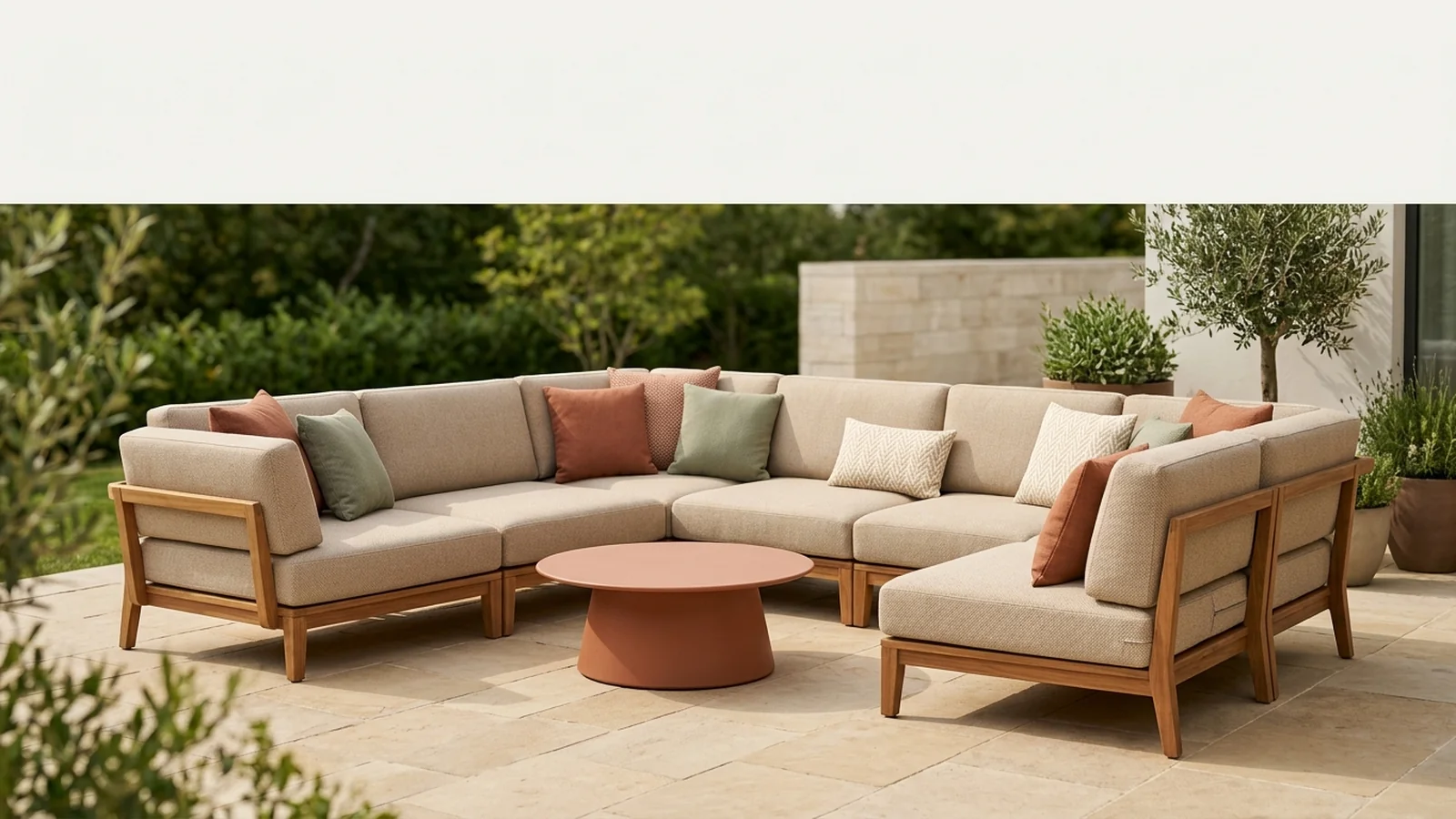
It is worth remembering that durability begins at the stage of choosing materials and construction. Furniture designed for a specific space, with a considered pairing of frame, weave or wood with fabrics, simply weathers the season better, because each element was chosen deliberately for its exposure and use rather than off the shelf. Fewer incidental joints means fewer places where furniture fails, and simpler care over the years to come.
Care begins at the design stage
The ease of maintaining outdoor furniture is no accident — it stems from decisions made long before the first wash. Choosing UV-resistant fabrics for the side the sun comes from, a European-class frame matched to the dampness of the spot, a tabletop that withstands daily use — all of this can be planned at the design stage instead of accepting the compromises of a ready-made set. A piece conceived for a specific terrace or balcony not only looks better but also costs less to maintain over the years.
At Grandis Trade we produce outdoor furniture to measure in our own studio in Warsaw — our own production, not the resale of ready-made sets. We have over 15 years of experience, 3 000 m² of production space and more than 300 completed projects. We start with laser measurement and a 3D design included in the price, select materials for exposure and use, and a project typically takes 2–4 weeks at a fixed price agreed in advance. Installation is carried out by our in-house team. If you are planning furniture that is easy to maintain and matched to your space, see our work in the portfolio and offers for the home and business. Take the short quiz and we will prepare an initial proposal tailored to your terrace or balcony.
Frequently asked questions
How often should technorattan furniture be cleaned during the season?
At the start of the season a thorough wash with lukewarm water and a mild detergent is enough, and during the summer a quick wipe every two or three weeks. Good-quality, UV-resistant weave needs no more attention unless it stands somewhere particularly exposed to dust or dripping water.
Does aluminium need oiling or impregnation?
No. Aluminium does not rust and needs no oiling or impregnation. Washing with water and a mild detergent and drying is enough. It is only worth protecting the powder coating from knocks and checking that the foot caps are in place.
How often should wooden garden furniture be oiled?
Ideally at the start of the season, then once or twice over the summer, especially on tabletops and heavily sunlit surfaces. The signs that wood needs oil are dulling, greying of the surface and raised grain.
What should be done with cushions after rain?
Leave them to dry in an airy spot and do not shut damp ones in a box or cover. Moisture trapped in the filling encourages odours and mould. Removable, washable covers make it much easier to keep things clean throughout the season.
Is made-to-measure furniture easier to care for than ready-made?
Usually yes, because the materials and construction are chosen for a specific exposure and use. Fewer incidental joints means fewer places where the furniture fails, and simpler inspection and cleaning over the seasons that follow.
What should garden tabletops be cleaned with?
European-class high-pressure laminates, glass and ceramic are cleaned with a damp cloth, and more stubborn stains with a mild detergent. Do not use harsh scouring agents. Place hot dishes on mats to avoid discolouration that ordinary washing will not remove.