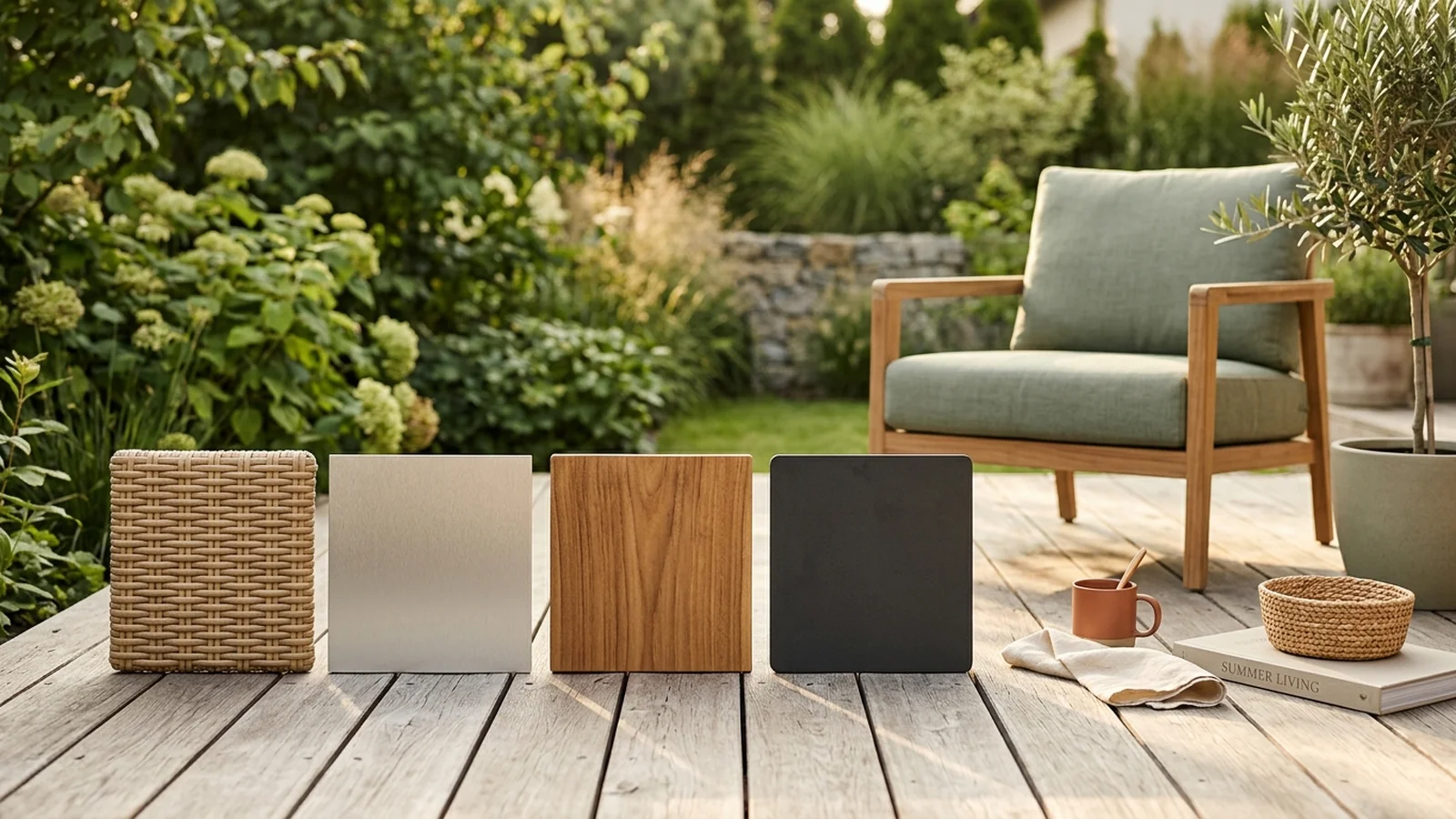
We compare the most popular outdoor furniture materials: rattan weave, aluminium, wood and HPL. Pros, cons and costs so you can choose furniture that lasts.
Choosing garden furniture starts with one decision that shapes everything else: what material it should be made of. Durability, looks, price and the time you will spend on maintenance all depend on it, season after season. We have put together a practical comparison of the four most popular materials — rattan weave, aluminium, wood and HPL — with their strengths and weaknesses, so you can choose with confidence rather than from a single catalogue photo.
Why material is the most important decision
Outdoor furniture works in conditions indoor furniture never faces. The sun bleaches colours, rain and morning dew seep into every gap, and the temperature swing between a hot afternoon and a cool night expands and contracts the materials. Add pollen, dust and the proximity of watered plants, and it becomes clear that it is not the shape but the material and the way it is joined that decide whether a set survives one season or ten.
The second factor is maintenance. Some materials only need a wipe with a damp cloth, others demand regular oiling several times a year. Before you choose, it is worth honestly assessing how much time you actually want to spend caring for the furniture. Even the most beautiful set will disappoint if its upkeep exceeds your willingness to commit.
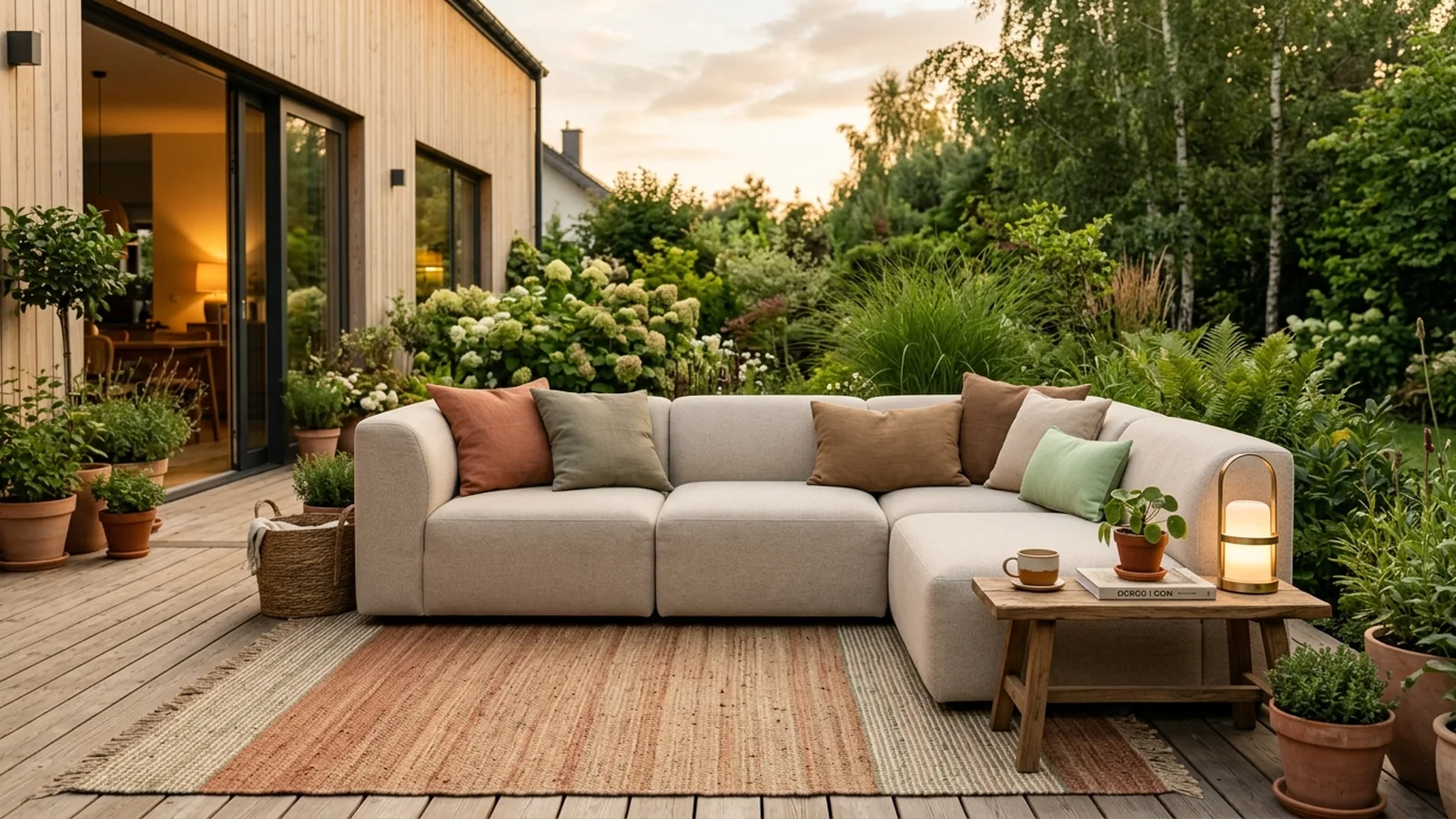
The third dimension is harmony with the space. Each material carries a distinct character: wood brings natural warmth, aluminium a modern coolness, rattan weave cosy softness, and HPL technical precision. A good choice is one that suits both the conditions of your terrace and the style in which you want to spend time there. In our projects for homes and businesses, gathered in our portfolio, we most often combine these materials so each handles what it does best.
Rattan weave — lightness and lounge comfort
Synthetic rattan is a man-made fibre imitating natural rattan, woven around a metal frame — usually aluminium. It is one of the most frequently chosen materials for garden furniture, and not by chance. It combines the look of a woven texture with a resistance that natural wicker can never achieve outdoors.
Its advantages are above all low weight, resistance to rain, sun and temperature swings, ease of cleaning, and a pleasant, warm appearance available in many colours. The weave excels in lounge sets, corner sofas and armchairs, where a soft form and the comfort of longer sitting matter. The light frame lets you move the furniture around the terrace without effort, for example to follow the sun or move into the shade.
The weak point is the cheaper alternatives. Low-quality fibre can fade after a single season and crack in frost, and a poorly tensioned weave loosens over time. That is why it is worth choosing European-class rattan resistant to UV radiation, and paying attention to how the weave is attached to the frame. This is the detail that separates furniture that lasts for years from furniture that lasts one season.
- Best for: those who want a comfortable lounge zone without complicated maintenance.
- Maintenance: minimal — a wipe with a damp cloth, a soft brush for the corners of the weave.
- Watch out for: fibre quality and attachment to the frame matter more than colour.
Aluminium — practically maintenance-free and modern
Aluminium is the material gaining ground fastest in recent years. It is modern, light and almost undemanding, which is why it increasingly forms the base not only of frames but of entire garden furniture structures. It fits well in minimalist arrangements where a clean line and a light silhouette count.
Its greatest advantage is corrosion resistance — aluminium does not rust, which is crucial in the Polish climate. It is also very light, so the furniture is easy to move, while being durable and weather-resistant. Maintenance comes down in practice to a wipe with a damp cloth. The powder coatings applied to aluminium profiles withstand daily use well and are available in a wide range of finishes, including wood imitations.
There are two drawbacks worth knowing. First, aluminium heats up in full sun, so the parts we touch directly, such as seats, are best supplemented with cushions or weave. Second, higher quality — thicker profiles, a more durable coating, certified hardware in moving parts — means a higher price. Cheaper structures are sometimes too thin-walled and deform over time.
- Best for: those who value a modern look and minimal maintenance duties.
- Maintenance: a wipe with water and mild detergent, protecting the coating from impacts.
- Watch out for: profile thickness and powder-coat quality decide durability.
Wood — natural warmth with a maintenance commitment
Wood is back in favour, especially in japandi-inspired arrangements and natural gardens. For outdoor furniture, teak, acacia and eucalyptus are most often chosen — species that cope well with moisture and changeable weather. Wood brings a warmth and character to a space that no synthetic material can fully reproduce.
Its advantages are a natural, noble appearance, solidity and timelessness — a well-made wooden piece never goes out of fashion. Exotic species such as teak contain natural oils that protect them from moisture and sun, making them exceptionally resistant even without intensive care. Wood also has a mass that conveys a sense of stability and quality.
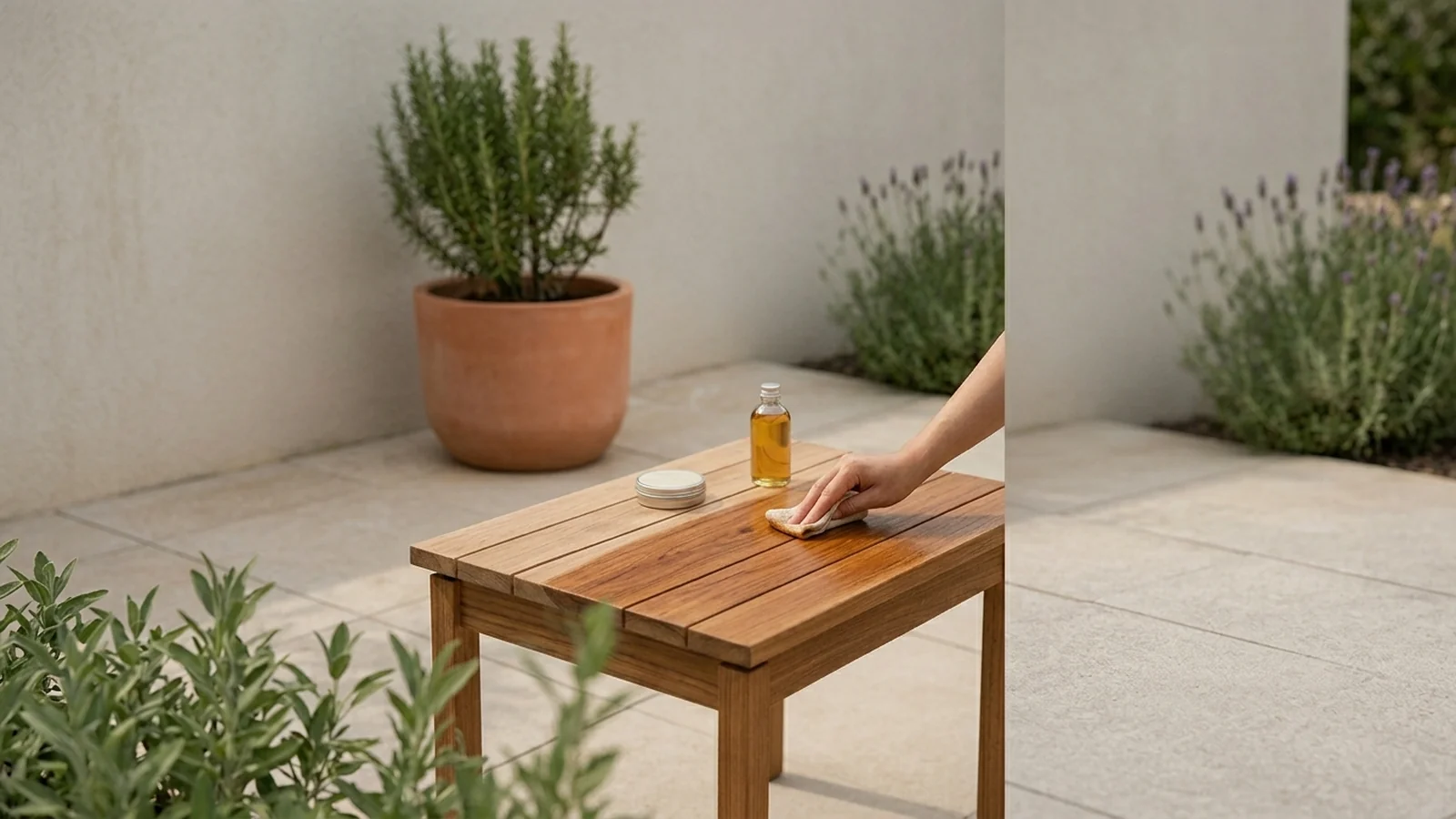
The drawback is precisely the need for maintenance. To keep wood from greying and losing colour, it usually requires oiling twice a season, and the surfaces most exposed to the sun, such as tabletops, sometimes more often. It is also heavier than the other materials, so harder to move, and usually more expensive to buy. It is worth remembering that wood naturally changes shade under UV — a normal process that regular oiling helps to control.
- Best for: lovers of natural character, ready to devote some time to care.
- Maintenance: oiling twice a season, cleaning off greening at the start.
- Watch out for: the wood species and the quality of joinery joints affect lifespan.
HPL — indestructible tabletops
HPL, or high-pressure laminate, is the material most often used for garden tabletops. It is made by pressing many layers of resin-soaked paper under high pressure and temperature, producing a hard, homogeneous board with exceptional resistance.
Its strengths are impressive for outdoor conditions: outstanding resistance to scratches, moisture, stains and UV radiation. HPL does not heat up as much as metal, is very easy to clean, and comes in many decors — from convincing wood imitations, through concrete, to solid colours. It is a material that withstands daily use, hot dishes within reason, and contact with food without losing its appearance.
The limitation is the scope of use. HPL is mainly a material for tabletops and flat surfaces, not for entire load-bearing structures — it needs a frame of another material, most often aluminium. In addition, cheaper, thinner boards are sometimes less resistant to edge impacts and can chip, so board thickness matters.
- Best for: those looking for a practical, modern tabletop that withstands daily use.
- Maintenance: a wipe with a damp cloth, no need for impregnation.
- Watch out for: board thickness and edge finishing quality.
The best material combinations
In practice, you rarely choose a single material for an entire set. The most durable and comfortable garden furniture combines several materials so each handles what it does best. This is the approach we apply in our production every day.
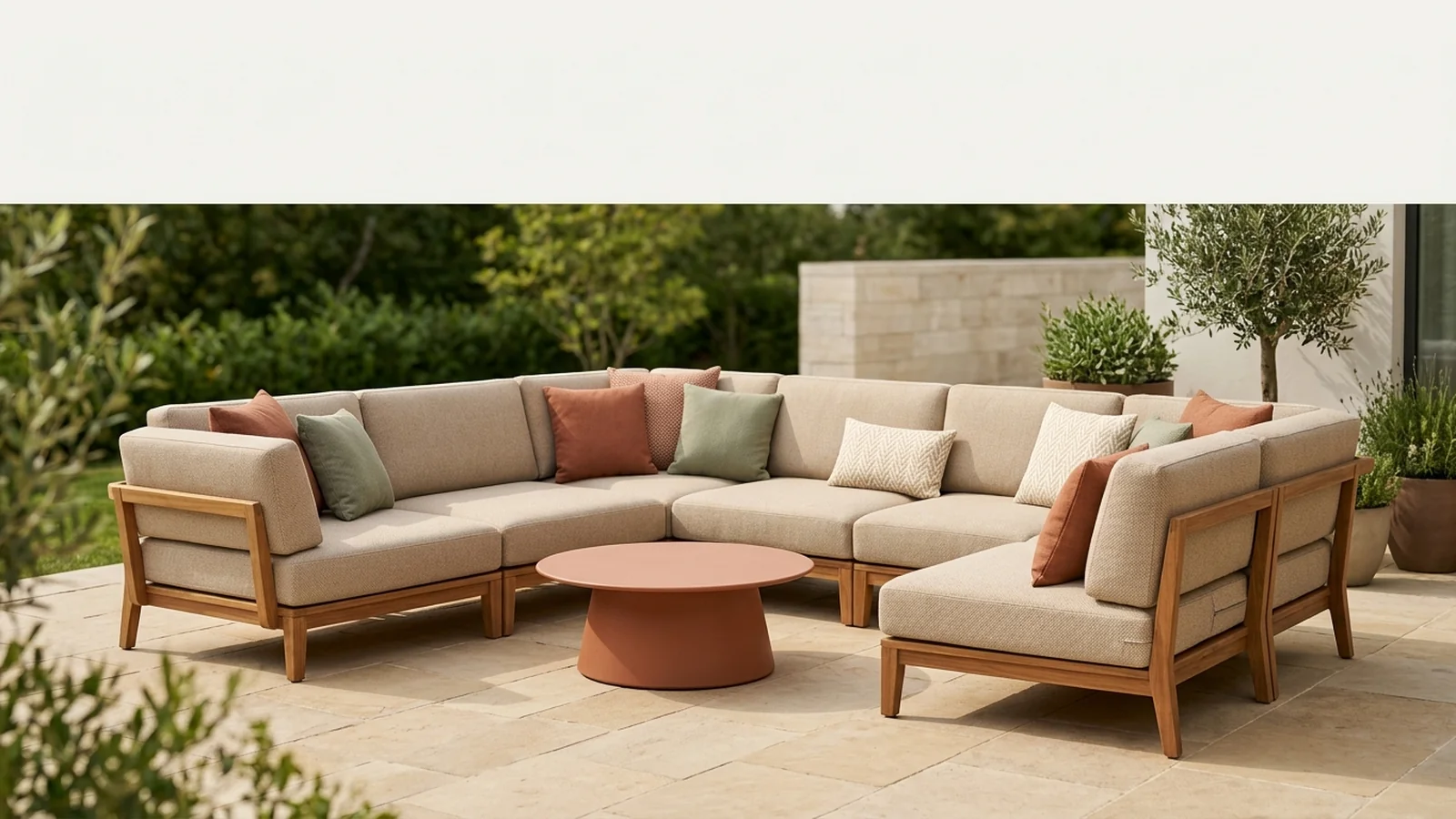
The most common and versatile combination is an aluminium frame with an HPL tabletop. It pairs the lightness and corrosion resistance of the frame with the indestructible surface of the top, giving a table that looks good for years with minimal care. The second proven pairing is a rattan-weave lounge set on an aluminium frame — the soft comfort of the weave on a light, rust-free base. For those who value nature, a good compromise is wood on seats or tabletops combined with a maintenance-free aluminium frame.
These combinations work best when planned for a specific space. A made-to-measure table with an aluminium frame and an HPL top matched to the width of the terrace, a rattan corner sofa using the exact geometry of the balcony — this is the difference between furniture picked off the shelf and furniture designed for your place. We carry out projects of this kind for flats and houses under our home offer, and for restaurants, hotels and shared spaces under our business offer.
Quick summary — which material to choose
If you care about a comfortable lounge zone, go for good-class rattan weave. If you value modernity and minimal duties, choose aluminium. If you dream of a natural, warm garden and are not afraid of seasonal care, reach for wood. And if you want a tabletop that withstands everything, choose HPL. In most real arrangements, however, a sensible combination of several materials matched to specific zones and terrace conditions works best.
Durability is decided not only by the material itself, but also by the quality of joints, the class of hardware and whether the structure was matched to the conditions it will work in. That is why it is worth treating the choice of material as the first step of a project, not as the purchase of a ready set from a warehouse.
Frequently asked questions
Rattan weave or aluminium — which is more durable?
Both materials are durable if you choose good quality. Aluminium is practically maintenance-free and has no parts that could unravel or chip, so in terms of pure structural lifespan it comes out slightly ahead. Rattan weave wins on comfort and the soft form of the lounge zone. Most often you do not have to choose — a good lounge set combines rattan weave with an aluminium frame.
Do wooden garden furniture pieces require a lot of effort?
Yes, wood is the most demanding material. To keep its colour and resistance, it usually needs oiling twice a season plus cleaning at the start of summer. Exotic species such as teak are more resistant thanks to natural oils, but they too grey over time without care. If you do not want to spend time on maintenance, aluminium or rattan weave will be a better choice.
What is an HPL tabletop best suited for?
HPL is the best choice for garden tabletops and work surfaces, for example in the grill zone. It resists scratches, stains, moisture and sun, does not heat up like metal and is easy to clean. It is not suitable, however, for entire load-bearing structures — it needs a frame, most often aluminium, on which it is mounted.
Is made-to-measure furniture more expensive than a ready set?
Not necessarily in terms of durability and fit. A ready set may be cheaper at the start, but on an irregular balcony or terrace it leaves dead spaces and often wears out faster. Made-to-measure furniture is designed for specific dimensions and conditions, with materials and certified hardware chosen for the way it will be used, so it lasts longer. It is an investment counted in years, not seasons.
Which material best withstands the Polish climate?
The least troublesome in our climate is aluminium, because it does not rust and needs no protective treatment. Good-class UV-resistant rattan weave and HPL tabletops also cope very well. Exotic wood is resistant but requires care, and domestic wood even more attention. In practice, a combination of aluminium with HPL or rattan weave is the safest choice for changeable Polish weather.
Can different materials be combined in one arrangement?
Yes, and it is in fact recommended. Combining materials lets you use the strengths of each — an aluminium frame for durability, an HPL top for resistance, rattan weave or wood for comfort and warmth. The key is that the whole stays coherent in proportion and colour, which is easiest to achieve by designing the zones together rather than mixing ready sets from different sources.
Want to match materials perfectly to your terrace, balcony or garden? Answer a few questions in our configurator and we will prepare a proposal tailored to your space. Fill in the short quiz and get a quote.