Some 44% of people aged 18-29 want their own plot and 35% value grilling with friends. See how to set up a small outdoor space wisely and where to invest.
The dream of having one's own outdoor space is especially strong among the young today. It is not about a showpiece garden to look at, but about a place to live in: grilling, meeting friends, a lazy afternoon with the people you care about. Data from 2024 shows what this need looks like, and practice suggests how to satisfy it sensibly, even on a limited budget and a small footprint. Below we gather concrete tips for anyone setting up a first balcony, a small terrace or a corner of a plot.
An own plot in the young generation's plans
According to a 2024 survey, as many as 44 percent of people aged 18-29 say they want their own plot of land. That is a high share, especially in a group usually associated with an urban, mobile lifestyle. It shows that the need to put down roots and to own a place outdoors is not fading from one generation to the next, and in many cases is in fact growing.
Importantly, a plot is not an end in itself in the eyes of the young. It is rather a means to having a space you can arrange your own way, without minding the neighbours behind the wall or the rules of a housing association. Freedom to arrange and use the place matters here as much as owning it. That is why the way the space is built out matters so much.
Grilling and gatherings at the heart of the outdoor space
The second figure that explains the young generation's approach well is 35 percent. That many young Poles consider grilling and meeting friends to be the main advantage of a plot. This defines the function of the whole space. It is not about a decorative garden, but about a place meant to be lived in — around a shared table, a fire and conversations that run late.
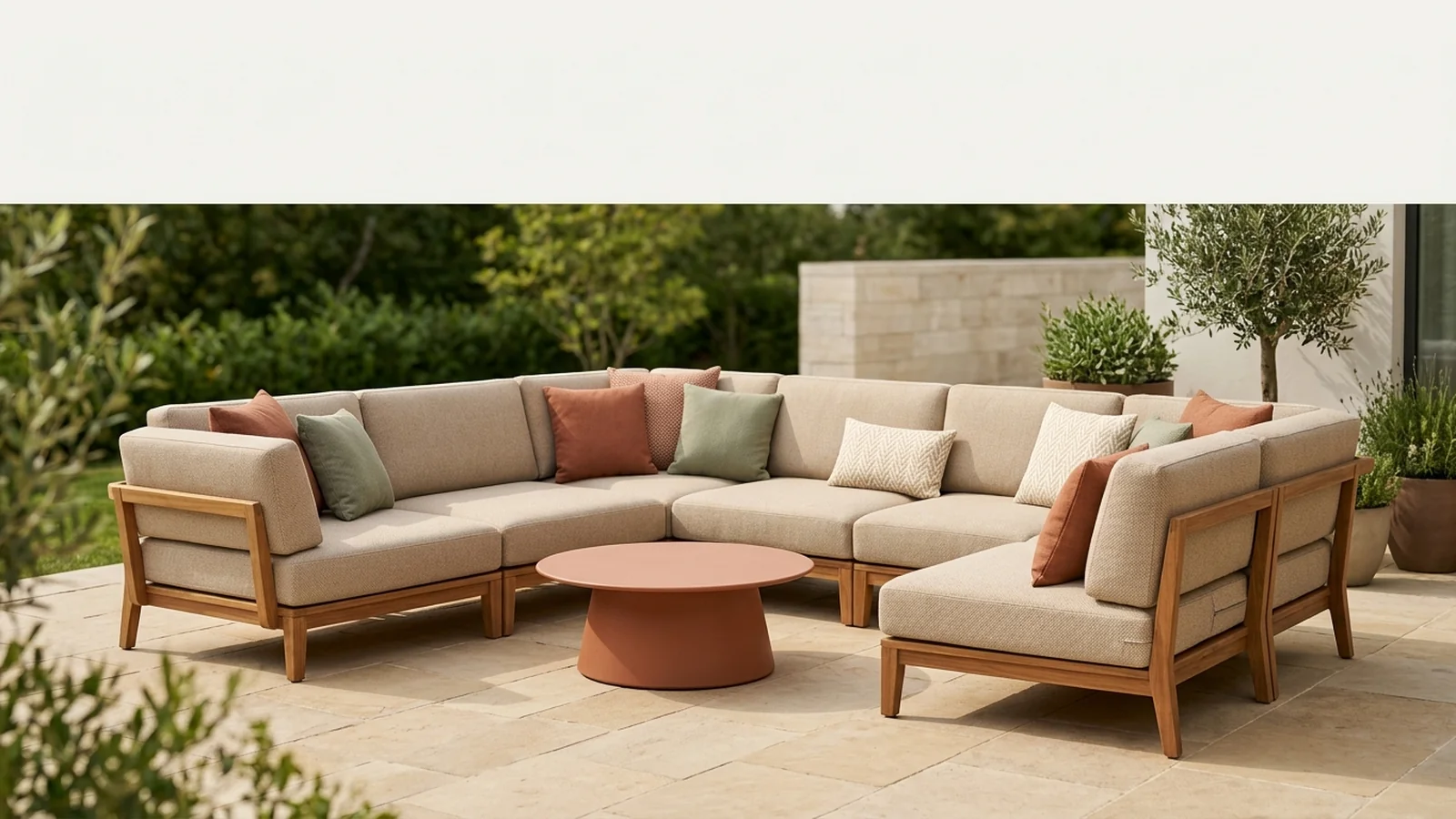
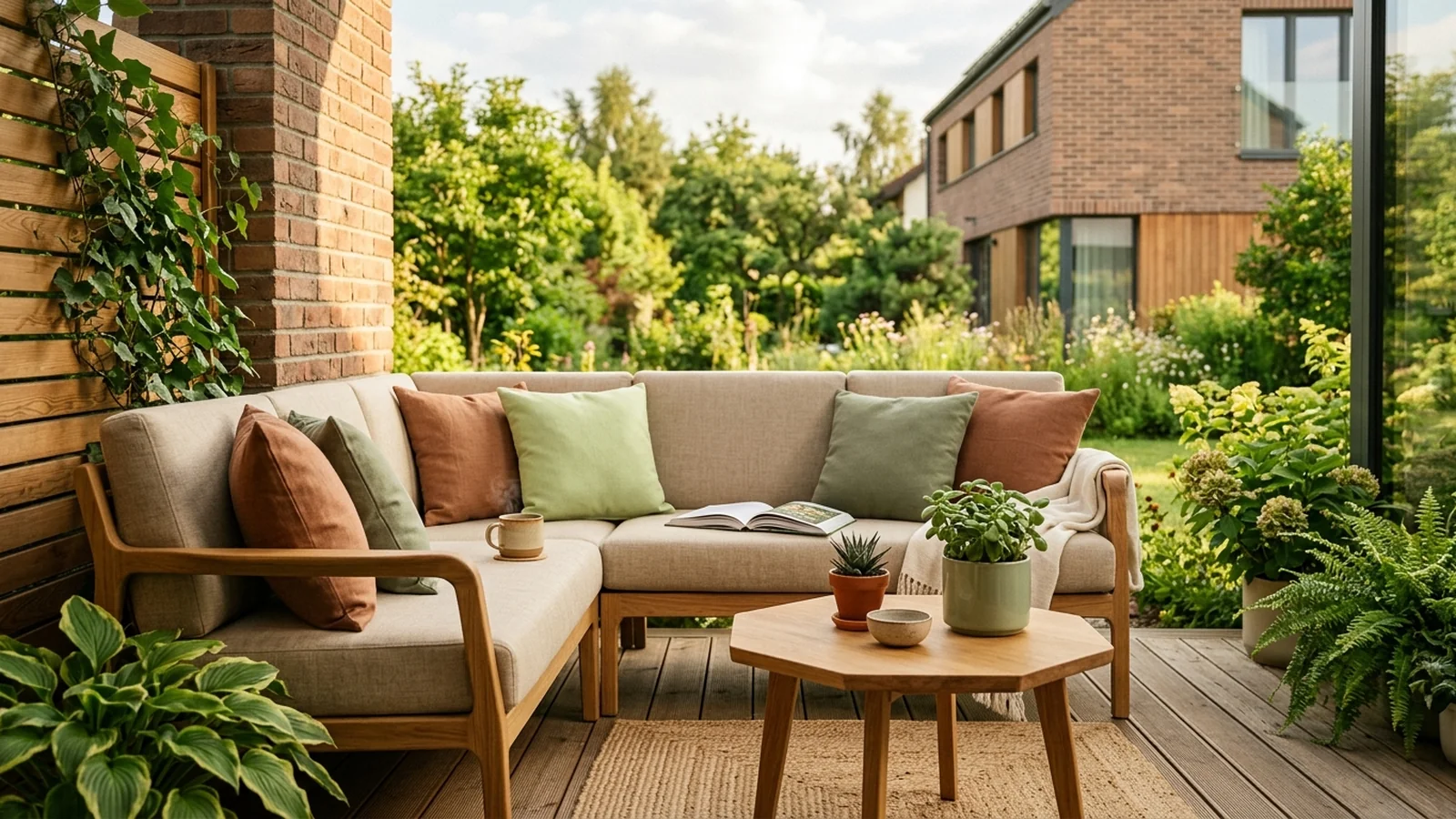
This approach translates directly into what to buy first. The key elements are those that serve gatherings: comfortable seating for several people, a table large enough for food, and a tidy zone around the grill with room to set down dishes. These decide whether a place truly invites you to spend time there, or remains a pretty but rarely used backdrop. Everything that comes later — decorations, accessories, lighting — is built on top of that foundation.
A small footprint is not an obstacle
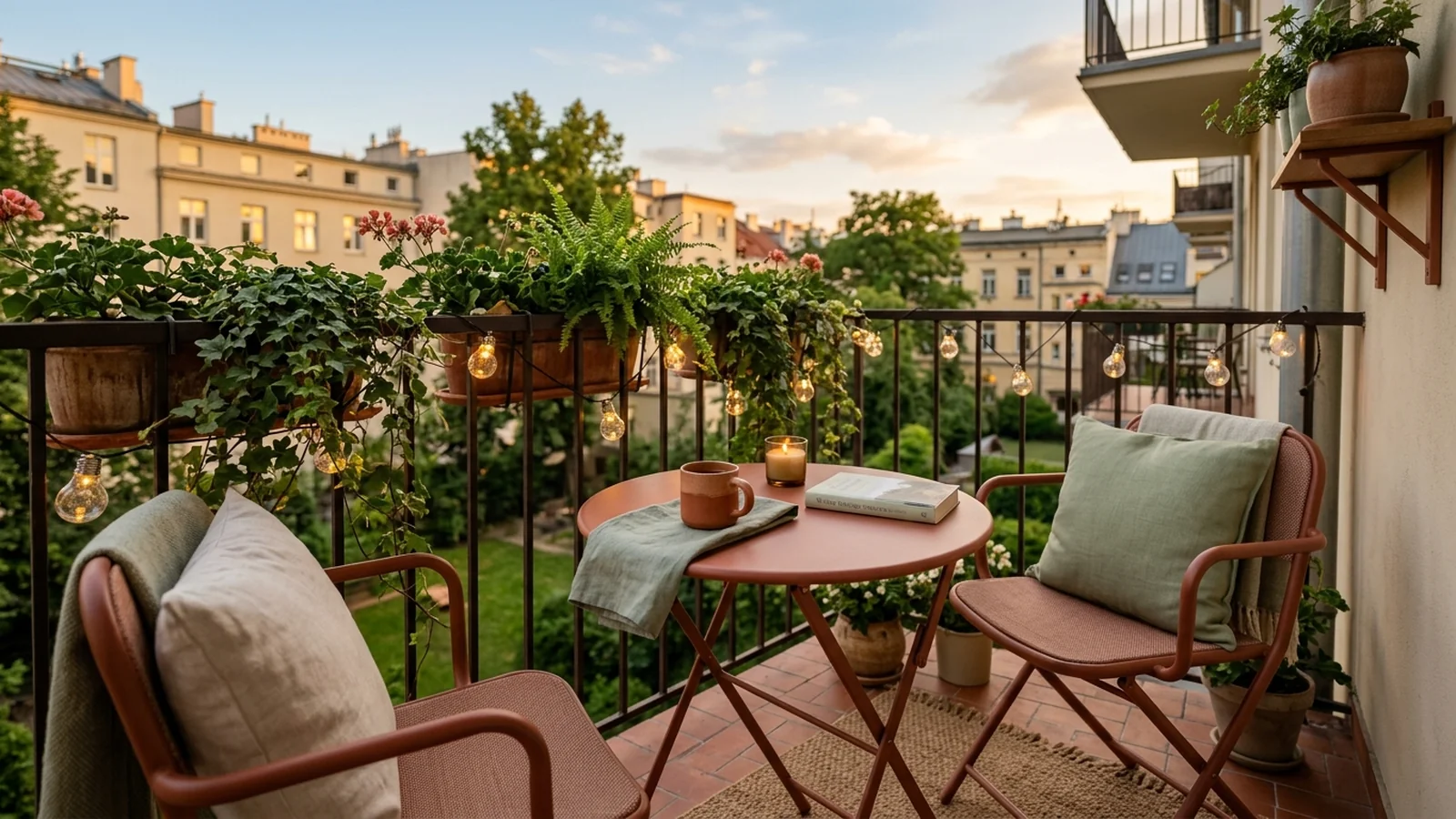
Many young people start with a small space: a corner of a plot, a balcony or a small terrace at a rented or first owned flat. A limited area is often treated as a barrier, although in practice it simply forces better planning. Not everything fits on 3 sq m, so the decisions have to be deliberate.
The key is setting priorities. If gatherings are to be the heart of the space, first take care of comfortable seating and a table in the right proportions, and only then the extras. Solutions that combine functions help — a seat with storage, a bench along the wall instead of single chairs, folding or sliding elements. On a small footprint every piece of furniture should earn its place by serving more than one role. Setting seating along the railing or wall also works well, because the centre stays free and there is no sense of cramping.
A smart budget — where to save, where to spend more
A limited budget does not mean giving up quality. It rather means deciding consciously where to save and where to spend more. Seasonal extras, decorations, textiles or lighting can be added gradually and replaced without much regret, since their character is changed every now and then anyway.
It is different with the elements that form the backbone of the space and are used most intensively. The main seating, the table and the structures working through the whole season are where paying more for durability returns fastest. A cheap piece that loses its shape after one summer is in practice more expensive than a solid solution that lasts for years. A sensible strategy is therefore a simple split: cheap and replaceable where it is an extra, durable where it is the foundation. It is worth remembering that durability also comes down to the details — European-class hardware in moving parts and UV-resistant fabrics in upholstery make the difference only after a few seasons of use.
Materials that forgive a beginner's mistakes
Setting up a space for the first time often means learning from your own mistakes. That is why it pays to choose materials forgiving of inexperience in care. Synthetic rattan on an aluminium frame needs only a wipe with a damp cloth and copes well with rain and sun. Aluminium is practically maintenance-free and does not corrode. High-pressure laminate tops withstand hot dishes, stains and scratches without special attention.
Wood gives the most warmth and natural character, but needs periodic oiling, so it is better chosen deliberately, when there is time and willingness for regular care. For someone who wants a space ready to use without daily chores, the safest set combines an aluminium frame, weather-resistant weave and a durable laminate top. It is a combination that simply works through the first years, and one that takes the everyday worry out of using the space.
When a made-to-measure piece is worth it
Made-to-measure furniture proves itself most where standard dimensions fail. A narrow balcony, a terrace of an unusual shape, a garden gazebo with a specific recess — in such places ready-made furniture often leaves space unused or does not let as many people sit as you would like to invite. A standard set is designed for an average space, not for a specific square metre.
A made-to-measure fit lets you use exactly as much room as is available and build it around the function that matters most to you. If grilling and gatherings are the core, the design can maximise the number of comfortable seats and the space around the table, even on a small footprint. At Grandis Trade we start with a laser measurement and a 3D design you can see before production, and the piece itself is made in our Warsaw studio in 2-4 weeks. This is an approach in which a small footprint stops limiting and starts being the starting point for a well-thought-out solution. We have gathered our projects for homes and balconies in our portfolio.
A space that grows with you
It is worth looking at the outdoor space over a longer horizon. A first balcony or a small plot is rarely a final destination, but well-chosen, durable furniture can travel with you through later moves and changes. Solid seating and a table that will serve for years are an investment that does not lose its sense when the address changes.
This approach suits a young generation that values flexibility but does not want to buy the same thing every few seasons. Instead of a series of temporary purchases, it is better to build the core of the space with durability in mind and freely change the extras around it according to the style and needs of the moment. From our over 15 years of experience and more than 300 completed projects comes a simple rule: furniture fitted once, and well, stays with the owner far longer than ready-made sets bought under the pressure of the season. If you are arranging a business space — a venue with an outdoor seating area, a cafe terrace — solutions from our offer for businesses will work, and for the home and plot we have prepared an offer for the home.
Where to start — a simple plan to begin with
If you are just starting, it is best to work in stages and not try to set up everything at once. Step one is defining the main function: gatherings and grilling, morning coffee, or perhaps working outdoors. Step two is measuring the space and checking how much room really remains after subtracting the path to the door and the walkway. Step three is choosing a durable core — seating and a table in proportions fitted to the area.
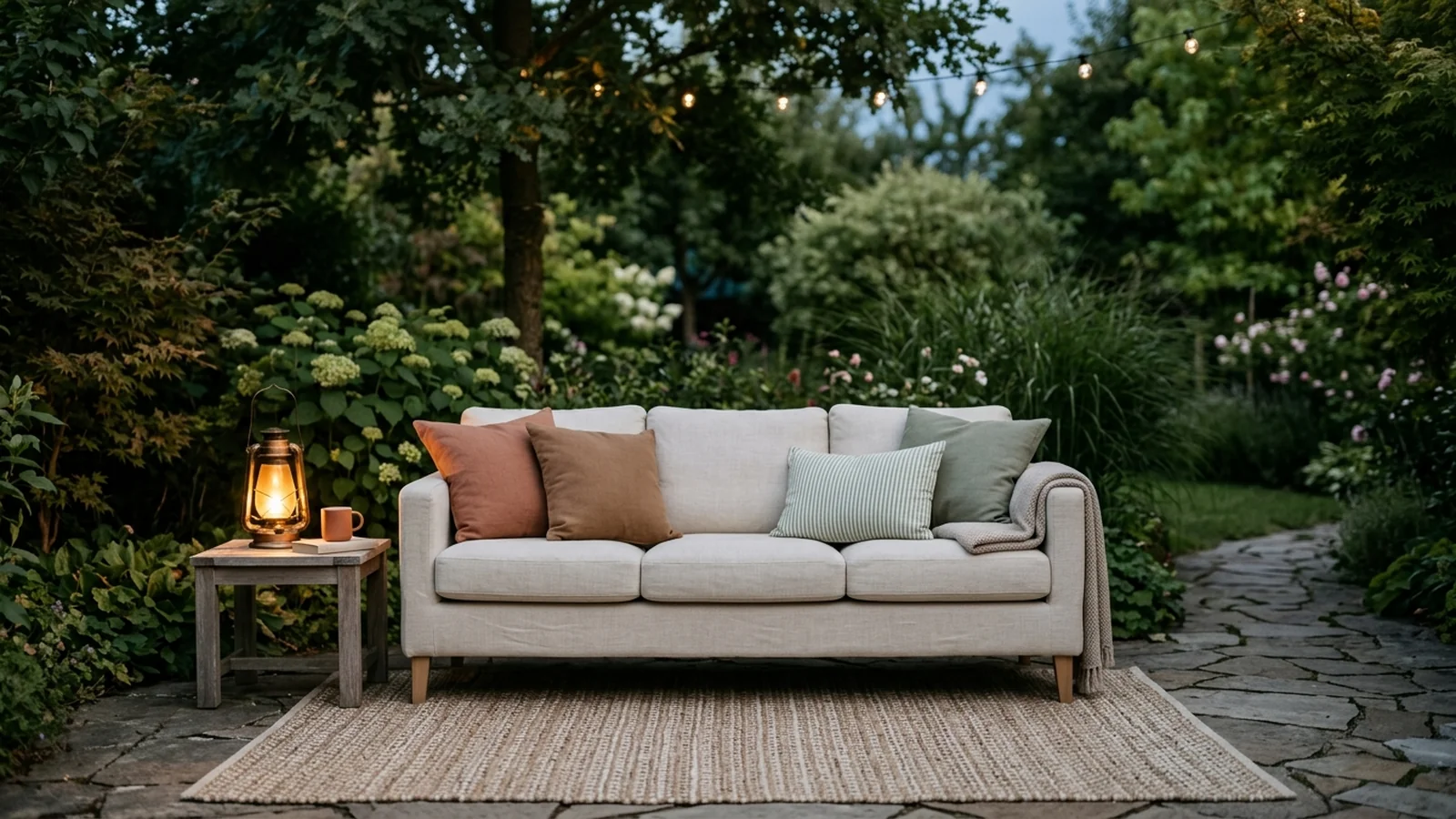
Only at the end come the extras: cushions, lighting, greenery, a parasol or other sun shade. This order guards against the most common beginner's mistake, namely spending money on decorations before a comfortable base exists. If you want to quickly check which solution fits your space and budget, fill in a short quiz — based on it we will suggest a layout and materials matched to how you want to use the place.
Frequently asked questions
Can a gathering zone fit on a small balcony in a block of flats?
Yes. Even on 2-3 sq m a compact bench or corner sofa with storage and a narrow table will fit. The key is placing the seating along the wall or railing and leaving the centre free, so the space does not feel cramped.
How many people can sit at a table on a plot with a limited footprint?
It depends on the shape of the zone, but made-to-measure design lets you use the available room to the full. Often a bench along the wall and a narrow, longer top can seat more people than a ready-made set taking up the same room.
What is best to save on when setting up for the first time?
On the easily replaceable elements: cushions, textiles, decorations, lighting. These are changed every now and then anyway. The durable core of the space — the main seating and the table — is where paying more returns fastest.
Which material to choose if I have no time for care?
The least demanding are aluminium and synthetic rattan on an aluminium frame — a wipe with a damp cloth is enough. A high-pressure laminate top withstands hot dishes and stains. Wood needs periodic oiling, so it is worth choosing only when you want to look after it.
How long does made-to-measure production take?
At Grandis Trade made-to-measure outdoor furniture is usually made in 2-4 weeks. We start with a laser measurement and a 3D design included in the price, and the price stays fixed from the moment it is agreed.
Does made-to-measure make sense on a limited budget?
It does, if you look at the cost spread over years. A custom fit lets you use the whole available space and avoid buying several cheaper sets one after another. The best starting point is the quiz, which helps estimate the scope and match a solution to your means.