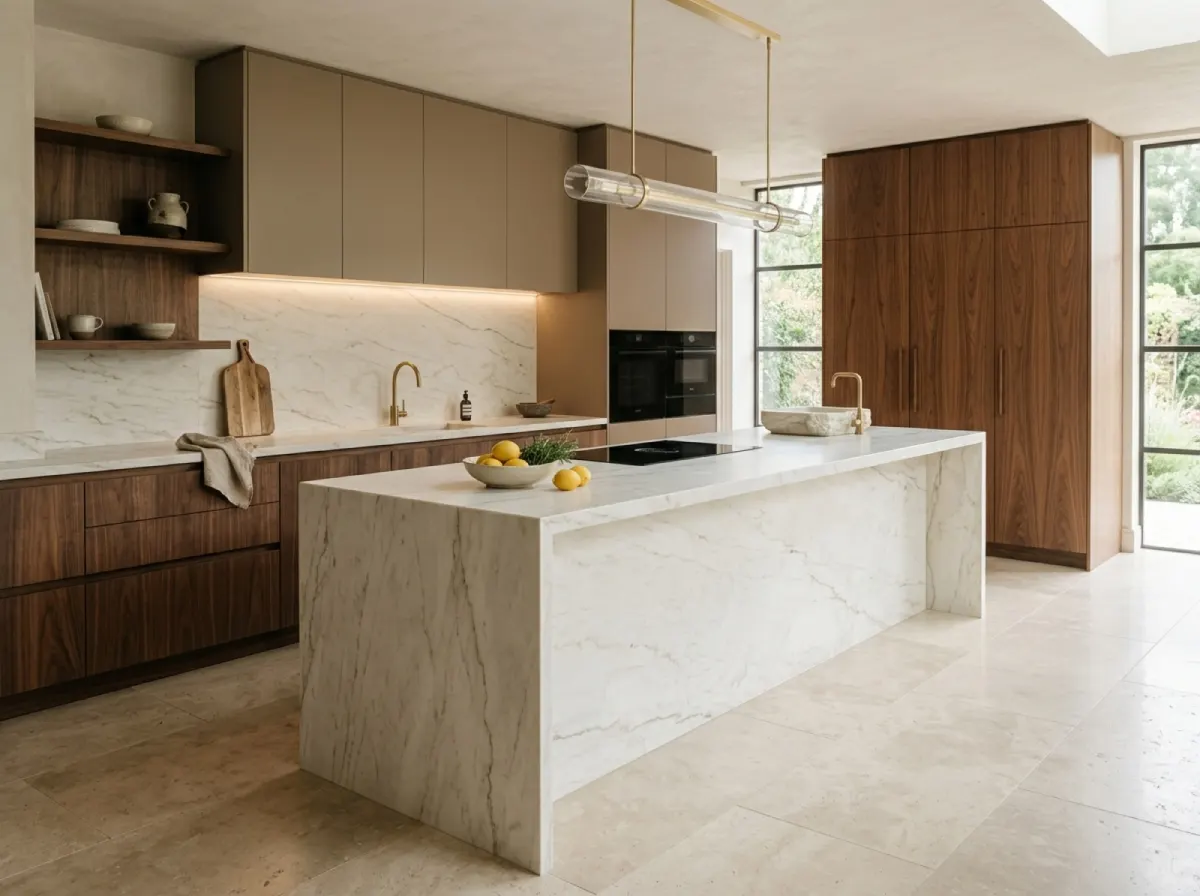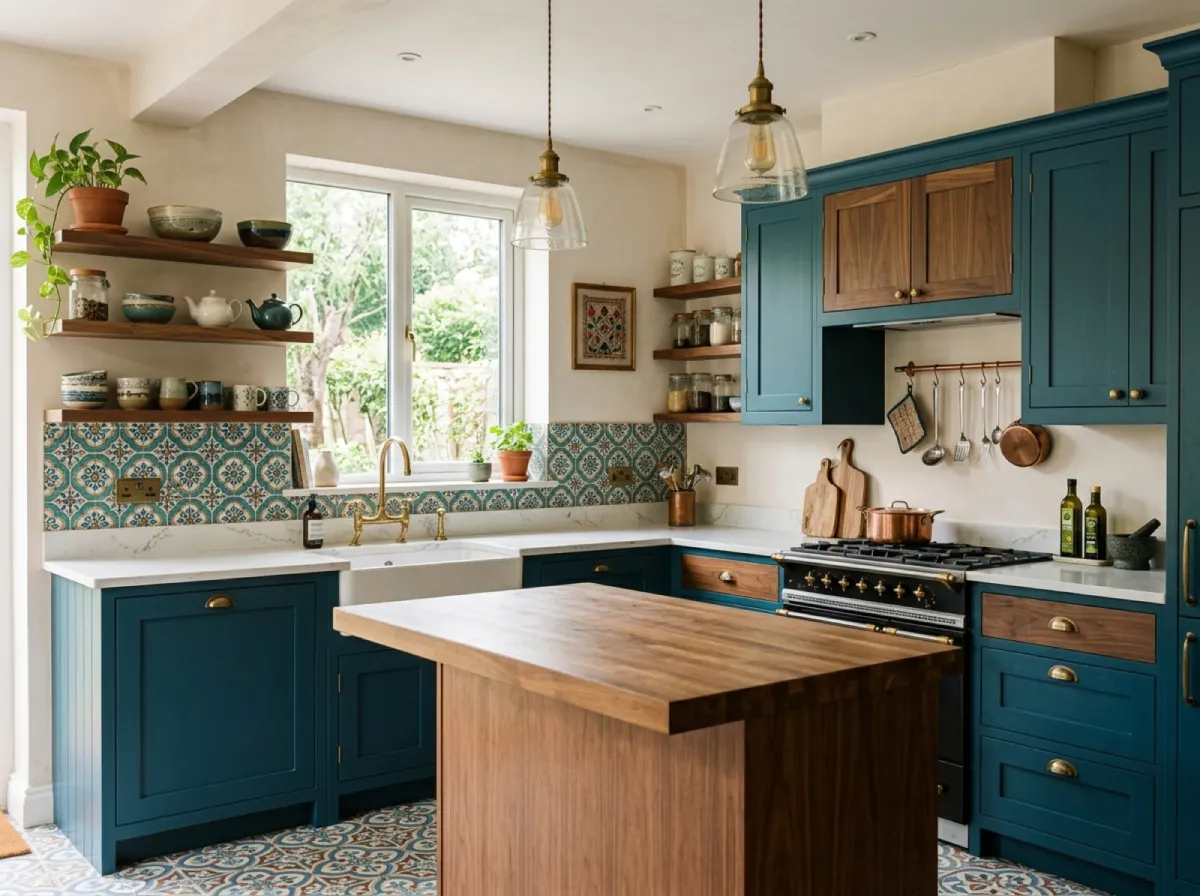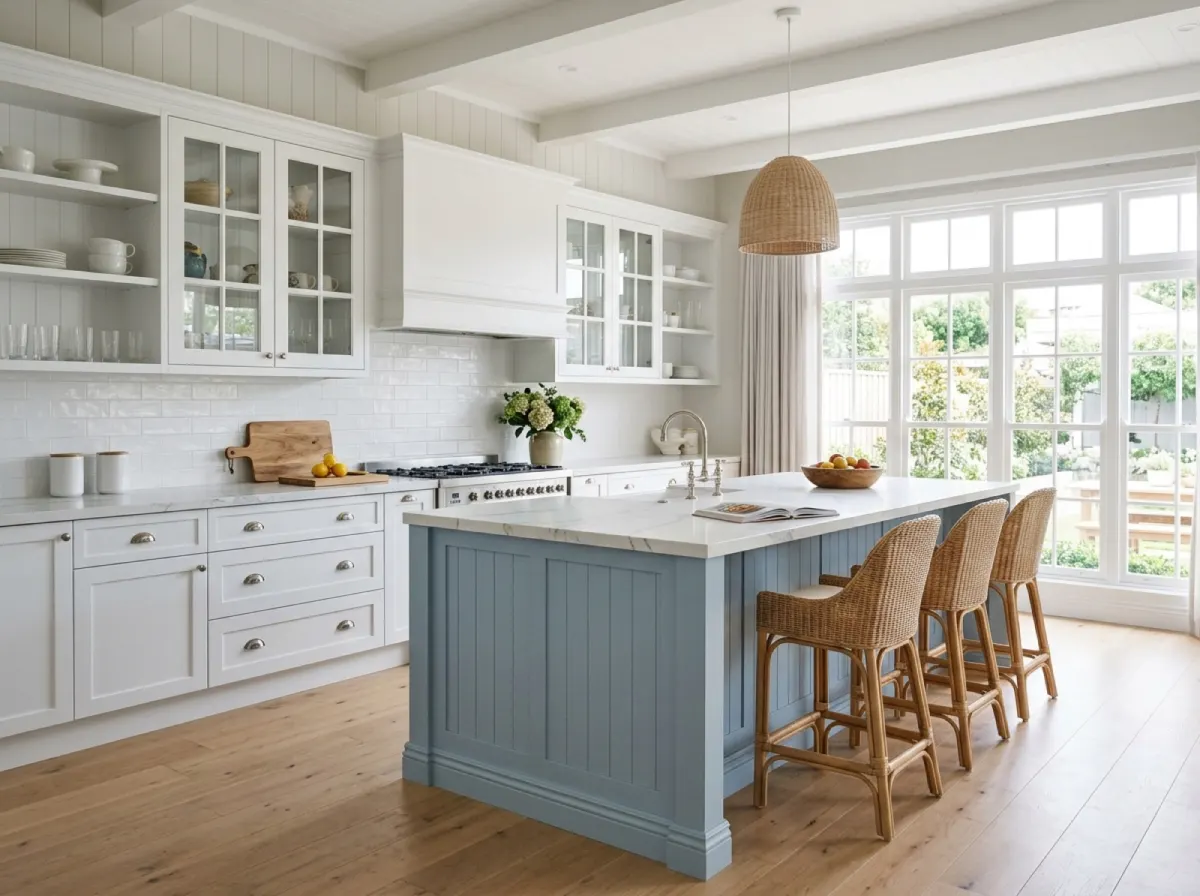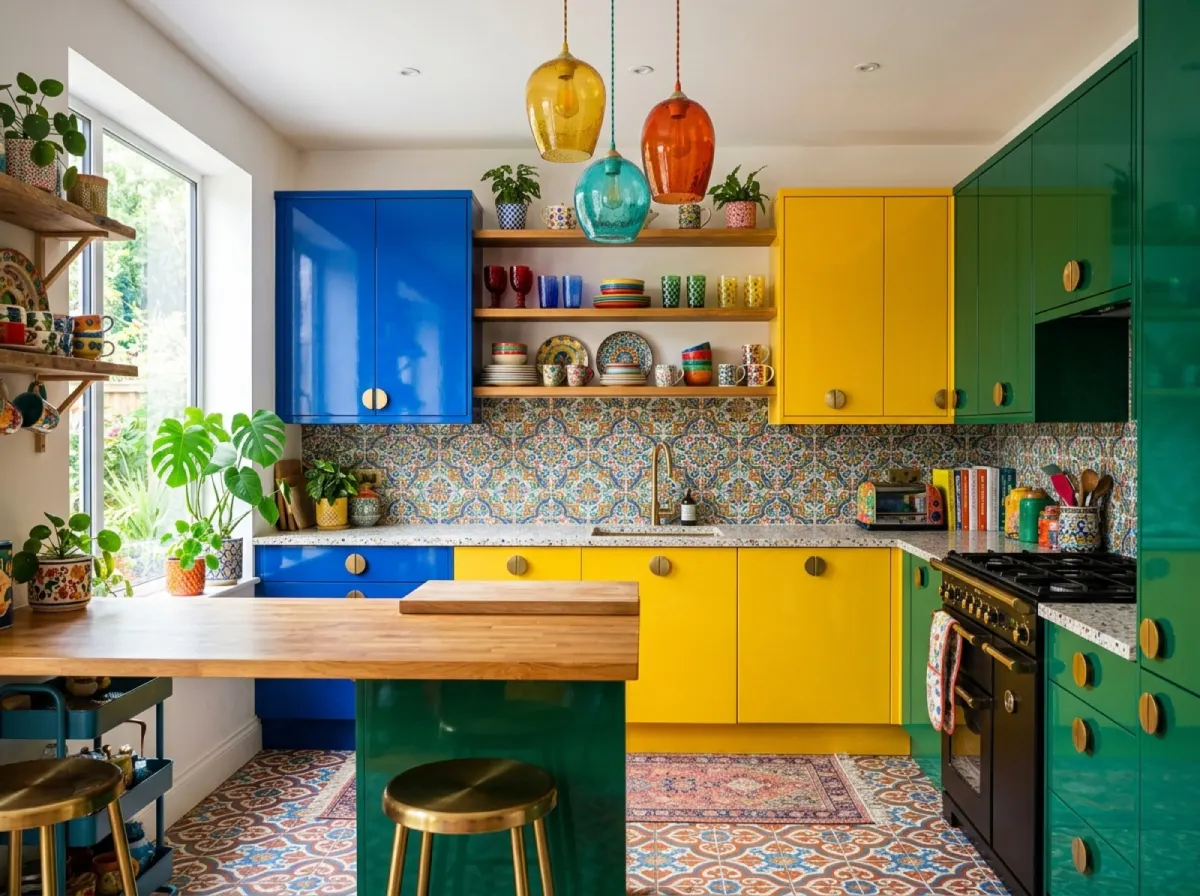
Maximalism and dopamine decor mean bold colour and strong personality. We show how to tame saturated hues and patterns in bespoke furniture without any chaos.
Maximalism and dopamine decor make an interior that is not afraid of colour, pattern and a personal story: saturated hues, lacquered fronts and brass arranged by a clear rule of composition rather than by chance.
What maximalism and dopamine decor are
Maximalism is a conscious decision to let the interior speak about the person who lives in it. Instead of emptiness and a single neutral palette, we get saturated colours, mixed textures, open shelves full of colourful objects and fronts that draw the eye. Dopamine decor is a newer take on the same idea: we choose for the home whatever lifts the mood, pleases the eye and triggers positive emotions every time we come back home.
It is worth distinguishing two variants. Classic maximalism is more decorative and layered: rich patterns, deep colours, a mix of eras and cultures, a deliberate filling of space. Dopamine decor is lighter and more personal: the starting point is emotion and joy rather than a set of stylistic rules. In practice these two approaches often overlap and together create an interior that is bold yet considered.
The philosophy of this style is simple. A home does not have to be a neutral background that offends no one's taste. It can be a stage for the things we love: colours, books, ceramics, fabrics, souvenirs from travels. The key, however, is composition. Maximalism without a rule turns into chaos, and chaos is tiring. That is why well-managed maximalism always has a hidden order: repeating colours, a balance of colour blocks and a clear hierarchy of what is meant to be the accent and what is the background.
Key features of the maximalist style
We recognise maximalism by several features that together build its energy. Each of them can be translated into bespoke furniture, because it is furniture that gives an interior structure and colour over large surfaces.
- Saturated colours. Emerald, cobalt, deep pink, sunny yellow and terracotta instead of white and grey. Colour is the hero here, not an add-on.
- Colour-blocking on fronts. Combining two or three strong colours on cabinet fronts builds rhythm and character without the need for extra decoration.
- Lacquered surfaces. High-gloss or satin fronts reflect light, deepen colour and add radiance to the interior.
- Patterns and textures. Strongly grained veneers, fluted fronts, patterned fabrics, textured fronts - combined consciously and in moderation.
- Brass and warm metal. Handles, trims, legs and frames in brass or gold tie the colourful palette together and add a note of luxury.
- Open display shelves. Glass cabinets and open shelving where colourful objects become part of the composition rather than clutter.
These features do not work alone. The heart of good maximalism is the rule of composition: colour repeats in several places, colour blocks are balanced, and the room has a clear division between accent and quieter background. Thanks to this, a saturated interior stays legible and does not tire the eye.
The second feature is personal character. Maximalism does not copy ready-made schemes - it tells a story about the owner. That is why bespoke furniture fits here exceptionally well: it lets us choose exactly the colours, textures and proportions that resonate with a specific person and a specific home.
Materials and colours
The basis of maximalist bespoke furniture is board and lacquered MDF fronts, which give full freedom of colour. Matte, satin or gloss lacquer lets us achieve exactly the shade of emerald, cobalt or pink we need, in a repeatable and durable way. Lacquered fronts are both striking and practical: they are easy to clean, and a well-chosen coating resists daily use.
Wood and veneer bring warmth and natural texture to the palette. The strong grain of walnut, oak or exotic species contrasts beautifully with smooth, colourful lacquer. Such a contrast - matte wood next to glossy colour - is one of the most pleasing devices in maximalism, because it combines the energy of colour with the calm of nature.
Stone and metal complete the composition. Worktops in natural stone or quartz sinter with deep, veined patterns become an accent in their own right. Brass, gold and warm metals in handles, trims and frames tie the colourful palette together and give it a note of luxury. Textures - fluting, fabrics, tinted glass, mirrors - are added in layers, but always in moderation, so each of them has a reason to be there.
The colour palette in maximalism is saturated but not random. The rule of one dominant colour, one or two supporting colours and a neutral background that lets the eye rest works well. Durability has a practical meaning here: intense colours live with us for years, so we choose shades that will not grow tiresome after one season, and coatings that keep the depth of colour despite daily use.
Who the maximalist style is for
Maximalism and dopamine decor are for people who know what they like and do not want to hide their personality behind neutral grey. This is a style for those who collect, travel, surround themselves with books and objects with a history, and treat the home as an extension of their own character. If you care about an interior that lifts the mood and tells a story about you, this direction will be a natural choice for the home.
This style also works very well in commercial spaces. Cafes, boutiques, offices, clubs and creative studios benefit from bold colour, because it sticks in the memory and builds brand recognition. A maximalist interior for business can become part of a company's identity - a customer remembers the place where they felt an emotion, not yet another neutral room.
Maximalism is not, however, for people who cope poorly with stimuli and need a maximally calm interior. In that case a moderate accent of colour on a neutral background will be better. The good news is that maximalism can be dosed: you can start with one bold built-in in the living room or a colourful kitchen and keep the rest of the home quieter.
How to introduce the maximalist style in bespoke furniture
Bespoke furniture is crucial in maximalism, because it lets you control colour over large surfaces. In the kitchen, the natural showcase is the fronts: colour-blocking of two saturated hues, a lacquered island in cobalt or an emerald floor-to-ceiling unit with brass handles. A worktop of veined stone and open shelves for colourful ceramics complete the whole. Many such projects can be seen in our portfolio.
Wardrobes and closets are a space where maximalism works more subtly but just as strongly. Lacquered fronts in deep colour, cabinets with tinted glass, lit shelves for bags and shoes turn a wardrobe into a small gallery. Drawer interiors and organisers can be chosen in a contrasting shade, so that even the everyday opening of the wardrobe becomes a pleasure.
In the living room and bedroom, bespoke furniture lets you build a coherent composition: a TV unit combining wood and colour, a bookcase with shelves in several shades, a headboard upholstered in patterned fabric. Here the rule of repetition is especially important - it is worth repeating the headboard colour in a detail of the built-in or in the framing of the shelves, so the interior holds together.
Built-in lighting in maximalism is not an add-on but a tool. Lighting shelves, cabinets and niches brings out colour and texture, builds depth and lets you direct the eye to what is meant to be the accent. Warm light deepens saturated hues and makes lacquered fronts reflect the glow beautifully, and in the evening the interior gains a completely new character.
The maximalist style in different rooms
Maximalism can be introduced in any room; you only need to match its intensity to the function. It works differently in the kitchen, where colour can be daring, and differently in the bedroom, where the energy of colour should harmonise with rest.
Kitchen
The kitchen is the best stage for dopamine decor. Colour-blocking on the fronts, a lacquered island in a saturated colour, brass handles and a worktop of expressive stone create an interior full of energy. Open shelves for colourful tableware and a lit cabinet turn a functional space into the heart of the home. It is important that one colour dominates and the others support it.
Living room
In the living room, maximalism shows the full range of its possibilities. A built-in combining wood with colour, a bookcase with shelves in several shades, colourful upholstery and layers of patterned fabrics build an interior you want to look at. The rule of repeating colours especially helps here: the same shade returns in a detail of the built-in, a cushion and the framing of the shelves, so richness does not turn into mess.
Bedroom and wardrobe
In the bedroom we dose the energy of colour consciously. An upholstered headboard in deep colour, a contrasting built-in and lit shelves give character, while a quieter background of walls allows rest. A bespoke wardrobe becomes a small gallery: lacquered fronts, cabinets with tinted glass and lighting display clothes and accessories like a collection.
Bathroom and entrance zone
The bathroom and hallway are great places for a bold accent on a smaller scale. A lacquered vanity unit in a saturated colour, brass details and colourful tiles give character without overwhelming. An entrance zone with a colourful built-in and a mirror in a brass frame announces the style of the whole home from the threshold.
Well-designed maximalism gains value over time. Consciously chosen saturated colours, durable lacquers and certified fittings ensure the interior does not grow boring or wear out after one season, but matures together with its residents. It is a style that best withstands the passage of time precisely because it is personal from the start.
Maximalism always allows a personal accent. One favourite colour, a collection on open shelves, an unusual front - these are the details that make an interior unique. The task of bespoke furniture is to give them a coherent frame, so the personal accent rings out instead of getting lost in excess.
The most common mistakes
The most common trap of maximalism is confusing it with chaos. An accumulation of colours and objects without a rule of composition gives an impression of mess rather than richness. The cure is hidden order: a dominant colour, supporting colours, a neutral background and the repetition of hues in several points of the room. Maximalism is a conscious choice, not a lack of choice.
The second mistake is leaving no room for the eye to rest. Even the most colourful interior needs quieter zones - a wall, a worktop, a floor - that give a counterpoint to the accents. Without them, saturated hues start to compete and the whole tires instead of pleasing.
The third trap is mixing too many textures and patterns at once. Gloss, fluting, patterned fabric and tinted glass in one place, without hierarchy, blur one another. It is better to choose one texture as the leading one and treat the rest as gentle support.
The fourth mistake is chasing a passing fashion. A colour that is on top today may tire in a year. That is why for large surfaces - fronts, built-ins - it is worth choosing colours we truly like, and leaving the trendiest accents to elements that are easy to swap: accessories, textiles, small objects on shelves.
How we do it at Grandis
We have been designing and producing bespoke furniture for over 15 years, in our own facility of 3 000 m². We have more than 300 completed projects behind us, including boldly coloured interiors where production precision determines the effect. We begin each project with a laser measurement, and visualisation and 3D design are included in the price, so saturated hues and colour-blocking can be seen even before production.
We work with European-class materials and certified fittings, which, with lacquered fronts and brass details, has a real impact on durability and depth of colour. Installation is carried out by our in-house team, not by subcontractors, so quality is repeatable. A standard project takes 2-4 weeks, and the price is fixed, with no annexes.
Bold colour demands precision. The stronger the hue and the gloss of a front, the more every joint and edge shows - which is why we make maximalism with the same accuracy as the most minimalist built-ins.
Frequently asked questions
Will maximalism grow tiresome quickly
It does not have to, if we choose the colours for large surfaces consciously rather than following a passing fashion. It is worth leaving the trendiest accents to elements that are easy to swap, such as accessories and textiles, so the interior can be refreshed without rebuilding the furniture.
Do saturated colours suit a small flat
Yes, you only need to dose them wisely. In a small space, one strong accent - a colourful built-in or front - works well on a quieter background, and built-in lighting additionally deepens the colour and visually orders the interior.
How to avoid the impression of chaos
The key is the rule of composition: one dominant colour, one or two supporting colours and a neutral background. The hues should repeat in several points of the room, and textures are added in layers in moderation, keeping a clear hierarchy of accent and background.
Are lacquered fronts practical
Yes. A well-chosen lacquer coating resists daily use and is easy to clean, while giving depth of colour and a beautiful reflection of light. We use European-class materials, which translates into durability of the hue.
Does maximalism work in a commercial space
Yes, and it often works exceptionally well there. Bold colour builds brand recognition and sticks in the memory, which is why it succeeds in cafes, boutiques and creative offices, where the interior is meant to be part of the company's identity.