The key outdoor furniture trends for 2026: organic shapes, earthy colors, japandi and boho styles. See how to arrange your terrace, balcony and garden.
The 2026 outdoor season has one common denominator: calm. Fewer loud contrasts, fewer angular shapes, more natural materials and comfort — today the garden and terrace are treated as just another room in the house.
Outdoor space is no longer a seasonal afterthought. We increasingly want to spend time there from the morning coffee until dinner at dusk, which is why we now plan it with the same care as a living room. In this guide we have gathered the most important trends of the coming season and show how to apply them at home — whether you have a large terrace or a narrow city balcony.
Outdoor living — the garden as a second living room
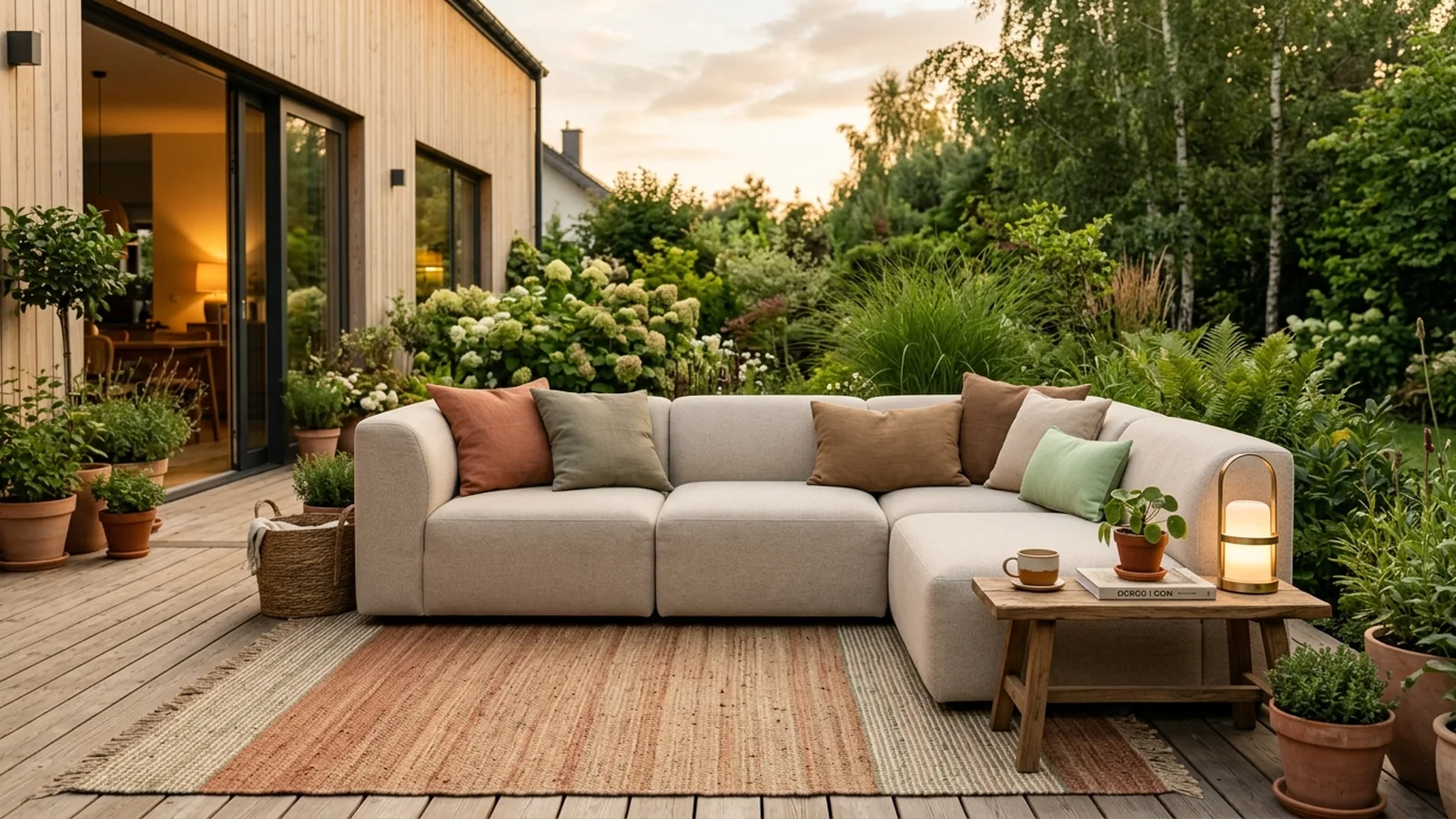
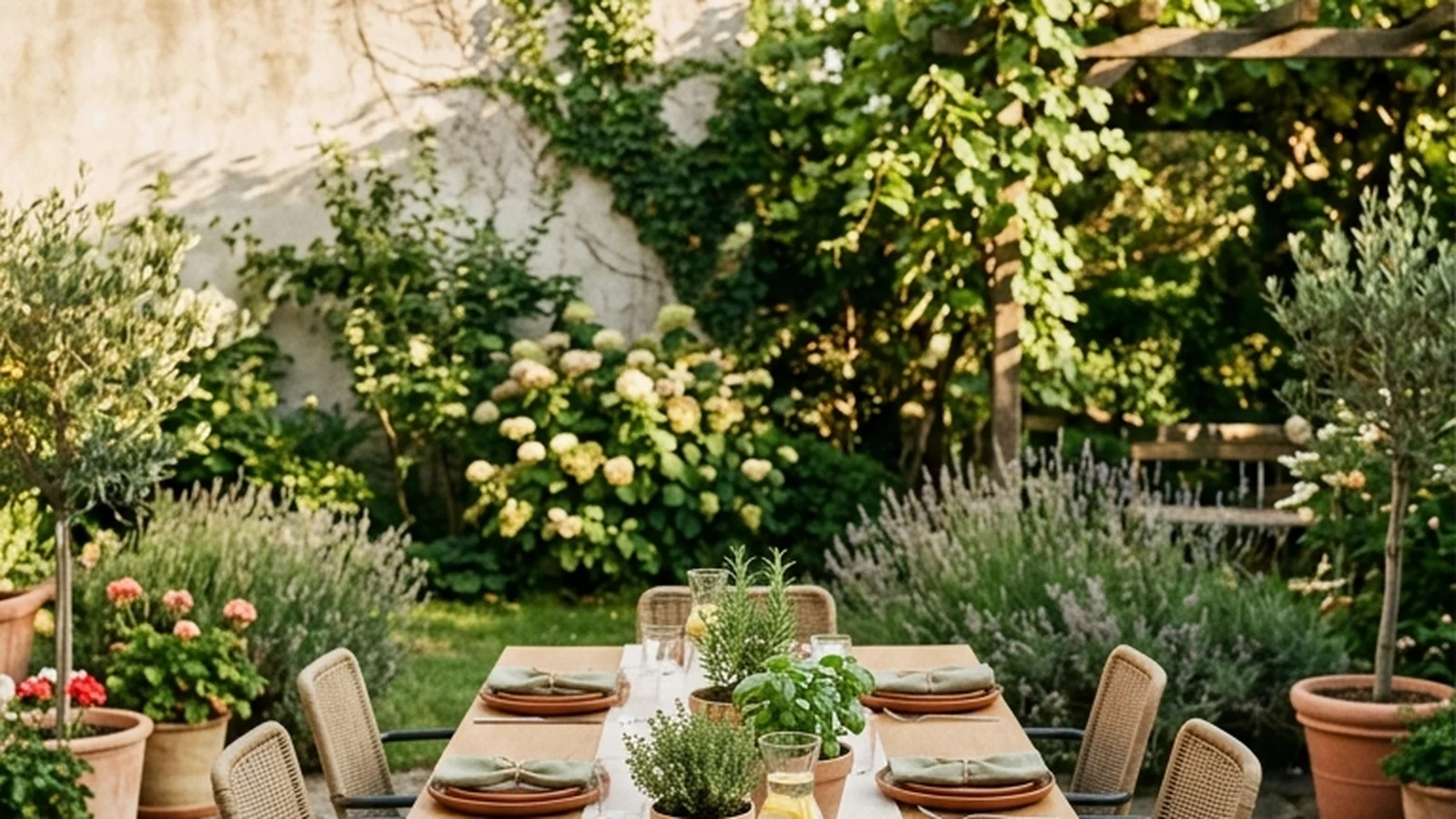
The strongest trend of the season is outdoor living: designing a terrace and garden exactly the way interiors are arranged. Instead of a single table-and-chairs set, full-fledged zones appear — a lounge area with a comfortable corner sofa, a dining area with a large table, and sometimes a cooking zone by the grill or a relaxation corner with daybeds.
Furniture is selected to form a coherent whole rather than a random collection from different sources. The boundaries between zones do not have to be literal — they can be marked by a change in level, an outdoor rug, planters or simply a different type of seating. The point is for the space to clearly signal where you eat, where you rest and where you talk. This turns the outdoor area into a natural extension of the living room rather than a separate, hastily furnished corner.
A terrace arranged at random, with a set bought ad hoc, quickly stops being enough. If it is to act as a second living room, it is worth planning from the functional layout through materials to lighting. This approach is best seen in the projects in our portfolio, where individual zones are coherent in proportion and material.
Outdoor living also changes how we think about durability. Since the space is meant to be used intensively for many months a year, the furniture has to withstand daily load, not just look good in a catalog photo. So when you plan a terrace like a living room, it pays to think from the start about weather-resistant materials, comfortable seat depths and a layout that does not force you to constantly rearrange things. A well-designed zone then works without friction — you sit down, eat, rest and head back inside without worrying about every detail.
Organic, soft shapes
Angular silhouettes are giving way to rounded, gentle lines. Curved backrests, oval tables on a central leg, armchairs with streamlined shapes — all of this creates the impression that the furniture has always been there, growing into its surroundings rather than cutting through them.
Soft form is also practical. Organic shapes are safer in daily use, more comfortable in contact with the body and blend better with plants, whose lines are equally irregular. Round and oval tables on a single central leg gain additional functionality, as they offer more legroom than classic four-legged models — more people can sit comfortably at the same tabletop.
This direction shows clearly why dimensions and proportions matter. A gentle form looks natural only when it is matched to the scale of the space; an oversized oval table on a small terrace loses all its charm and blocks circulation.
Earth colors
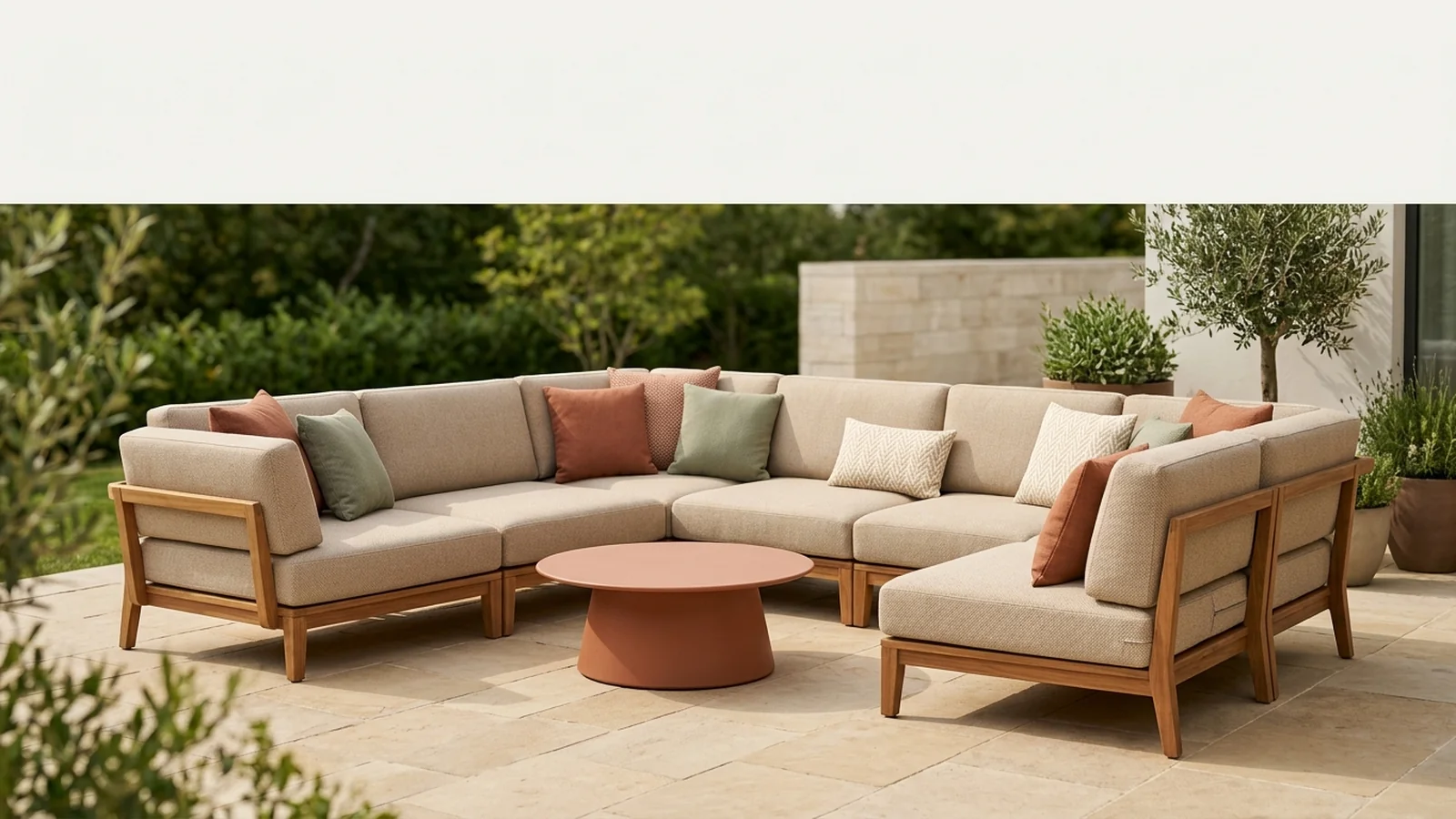
The 2026 palette draws shades straight from nature: warm beige, sand, terracotta, clay, sage green and soft browns. Designers abandon sharp contrasts in favor of monochromatic, muted combinations that soothe and blend effortlessly with garden greenery.
Such colors have another advantage — they are universal and timeless. They do not tire after a single season and suit most architectural styles, from a modern volume with large glazing to a traditional house. This means earth-toned furniture stays current for years, which matters if you treat it as a longer-term investment rather than a purchase for the current season.
A muted base need not mean monotony. A seasonal accent — a deeper green, warm rust, a subtle graphite — is easiest to introduce through cushions, throws and small accessories that you can swap next year while keeping a neutral, well-matched foundation.
Styles: japandi, boho-luxe and soft minimalism
Three directions are on top this year, united by restraint and a focus on comfort.
Japandi combines Japanese simplicity with Scandinavian warmth. It means natural materials, light wood, clean lines and a deliberate rejection of excess. A japandi space is calm and orderly, and every element has its justification.
Boho-luxe is coziness with a touch of luxury: plenty of textiles, layers of cushions, woven textures and relaxed, effortless elegance. This style works well where a moody, welcoming character is the goal.
Soft minimalism does not mean emptiness but a thoughtful, sparing arrangement in which every piece has its place. It is ideal for smaller terraces and balconies, where every centimeter counts and an excess of trinkets quickly overwhelms the space. The common denominator of all three styles is a drive for coherence, which is easiest to achieve by designing furniture for a specific space rather than assembling it from ready-made sets.
Materials of the season: tech-rattan, aluminum and wood
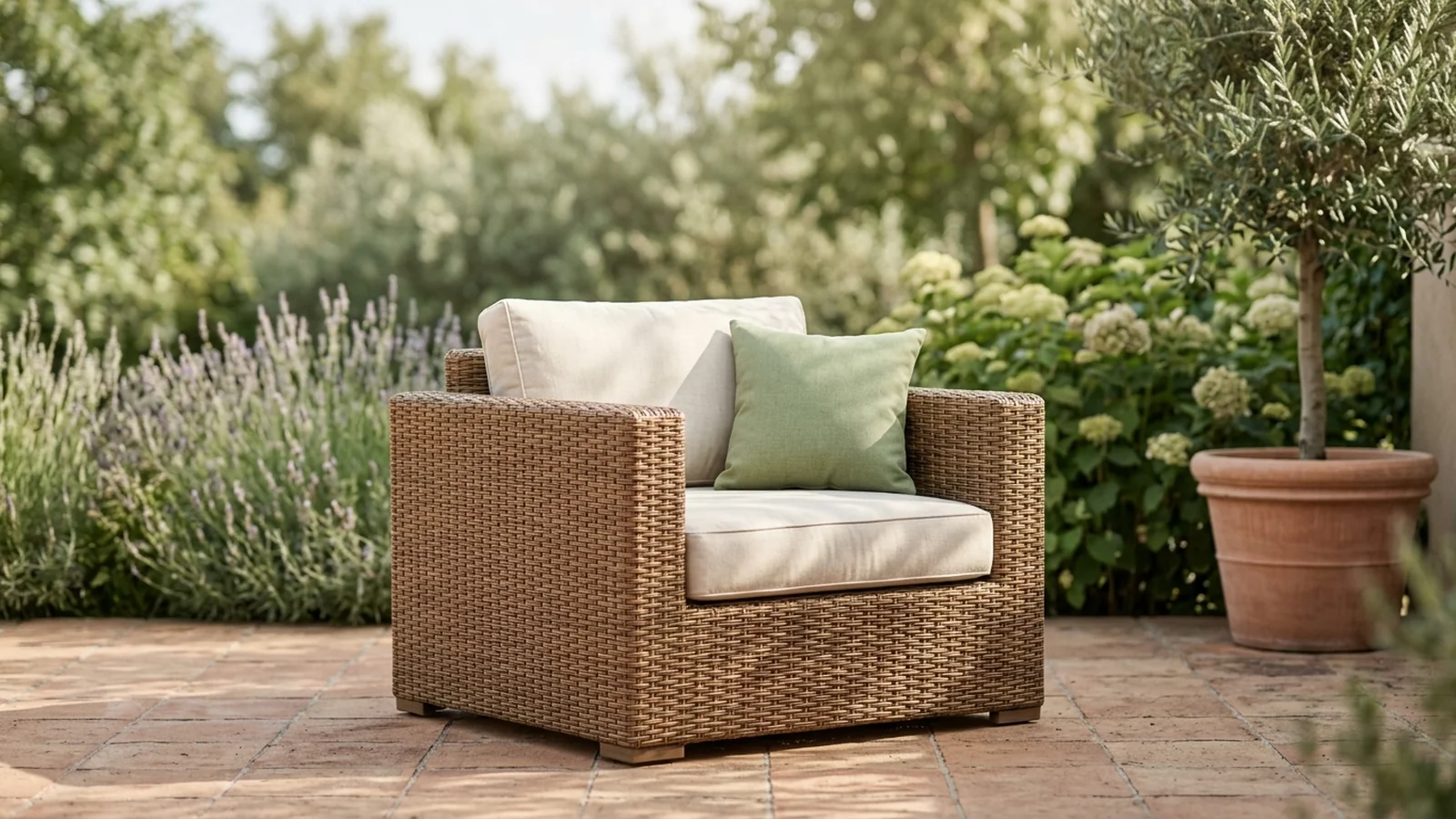
Tech-rattan remains the king — a synthetic fiber woven around a metal frame. It is light, resistant to rain, sun and temperature swings, easy to maintain and pleasant to look at. It works perfectly in lounge sets and corner sofas, where comfort and the soft texture of the weave matter most.
Aluminum is gaining popularity as a virtually maintenance-free material. It does not rust, is very light, which makes furniture easy to move, and powder coatings withstand daily use well. Aluminum suits modern, minimalist arrangements and often combines with other materials in a single piece.
Wood is also returning, especially in japandi and natural arrangements, because it brings warmth and a character that cannot be faked. It requires a little more attention but rewards you with a timeless look. In 2026, renewable and recyclable materials play an ever-greater role, responding to growing environmental awareness. In practice, thoughtful material combinations work best — for example a light frame paired with a durable tabletop, or a weave complemented by a corrosion-resistant frame.
Sun- and rain-resistant fabrics
High-quality outdoor fabrics, resistant to UV radiation and moisture, are becoming a standard rather than a luxury add-on. They largely determine whether a piece looks like new after the season or loses its color and resilience.
Cushions in earthy shades, soft weaves and pleasant-to-touch materials are today the basis of comfortable outdoor relaxation. It is worth checking whether covers are removable and washable — this greatly simplifies keeping things clean all summer. A good-quality fabric, deliberately chosen for the side the sun comes from, keeps its original look longer, which directly translates into the durability of the whole arrangement.
How to apply the 2026 trends at home
You do not have to replace everything at once. Start with one well-designed zone — for instance a comfortable corner sofa in an earthy color — and expand the space gradually. Choose neutral, timeless furniture as the foundation, and introduce seasonal accents through cushions, throws and accessories that are easy to swap next season.
If you want furniture perfectly matched to the non-standard dimensions of a terrace or balcony, consider made-to-measure solutions. At Grandis Trade (BOBIDI TRADE sp. z o.o.) in Warsaw, we design and manufacture custom furniture in our own 3 000 m² studio. For more than 15 years we have delivered projects tailored to specific spaces — with 300+ completed projects to date, and a typical lead time of 2–4 weeks.
We start the process with a laser measurement and a 3D design included in the price, and the client receives a fixed quote with no addenda or surprises. Installation is handled by our in-house team, which ensures consistent quality. You will find home solutions in the for home section, and arrangements for commercial venues — restaurants, hotels, hospitality spaces — in the for business section.
Frequently asked questions
Which outdoor furniture colors will be on trend in 2026?
Earth colors dominate: warm beige, sand, terracotta, clay, sage green and soft browns. These are muted, monochromatic combinations that soothe and blend easily with garden greenery. Their advantage is versatility — they do not tire after a single season and suit most architectural styles.
Which material should I choose for outdoor furniture in 2026?
Tech-rattan is the most frequent choice — light, weather-resistant and comfortable in lounge zones. Aluminum works where you want minimal upkeep and a modern look, while wood brings natural warmth, especially in the japandi style. In practice, thoughtful material combinations matched to how the furniture is used work best.
What is outdoor living?
It is an approach in which the terrace and garden are treated as a full-fledged living space rather than an addition to the house. The area is divided into zones — lounge, dining and relaxation — with furniture selected to form a coherent whole. The result is a natural extension of the living room outdoors.
Is japandi furniture suitable for a small balcony?
Yes. Japandi and soft minimalism are based on restraint and a sparing form, so they work well in limited spaces. Slim, light furniture with clean lines visually enlarges the area, and the absence of excess accessories means even a 2–4 m² balcony looks light and tidy.
Is it worth ordering custom outdoor furniture instead of ready-made?
A custom order makes sense for non-standard spaces — narrow balconies, terraces with curves or columns — and when you care about coherence across all zones and a longer use horizon. Furniture designed from measurement uses every centimeter and eliminates the compromises typical of ready-made sets. You can check this in our short quiz.
How long does custom furniture production take at Grandis Trade?
A typical project takes 2–4 weeks. We start with a laser measurement and a 3D design included in the price, and the client receives a fixed quote with no addenda. Furniture is made in our own 3 000 m² production studio in Warsaw, and installation is handled by our in-house team.
Want to find out which layout and materials will work in your space? Fill in the short quiz and we will prepare a proposal tailored to your terrace, balcony or garden.