How to turn a small balcony into a comfortable lounge zone? See furniture, colours and tricks for making the most of every single centimetre of space.
A small balcony is not a limitation but a design challenge — and one you can win. Even on 2–4 m² you can create a cosy zone where you will happily drink your morning coffee or unwind in the evening. The secret lies not in the square footage but in the right choice of furniture, a conscious colour palette and a few proven rules. Here is how to turn a narrow balcony into a fully functional extra room, step by step.
Start with function: what is your balcony really for
Before you choose anything, answer one question: what do you expect from this space. A balcony for morning coffee and reading looks completely different from a spot for dinner for two or a corner for working in the fresh air. On 2–4 m² you cannot fit everything at once, so it pays to name one main function and subordinate the whole arrangement to it.
This is the first rule of soft minimalism, which in the 2026 season does not mean emptiness but smart use of space. Every piece of furniture has a specific job here rather than appearing by chance. Once you know the priority — relaxation, dining or work — it becomes easier to reject what only takes up centimetres and keep what genuinely improves comfort.
A useful exercise is to picture a typical day on the balcony. Where will you put your cup, where will you set down your book, where will you sit after work. Those answers tell you how many seats you need, how large the surface should be, and whether you need a table at all or a narrow shelf will do.
Match the furniture precisely to the dimensions
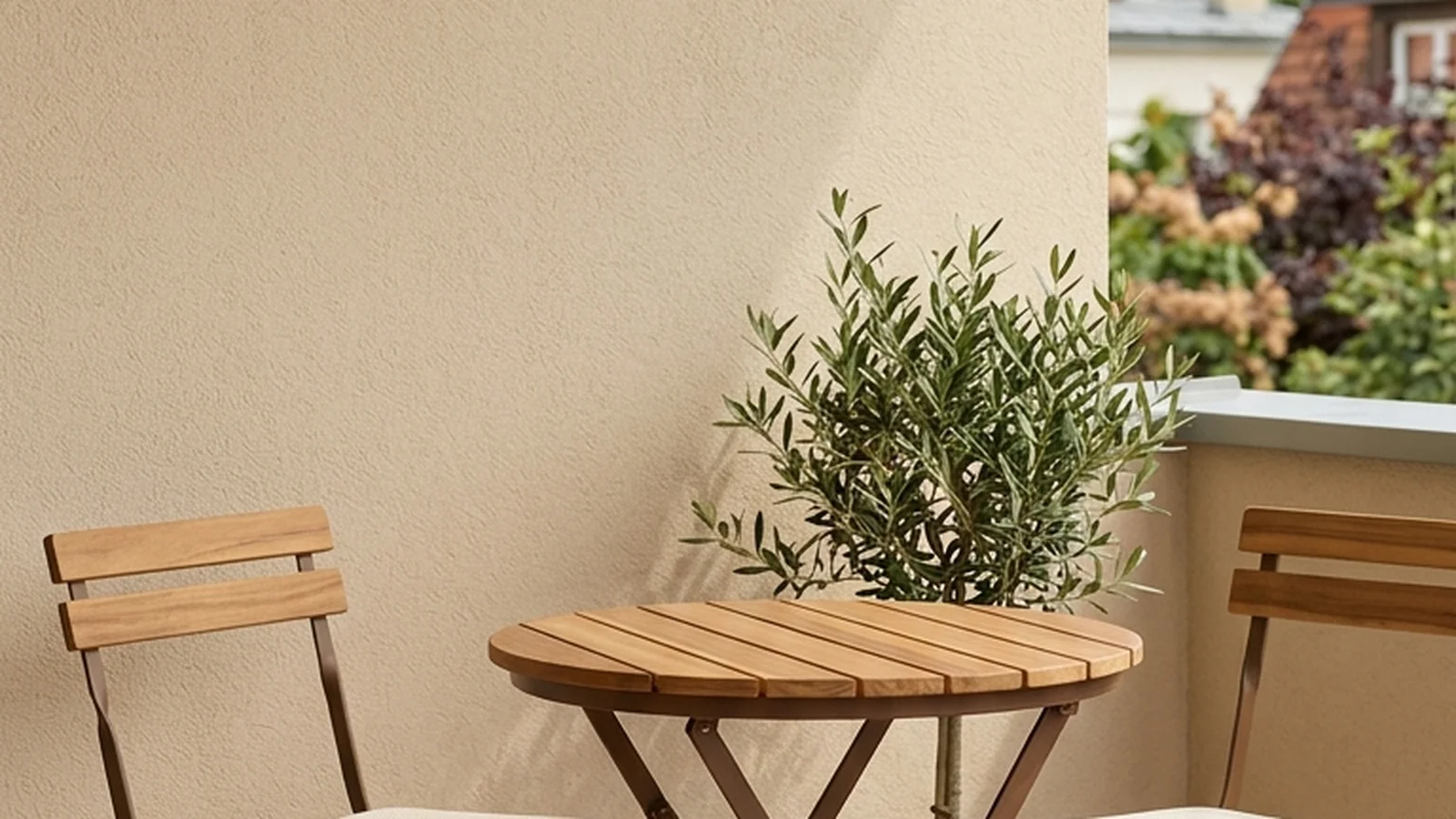
On a small balcony every centimetre counts, which is why furniture bought by guesswork rarely works. Narrow wall-side tables, folding chairs, benches with storage under the seat, slim-framed armchairs — these are the solutions that use space to the maximum instead of cluttering it.
Folding furniture works especially well where the balcony serves several roles. You unfold it when needed and put it away when you want to reclaim space. Storage furniture works in a similar way: a bench that hides cushions, a blanket or grill accessories under its seat saves the space that is always in short supply on a balcony.
Trouble begins where the balcony has an unusual shape — narrow, elongated, with a bay, a column or an angled wall. Ready-made sets then leave dead zones that cannot be sensibly used. If you want furniture that fits such a space perfectly, consider made-to-measure solutions. With custom furniture the starting point is your specific balcony rather than dimensions from a catalogue, so a seat can wrap around a corner, tuck under the windowsill or merge with the railing into one coherent form.
Use the height, not only the floor
When surface area is scarce, the only direction is up. Wall-mounted shelves, planters hung on the railing, suspended pots and climbing plants let you bring in greenery without taking up precious floor space. A vertical garden on the balcony wall is one of the most striking ways to liven up a small space — it builds atmosphere while costing almost no footprint.
The wall is also a place for practical functions. A folding worktop fixed to the wall serves as a table only when you need it and disappears once folded down. Narrow, tall shelving units use the vertical instead of the horizontal and hold more than their width suggests. The more tasks you move onto the walls and railing, the freer the floor remains.
Proportions matter too. On a small balcony a tall, openwork structure against the wall does not overwhelm the way a massive piece in the middle does. The eye travels upwards, and the space feels taller and more open.
Choose light colours and lightweight forms
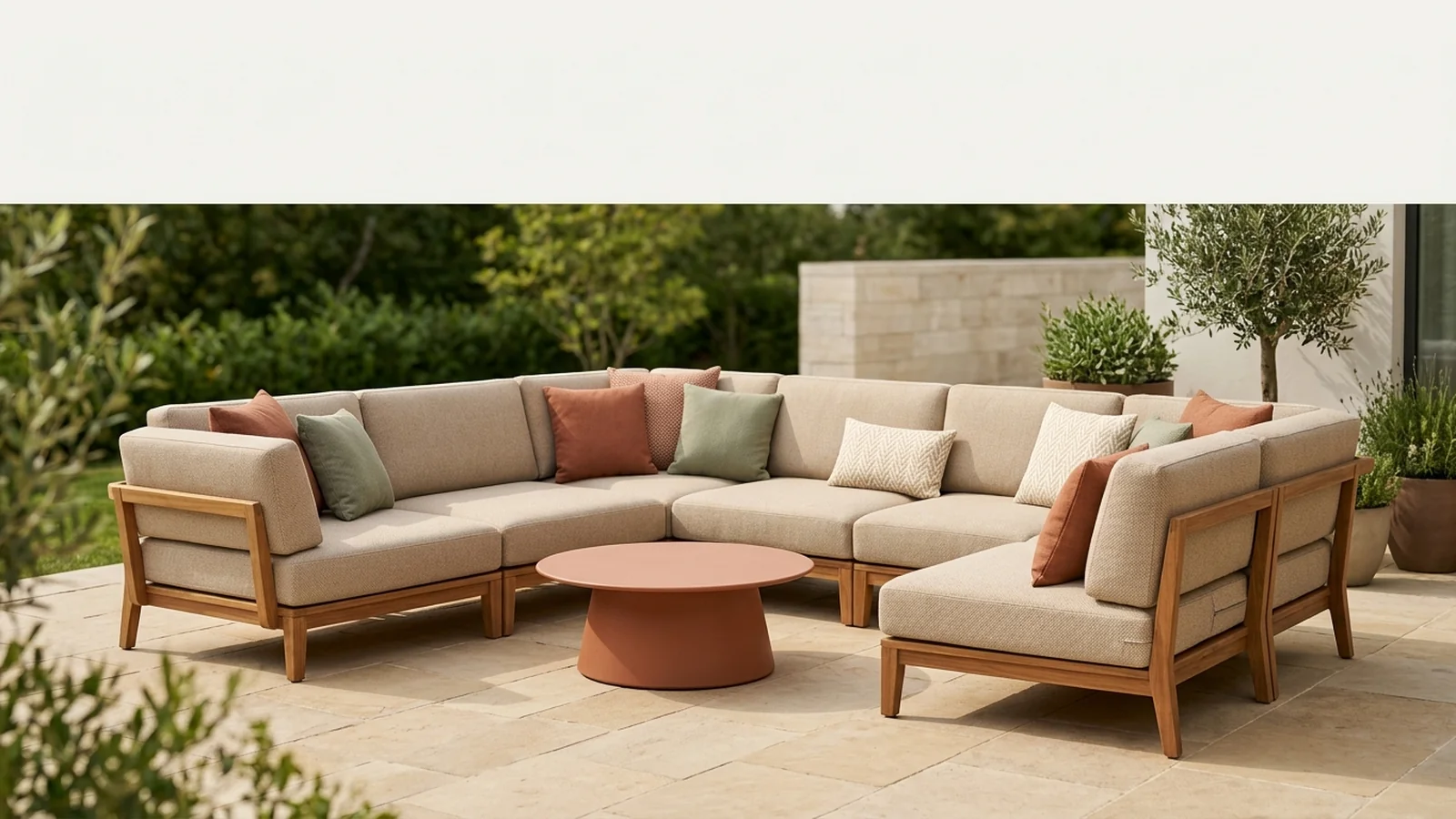
Light, earthy tones make a small space feel larger — sandy beige, sage green, soft browns and creams. This is also the palette in line with the 2026 trends, one that pairs easily with the greenery of plants and does not tire after a single summer. Dark, saturated colours have their charm, but on 2–4 m² they can close the space in and make the balcony seem smaller than it really is.
The form of the furniture matters just as much. A light, openwork structure — thin profiles, weave, slim legs — does not overwhelm the interior the way solid, bulky shapes do. A piece that light passes through visually disappears, whereas a heavy chest with closed sides immediately eats up a few centimetres of perceived space.
Colour coherence does the rest. When the floor, furniture and textiles stick to one muted range, the balcony reads as a whole rather than a collection of random elements. Avoid an excess of small objects — a few thoughtful accents work better than dozens of trinkets that break up an already modest space.
Add softness and evening atmosphere
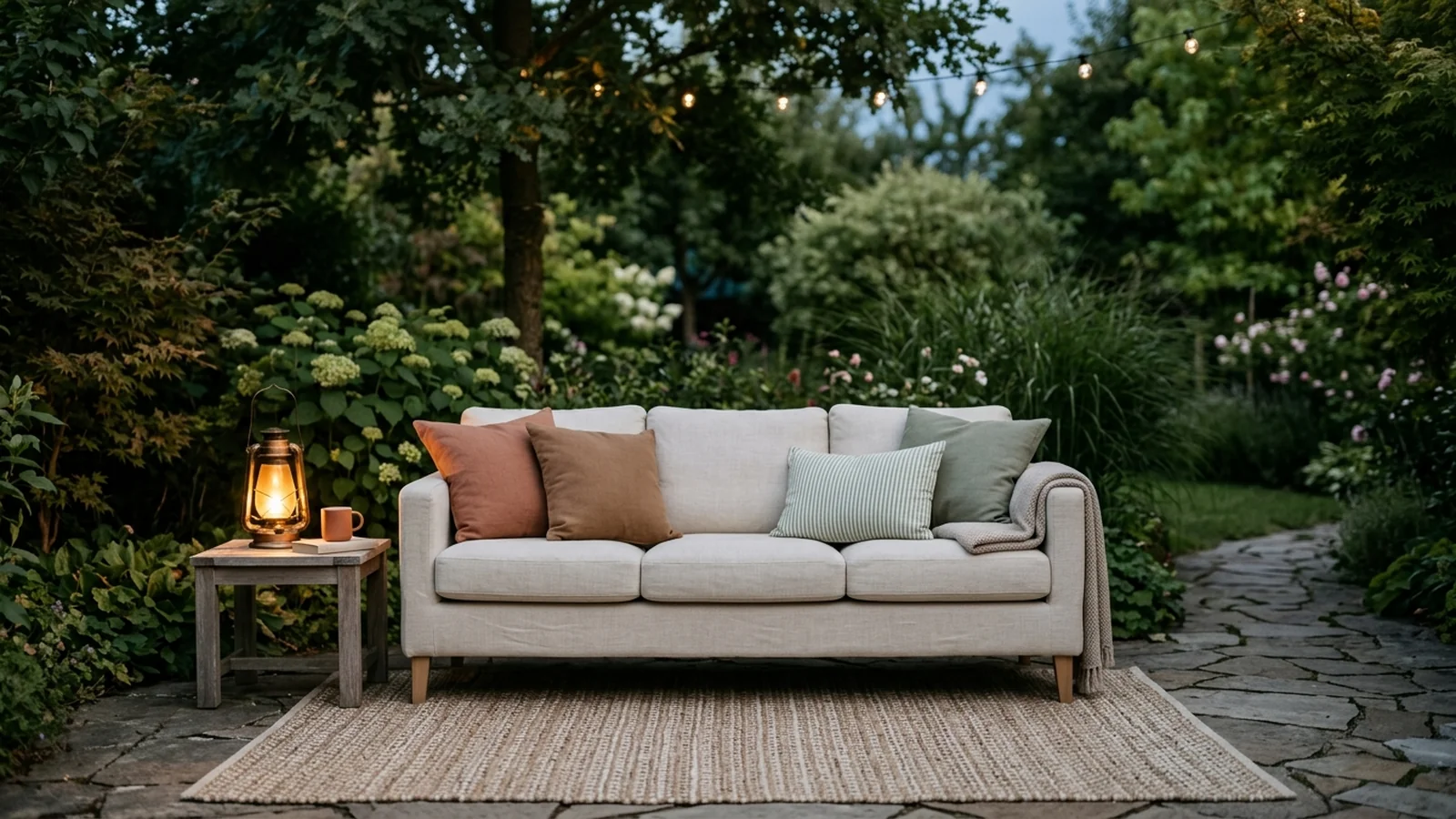
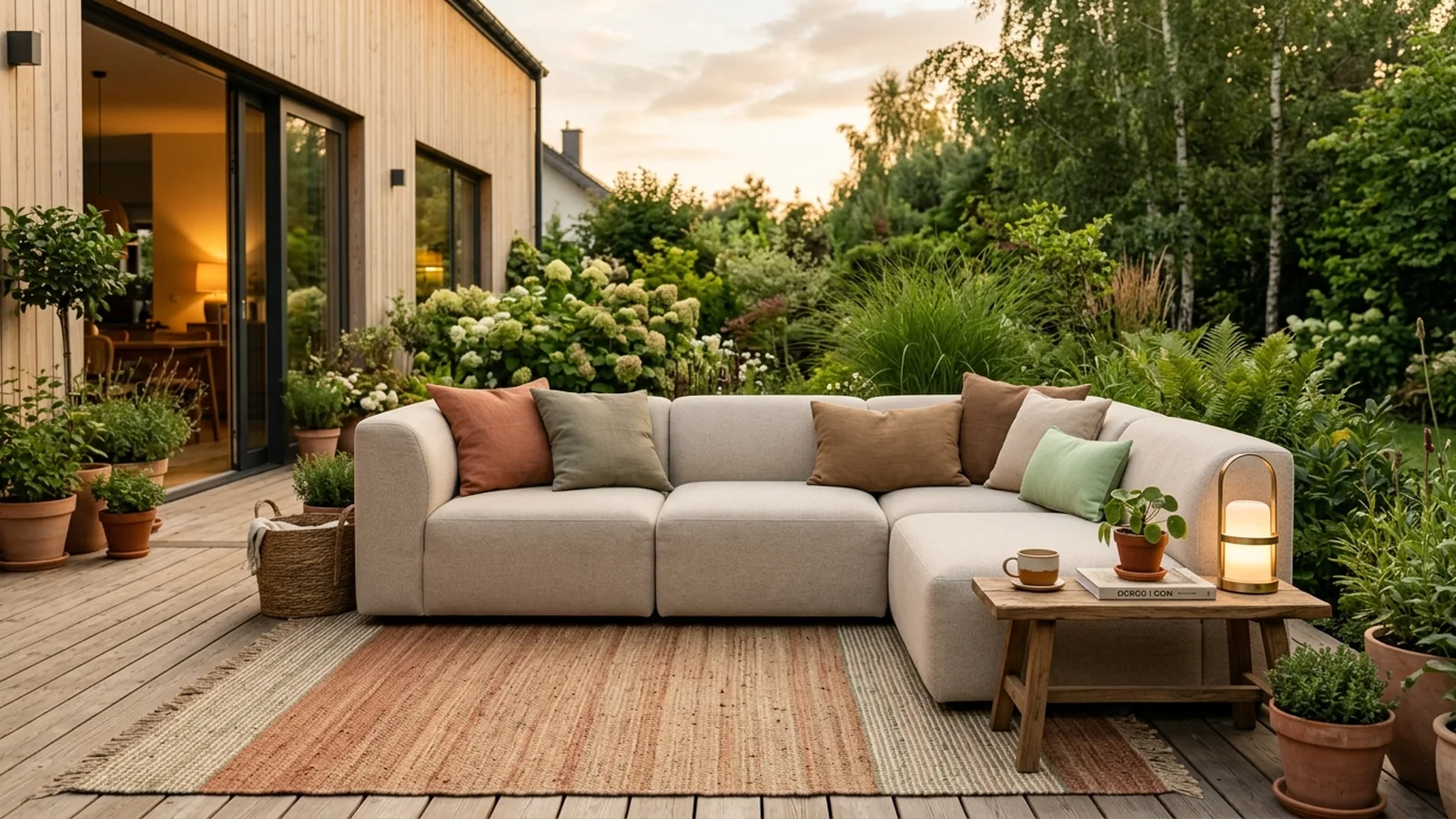
What turns a balcony from functional into cosy lies in the details. Comfortable cushions in natural shades, a light outdoor rug underfoot, a string of lights overhead or a lantern on the floor — each of these adds a layer of comfort that furniture alone cannot achieve.
The quality of the fabrics is crucial. Materials resistant to UV radiation and moisture keep their colour through the whole season instead of fading after a few weeks of sun. The same applies to fillings — a cushion that dries quickly after rain lasts longer and does not pick up odours. Removable, washable covers make it considerably easier to keep things clean all summer.
In the evening, light takes over. A warm, soft tone builds the mood that will make you want to spend every free moment on the balcony, while cold, harsh lighting ruins the effect. Several scattered points of light work better than one bright lamp — they create depth and give even 2 m² an intimate feel.
Provide shade on hot days
In full sun even a small balcony can heat up considerably and become unbearable in the middle of the day. An awning, a roller blind or a small parasol effectively protect against the sun and let you use the space at noon as well, not only morning and evening. It is an investment that genuinely extends the time you spend on the balcony in summer.
The choice of cover depends on the exposure and the direction the sun comes from. A south- or west-facing balcony heats up the most and needs more effective shading than an east-facing one. It is also worth checking whether the balcony structure allows a permanent awning mount, or whether a folding parasol on a heavy base will be the better solution.
Plan the shade exactly where you actually sit, not over an empty patch of floor. A well-placed cover protects the seat and the surface through the hottest hours, keeping the balcony usable all day long.
Coherence that begins at the design stage
A well-arranged balcony becomes a fully fledged extra room — a place to relax right outside the door. It looks best when the furniture, colours and accessories form a single whole rather than a collection of elements drawn from different sources in different proportions. On such a small surface every false tone and every spare centimetre stands out at once.
It is hard to achieve this coherence by assembling the arrangement from ready-made sets with standard dimensions. That is why, for unusual balconies, more and more people choose furniture designed for a specific space. The process begins with measurement and analysis: how the sun falls, where the shade is, how traffic moves, how many people will sit down. Only then does the furniture layout take shape, using every centimetre without compromise.
At Grandis Trade we design and produce outdoor furniture to measure in our own studio in Warsaw. We have been working for over 15 years, we run a production hall of 3 000 m² and we have more than 300 completed projects behind us. Every order starts with a laser measurement and a 3D design included in the price, installation is carried out by our in-house team, and the price is fixed from start to finish. Slim balcony sets, folding chairs and compact tables, as well as solutions tailored to your balcony — all of it is made by us. From measurement to installation usually takes 2–4 weeks. See our projects to see what a precise fit looks like in practice, or take a short quiz to receive an initial proposal for your balcony.
Frequently asked questions
Can you create a comfortable lounge zone on a 2 m² balcony?
Yes. The key is one main function and furniture matched to the dimensions: a narrow wall-side or folding table, one or two slim seats, and use of the wall and railing for greenery and storage. On such a small surface, made-to-measure solutions that wrap around a corner and leave no dead zones work best.
What colours should I choose for a small balcony?
Light, earthy shades are best — sandy beige, sage green, soft browns and creams. They make the space feel larger, pair easily with the greenery of plants and do not tire after a season. Use dark, saturated colours sparingly, as an accent, since on a small surface they can close the space in.
Folding or fixed furniture on a small balcony?
It depends on the number of functions. If the balcony serves several roles, folding furniture gives flexibility: you unfold it when needed and put it away to reclaim space. When the balcony has one fixed purpose, a made-to-measure build with storage works better, using all the available space.
How do I use the height of a balcony?
Move as many functions as possible onto the walls and railing. Shelves, narrow units, railing planters, hanging pots and climbing plants bring in greenery and storage without taking up the floor. A folding worktop fixed to the wall serves as a table only when needed and disappears once folded.
What fabrics work well on a balcony?
Outdoor fabrics resistant to UV radiation and moisture. They fade more slowly, dry faster after rain and do not pick up odours, so they keep their look through the whole season. It is worth choosing removable, washable covers, which make cleaning considerably easier in summer.
Does made-to-measure furniture make sense in such a small space?
The smaller and more unusual the balcony, the stronger the case for a custom solution. Ready-made sets leave dead zones on unusual shapes, whereas furniture designed for a specific footprint uses every centimetre — it wraps around a corner, combines a seat with storage and adapts to the railing. Check the for home offer to see the options.