The Provence style means the warmth of the French countryside, pastel fronts with gentle patina and natural finishes. See how to bring it into custom furniture.
The Provence style is the warmth of the French countryside, pastel fronts with gentle ageing and natural materials in which everyday life slows down. It is an interior that combines romance with durability.
What the Provence style is
The Provence style originates in the south of France, in the Provence region, where the sun, lavender fields and stone houses shaped the way interiors are arranged. It is an aesthetic rooted in the simplicity of country life, yet filtered through a French sense of elegance. Furniture here is neither raw nor primitive, but soft in form, painted in pastels and gently aged, as if it had served a family for generations.
At the heart of this style lies a philosophy of warmth and calm. A Provence interior does not shout, nor does it flaunt luxury or modern solutions. Instead, it builds the atmosphere of a home where you want to sit down at the table, open a window onto the garden and let the light spill across the bright surfaces. It is a style that values craftsmanship, natural finishes and objects with a history.
It is worth distinguishing several variations of this trend. The classic Provence look relies on profiled, framed fronts, ceramic knobs and glazed display cabinets. A more rustic variation reaches for rougher wood, terracotta on the floor and exposed beams. The lighter version, sometimes called French shabby chic, emphasises pastels, floral motifs and romantic details more strongly. Yet all of them share the same foundation: warmth, naturalness and gentle, rather than artificial, ageing.
Provence is also a very practical style. It grew out of homes where people cooked, stored provisions and spent time together. That is why furniture in this style has plenty of storage, open shelves for dishes and a well-thought-out function. It is not decoration detached from life, but a frame for everyday living.
Key features of the Provence style
The Provence style is recognised by several recurring elements that together create its character. Below are the most important of them.
- Framed fronts with a profile. Furniture fronts have a routed frame and a recessed panel, often with gentle edge profiling. They give the interior softness and a country character.
- Pastel, painted surfaces. Creams, faded blue, sage green and muted lavender. The colours are matte and subdued, as if slightly bleached by the sun.
- Gentle patina and ageing. Subtle wear on the edges, a warm shade of varnish, a texture that suggests the passage of time. The key is moderation: the ageing should be natural, not theatrical.
- Ceramic handles and knobs. Instead of metal rails, ceramic knobs are used, sometimes with a painted floral motif, along with simple handles in aged brass.
- Glazed cabinets. Glazed fronts of upper cabinets and dressers, sometimes with muntins, display dishes, glass and small objects.
- Plant motifs and natural textures. Lavender, small flowers, linen, wicker and terracotta. The details refer to Mediterranean nature.
These features do not all have to appear at once. In a modern interior, two or three of them are often chosen to avoid excess. For example, pastel framed fronts and ceramic knobs in themselves give a kitchen a Provence character, even without floral patterns.
A sense of proportion is also important. Provence likes space, bright walls and natural light. The more delicate the details, the calmer the background should be, so that the whole does not become heavy.
Materials and colours
The foundation of the Provence style is wood and materials that imitate its warmth. In custom furniture, MDF boards with routed, framed fronts for painting are most often used, because they best convey the characteristic profile. Carcasses are built from European-class boards with a stable structure, and worktops can be made of solid wood, composite or stone with a matte, natural surface.
The colour palette is subdued and warm. Creams and ivory shades dominate, complemented by muted lavender, sage green and faded blue. These colours are deliberately slightly tired, as if bleached by the sun, which distinguishes Provence from bright pastels. Accents can be warmer: terracotta, honey, natural linen. Pure white is used rarely, more often in a creamy shade.
Textures play a major role here. Matte varnishes on the fronts, natural wood grain on the worktops, ceramic handles and linen or cotton fabrics build an impression of tactile softness. Stone, if it appears, is matte and warm in tone rather than polished to a high gloss. Metals are muted brass or patinated alloys, without chrome or shiny steel.
Durability in this style comes from the quality of materials and finishes. Painted fronts are coated with varnishes resistant to moisture and abrasion, and certified fittings are chosen so that drawers and hinges work smoothly for years. Natural finishes age beautifully, and minor traces of use blend into the aesthetic of ageing instead of spoiling it. It is a style that gains over time rather than loses.
Who the Provence style is for
The Provence style works best for people who look for warmth, calm and a sense of rootedness in their interior. It is a choice for those who do not chase cold minimalism or technological gloss, but value natural materials, a romantic mood and the atmosphere of a home where the family gathers. It works well in detached houses, in attics and in flats with plenty of light.
It is also a style for people who value craftsmanship and an individual approach. Because it relies on painted, profiled fronts and matched details, it naturally fits custom furniture for the home. It is hard to buy it in ready-made sets without losing character, which is why clients who want a genuine Provence mood most often opt for a project tailored to the space.
Provence also finds its place in commercial spaces of a warm, intimate character: in bakeries, cafes, guesthouses or boutique wine bars. In projects for business, this style builds an impression of authenticity and tradition, which works well with a brand based on craftsmanship, locality and natural products.
How to introduce the Provence style in custom furniture
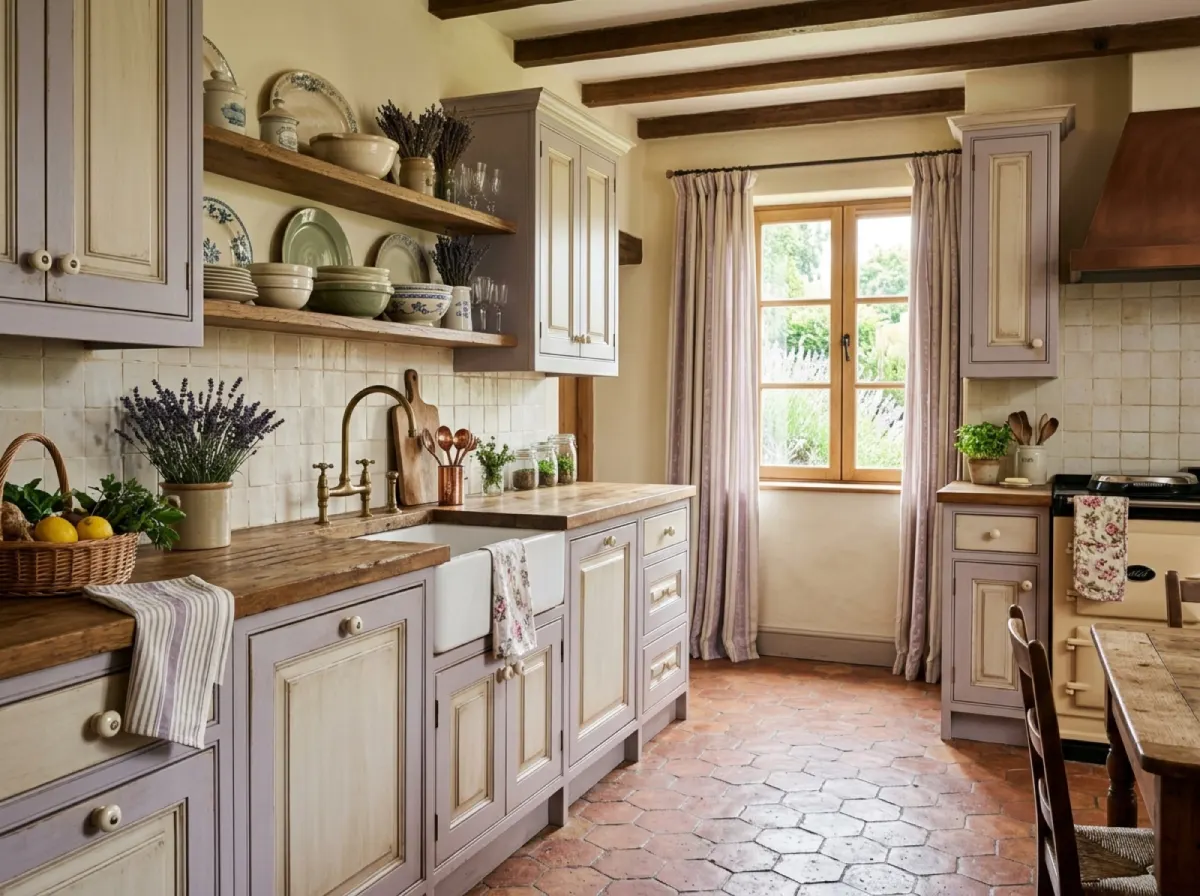
The Provence style reveals itself most fully in the kitchen. Framed fronts painted in cream or sage, ceramic knobs, glazed display cabinets on the upper units and a tall hood enclosed in the form of a chimney create the recognisable image of a French country kitchen. An island or a table with a wooden worktop becomes the heart of the room, and open shelves allow dishes and glass to be displayed.
In wardrobes and closets, Provence translates into profiled fronts, sometimes with glazing covered by a light curtain, and into warm, bright interiors with wooden rails and shelves. Instead of raw open systems, closed chests and linen cabinets with knobs are used, organising the space and maintaining the romantic mood. Examples of such projects can be seen in our portfolio.
In the living room and bedroom, the style is introduced through dressers, bookcases with glazed doors, bed frames and dressing tables with profiled details. Furniture should not be massive; rather slender, on slightly turned legs, painted in subdued pastels. Recessed built-ins painted in the colour of the wall work well, integrating with the interior instead of overwhelming it.
Built-in lighting plays an important, though discreet, role in Provence. Warm light hidden under the upper cabinets, gentle points in the display cabinets and soft shelf lighting emphasise the natural colours and textures. Cold, harsh light is avoided; everything should support the atmosphere of a calm, sunny afternoon.
The Provence style in different rooms
Provence is flexible enough to find its place in every room of the house, although in each it accentuates slightly different features.
Kitchen
The kitchen is the natural kingdom of this style. Framed fronts in creams and sage, a dresser with a display cabinet, a hood in the form of an enclosed chimney and a worktop of warm wood or matte stone build a rustic, French mood. Ceramic knobs and muted brass complete the details, and open shelves allow everyday dishes to be shown.
Living room
In the living area, Provence is introduced more sparingly to avoid excess. A dresser, a bookcase with glazing and a built-in unit around the fireplace, kept in pastels, set the tone, while the rest of the furnishings remain subdued. Natural linen on the upholstery and wicker accents connect the interior with the rest of the home.
Bedroom and wardrobe
Here the style works at its most romantic. A bed with a profiled headboard, a dressing table with a mirror, chests with ceramic knobs and a bright wardrobe with closed fronts create a calm, warm space of rest. Pastels and delicate plant motifs work especially well here.
Bathroom and entrance area
In the bathroom, Provence reveals itself in a vanity unit with a framed front, a mirror in a profiled frame and terracotta or matte tiles. In the entrance area, a built-in unit with space for shoes and coats works well, with knobs and a pastel front that introduces the warm mood of the home from the threshold.
The advantage of Provence is that it withstands the passage of time well. Natural finishes and gentle ageing mean that minor traces of everyday use do not spoil the effect but add to its authenticity. Furniture in this style does not go out of fashion after a few seasons, because it is not based on a passing trend but on a proven, warm aesthetic.
Importantly, the style allows for an individual accent. It can include a favourite pastel colour, a family dresser restored and built into the units, or a chosen floral motif on the ceramic knobs. As a result, the interior remains personal rather than copied from a catalogue.
The most common mistakes
The most common pitfall is overdone, theatrical ageing. Heavy wear, artificial cracks in the varnish and an excess of patina make the furniture look damaged rather than nobly ageing. The key is moderation: gentle patina on the edges and a warm shade of finish are enough to achieve a natural effect.
The second mistake is overloading the interior with patterns and details. Floral motifs, lace, frills and a multitude of knobs together produce chaos instead of romance. It is better to choose one or two carriers of the style and leave a calm background that lets them resonate.
The third pitfall is the wrong palette. Pastels that are too bright and pure take away the Provence softness of the interior and make it resemble a child's room. The colours should be subdued, slightly faded, with a warm undertone. Cold, bluish light and shiny, chromed accessories also break the mood and are worth avoiding.
The fourth mistake is mixing Provence with sharply modern elements without thought. The gloss of piano varnish, stainless steel on large surfaces or minimalist recessed handles clash with the country character. If styles are combined, the modern accents should be discreet and subordinate to the whole.
How we do it at Grandis
We have been designing and producing custom furniture for over 15 years, in a facility of 3 000 m². We have more than 300 completed projects behind us, and we begin every project with laser measurement and a 3D visualisation, which is included in the price. Thanks to this, even before production you can see how the framed fronts, pastel palette and ceramic details will arrange themselves in a specific space.
We work with European-class materials and certified fittings, and installation is carried out by our in-house team, not subcontractors. A standard project takes 2-4 weeks and is delivered at a fixed price, without annexes. In the Provence style this is especially important, because painted fronts and gentle ageing require care at every stage.
Good Provence furniture is recognised not by the number of ornaments, but by a sense of moderation and the quality of finish, which gains over time rather than loses.
Frequently asked questions
Does the Provence style suit a small flat
Yes, provided moderation is kept. In a smaller space it is better to rely on bright pastels, limit the number of patterns and choose slimmer furniture forms. Bright, painted fronts visually enlarge the interior, and a few Provence details are enough to convey the mood of the style.
Are painted fronts durable
Yes, if they are coated with suitable varnishes resistant to moisture and abrasion. In custom furniture we use European-class materials and careful finishing, so the fronts withstand everyday use well, and gentle traces blend into the aesthetic of ageing.
Can Provence be combined with modern appliances
It can, and it often is. Modern appliances are best hidden behind framed fronts in built-in units, and visible elements chosen in subdued, warm tones. This way the kitchen remains functional and the character of the style does not suffer.
How long does the production of Provence-style furniture take
A standard project takes 2-4 weeks from the approval of the design. The time covers production in our facility and installation carried out by our in-house team. Laser measurement and a 3D visualisation precede this stage and are included in the price.
Which colours best convey the Provence style
Subdued, slightly faded pastels work best: creams, sage green, muted lavender and faded blue, complemented by warm accents of terracotta and linen. Bright, pure colours, which take away the interior's characteristic softness, are avoided.