Rustic style means solid wood with visible grain, massive countertops, stone and forged handles. See how to bring it into custom furniture in your home.
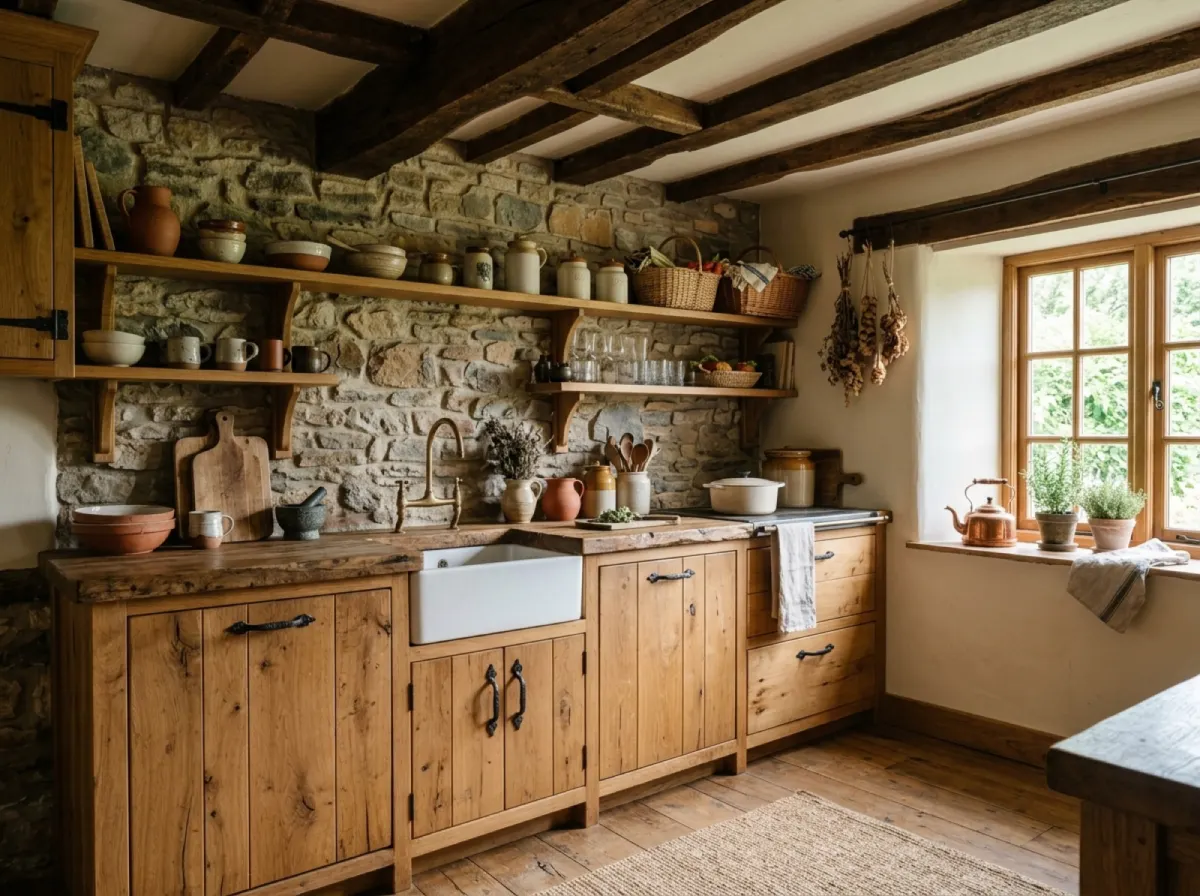
Rustic style means solid wood with visible grain and knots, massive countertops, stone and forged handles — a raw yet warm interior where solidity and natural material matter most.
What rustic style is
Rustic style grows out of rural building and the simple, everyday furnishings of homes far from the city. Its roots reach back to farmsteads where furniture was made from whatever was at hand — from thick solid wood, from stone gathered in the fields, from metal forged by the local blacksmith. These objects were meant to last for years, so they were massive, simple and resistant to wear. Contemporary rustic style takes up this philosophy and brings it into the modern home while preserving the raw beauty of the material.
The heart of rustic is naturalness and a handcrafted character. The wood does not pretend to be a smooth, lacquered surface — on the contrary, it shows grain, knots, small irregularities and the marks of working. The surface is often lightly brushed to bring out the pattern of the grain. The whole gives the impression that the piece was made by a craftsman rather than coming off a production line. It is an interior where texture matters as much as colour.
It is worth distinguishing rustic from the Provençal style, with which it is sometimes confused. Provence is lighter, more pastel and decorative — with whitewashed wood, delicate patterns and a romantic accent. Rustic is rawer: less pastel, more raw and darker wood, more stone and forged metal. Where Provence flirts with lightness, rustic relies on mass and substance.
Within rustic itself there are variations. The Alpine variant, associated with the mountain cabin, relies on dark wood and ceiling beams. The Mediterranean variant introduces more stone and light plaster. The Scandinavian-rustic variant combines raw wood with a cooler, lighter palette. What unites them all is respect for natural material and an impression of durability.
Key features of rustic style
Rustic style is recognised by several constant elements that return regardless of the room. They build the characteristic raw yet warm mood of the interior.
- Solid wood with visible grain. The basis is fronts and countertops of wood with a legible grain pattern, knots and natural discolourations. The material is not hidden under a smooth coating but displayed.
- Massive countertops and thick fronts. Rustic likes material in abundance — thick countertops, solid carcasses, a sense of weight. The furniture looks durable and built for generations.
- Forged and dark handles. The hardware is dark, metal, often of a hand-forged form. It contrasts with the warmth of the wood and underlines the handcrafted character.
- Stone and ceiling beams. Natural stone on walls, countertops or casings, and exposed ceiling beams, are the hallmarks of the style that bring in a rural touch.
- Ceramics and natural accessories. Clay vessels, ceramic sinks, linen and wicker complete the interior, sustaining the impression of authenticity.
- An earthy, natural palette. The colours are muted: honey wood, the grey of stone, creams and earthy tones. Nothing shouts, everything harmonises with nature.
These features need not all appear at once and at full intensity. Sometimes a massive oak countertop and forged handles are enough to give a kitchen a rustic character. In a larger space you can afford beams, stone and full solid-wood furniture.
Rustic tolerates patina and the passage of time well. Small scratches, the natural darkening of wood or signs of use do not spoil the interior — they fit its idea. It is a style that gains over the years rather than losing.
Materials and colours
The heart of rustic is solid wood. Most often species with a pronounced pattern and hardness suited to daily use are chosen — oak, ash, pine or beech. The wood is often oiled or waxed rather than lacquered to a high gloss, so it keeps a matte, natural surface and a texture pleasant to the touch. Where full solid wood is impractical, high-quality European-class wood-look boards are used, which faithfully reproduce the grain and resistance to moisture.
Stone is the second material pillar of the style. It appears as a kitchen countertop, an island casing, a fragment of wall or a fireplace cladding. Materials with a natural, slightly raw texture and an earthy colour work well. Stone brings a cool mass that balances the warmth of the wood and underlines the solidity of the interior. The metals are dark and matte — forged handles, black hinges, hand-worked elements.
The rustic palette is calm and drawn from nature. Honey and warm brown wood dominate, complemented by the grey of stone, cream plasters and earthy tones — clay, ochre, muted green. Bright colours and high gloss are avoided. Contrast is built not by colours but by textures: smooth stone next to brushed wood, matte metal next to linen fabric.
Durability is the overriding value here. Rustic is by design made from materials that withstand years of use well and take on character rather than ageing in a bad sense. Solid wood can be renewed by re-oiling, stone is practically indestructible, and dark hardware masks the small marks of everyday use. It is an investment in furniture meant to stay for a long time.
Who rustic style is for
Rustic style is for people who value natural material, solidity and an interior with a soul rather than cool minimalism. It works for those who want a home to be warm, cosy and resistant to everyday life — with children, pets and guests. It is a good choice for detached houses, homesteads and larger flats, where there is room for massive furniture and natural materials. If you are planning a space for the home, rustic gives an interior that ages with dignity.
The style also finds its place perfectly in commercial spaces of a certain character. Regional restaurants, wine bars, cafés, guesthouses and agritourism venues use rustic to build an impression of authenticity and warmth. Massive wooden tables, stone walls and forged details create an atmosphere that is hard to fake with cheap décor. For such projects for business we select materials resistant to intensive use.
Rustic is not for everyone, however. People who prefer light, minimalist and very bright interiors may feel overwhelmed by the mass of wood and stone. In small, low rooms, heavy furniture and a dark palette can further reduce the space. In such cases it is worth reaching for a lighter, brighter variant of the style, or combining rustic accents with a more modern base, to keep the mood without an overwhelming effect.
How to introduce rustic style in custom furniture
Custom furniture is the natural environment for rustic, because it lets you match the thickness of the countertop, the species of wood and the type of hardware to a specific interior. In the kitchen the heart of the style is a massive countertop of solid wood or stone, fronts with a legible grain and dark, forged handles. The cabinetry can hide modern appliances behind wooden fronts, so the kitchen keeps its rustic character without giving up convenience. A hood clad in wood or stone becomes a central element.
In the dressing room and wardrobes, rustic shows through solid carcasses, wooden fronts and dark metal handles. A fitted wardrobe made to measure can use the full height of the room, and its doors of solid wood or wood-look board fit the natural palette. Inside, it is worth opting for practical, durable solutions with certified hardware that will withstand years of daily opening. Examples of such projects can be seen in our portfolio.
In the living room and bedroom, rustic is introduced through massive solid-wood furniture — chests of drawers, display cabinets, bed frames, bookcases. Wood with visible grain and dark hardware build consistency with the rest of the home. In the bedroom, cabinetry around the bed and wooden wall panels that warm the interior work well. Custom furniture lets you keep the proportions of massive forms without cluttering the space.
Built-in lighting is a detail that matters greatly in rustic. Warm spot lighting set into the countertops, the illumination of niches and shelves, and discreet LED strips under cabinets bring out the texture of wood and stone. A warm colour temperature emphasises the honey tones and builds a cosy mood. Built-in lighting hides the technology, leaving only the natural material on show.
Rustic style in different rooms
Rustic can be carried consistently through the whole home or applied selectively, in chosen zones. Below are the most important rooms and what is worth paying attention to in each of them.
Kitchen
The kitchen is the natural centre of rustic. A massive countertop, solid-wood fronts, a stone island casing and forged handles create the heart of the home. The sink area also matters — a ceramic basin and a tap in a dark, matte finish strengthen the rural character. Open shelves for ceramics and wooden accessories sustain the impression of authenticity.
Living room
In the living room, rustic shows through massive furniture and natural materials. Wooden cabinetry around the fireplace, a solid-wood bookcase, a stone wall behind the television or exposed ceiling beams build the character of the day zone. Fabrics — linen, wool, leather — complete the interior with warmth and texture. The whole is meant to invite spending time, not just watching.
Bedroom and dressing room
In the bedroom, rustic calms and warms. A wooden bed frame, cabinetry around the headboard and wall panels create an intimate space. A wardrobe of solid wood or wood-look boards, with dark hardware, combines functionality with a natural look. It is worth providing built-in lighting that makes the wardrobes easier to use and brings out the texture of the fronts.
Bathroom and entrance zone
In the bathroom, rustic is introduced carefully, combining moisture-resistant wood with stone and ceramics. A wooden vanity unit, a stone countertop and dark taps create a coherent picture. In the entrance zone, solid wooden storage for shoes and coats, a solid-wood bench and a mirror in a wooden frame work well — the first element of the home that greets guests with a rustic character.
Regardless of the room, rustic will hold up over the years, because it relies on materials that withstand time well. Solid wood can be renewed, stone is almost indestructible, and a muted palette does not go out of fashion. The longer you live with such furniture, the more character it takes on.
The style also allows an individual accent. You can combine raw wood with modern appliances, add contemporary lighting, or one strong, signature element — a forged candlestick, a stone countertop of an unusual shape, hand-made ceramics. Rustic does not require a museum; it tolerates a reasonable dose of modernity, as long as the base remains natural.
The most common mistakes
The most common pitfall of rustic is overdoing dark wood and mass. When the whole interior drowns in heavy, dark furniture, it becomes gloomy and cramped. The remedy is balance — light walls, plasters and fabrics that let light through, and leaving empty space between the massive forms. Rustic needs air for its solidity to please rather than overwhelm.
The second mistake is confusing rustic with cheap imitation. Foils imitating wood with an unnatural pattern, plastic handles or glossy surfaces spoil the whole effect, because this style relies on the truth of the material. It is better to invest in fewer elements of good solid wood or high-quality European-class boards than to fill the interior with tacky substitutes.
The third pitfall is a lack of consistency. Rustic easily turns into a random collection of rural props if the palette and textures are not watched. It is worth sticking to one family of colours and materials, repeating the same hardware and species of wood, and choosing accessories with moderation. Less, but consistently, works better than an accumulation of decorations.
The fourth mistake is often ignoring the scale of the room. Massive furniture looks great in spacious interiors, but in a small, low room it can completely smother them. In cramped spaces it is better to reach for a lighter variant of the style, brighter wood and less massive forms, to keep the rustic mood without an overloaded effect.
How we do it at Grandis
We have been designing and producing custom furniture for over 15 years, in our own facility of 3 000 m². We have over 300 completed projects behind us, including interiors kept in rustic style. We begin every project with laser measurement and a 3D visualisation, which we include in the price — so even before production it is clear how massive countertops, wooden fronts and stone details will sit in a specific interior.
We work with European-class materials and use certified hardware that withstands years of daily use. Installation is carried out by our in-house team, not subcontractors, so we are responsible for quality at every stage. A standard project takes 2-4 weeks, and the price is fixed — without annexes or surprises along the way.
Rustic is a style that does not forgive shortcuts — solidity is visible in the thickness of the countertop, in the grain of the wood and in the quality of the hardware. That is why we make it from real materials, from measurement to installation.
Frequently asked questions
How does rustic differ from the Provençal style?
Rustic is rawer and less pastel. It relies on raw, often darker wood, stone and forged metal, while Provence is lighter, more decorative and romantic. Rustic is mass and substance, Provence is lightness and delicacy.
Does rustic suit a small flat?
Yes, but in a lighter variant. In a small space it is better to reach for brighter wood, less massive forms and point rustic accents — forged handles, a wooden countertop, a stone detail — rather than full, heavy cabinetry that could overwhelm the interior.
Does solid-wood furniture require special care?
It requires reasonable attention. Oiled or waxed surfaces are worth refreshing from time to time, so the wood keeps its beauty for years. This is an advantage of rustic — furniture can be renewed and repaired rather than replaced.
Can rustic style be combined with modern appliances?
Yes, and this is its strength. Modern appliances or electronics can be hidden behind wooden fronts or left on show as a contrast. Rustic allows a reasonable dose of modernity, as long as the base remains natural and material-based.
How long does a custom rustic furniture project take?
A standard project takes 2-4 weeks from approval of the design, depending on the scope. The price is agreed in advance and remains fixed, without annexes during production and installation.