Custom furniture from Poland for a flat in Germany, France or Spain is bought like any other goods inside the EU. There is no customs, the legal guarantee runs for at least two years, and the weak points are three: remote measuring, installation and no right to return without a reason. All of them are settled in the contract before the deposit.
In this article
- Why the price is lower: what the labour data show
- How ordering at a distance works: eight steps
- What the price is made up of and when the order makes sense
- VAT: whose rate ends up on the invoice
- Buyer's rights and what to do if something goes wrong
- What to put in the contract
- Poland, a local manufacturer or ready-made furniture
- Ten questions for the manufacturer before the deposit
- Sources
Custom furniture from Poland for a flat in Germany, France or Spain is bought like any other goods inside the EU. There is no customs, the legal guarantee is never shorter than two years, and an hour of labour in Polish manufacturing costs €17.1 against €49.5 in Germany. There are three weak points, and the contract settles all of them before you pay a deposit. They are remote measuring, installation and the fact that you cannot return the furniture without a reason.
The labour figures come from Eurostat, the EU's statistical office, and refer to 2025. In France the same hour costs €47.1, in Spain €28.2. The basic rules of buying are the same across the EU and are set out on the official Your Europe portal.
This article was prepared by the Grandis team. We are a European manufacturer of custom furniture and deliver across Europe, so our interest here is direct. We do not quote a saving in per cent, because there is no open data that would let us calculate one honestly. The article is for information only and does not replace advice from a lawyer or a tax adviser.
Why the price is lower: what the labour data show
The price difference comes down to the cost of a working hour. According to Eurostat, an hour of labour in Polish manufacturing cost €17.1 in 2025. In Germany it cost €49.5, which is 2.9 times more. Made-to-measure furniture involves a lot of manual work, from measuring and design to fitting and installation.
| Country | Manufacturing, euros per hour | Whole economy, euros per hour |
|---|---|---|
| Poland | 17.1 | 19.1 |
| Czechia | 20.2 | 19.8 |
| Spain | 28.2 | 26.4 |
| Italy | 32.8 | 32.0 |
| EU average | 35.0 | 34.9 |
| France | 47.1 | 44.3 |
| Germany | 49.5 | 45.0 |
| Austria | 51.3 | 46.3 |
Eurostat counts wages together with employers' contributions and covers only businesses with ten or more employees. Furniture making is not shown as a separate line in these data, which cover manufacturing as a whole.
You cannot carry the one-to-three ratio over to the price of a finished kitchen. The data describe labour only and say nothing about the prices of board, worktops and hardware, meaning hinges, runners and lift mechanisms. The fitting team's travel and the transport add costs that a local manufacturer does not have.
The gap is narrowing, too. Over one year the Polish hour in manufacturing rose from €15.5 to €17.1, and the German hour from €48.5 to €49.5. One year of data does not show that waiting pays off.
Date of the data. The Eurostat figures refer to 2025, and the database was updated on 23 April 2026. Before ordering in 2027 it is worth looking up the latest values.
How ordering at a distance works: eight steps
An order from another country goes through the same stages as a local one. The difference is that distance rules out "popping round to fix it". That is why dimensions, drawings, materials, the total and the date are put in writing before production starts.
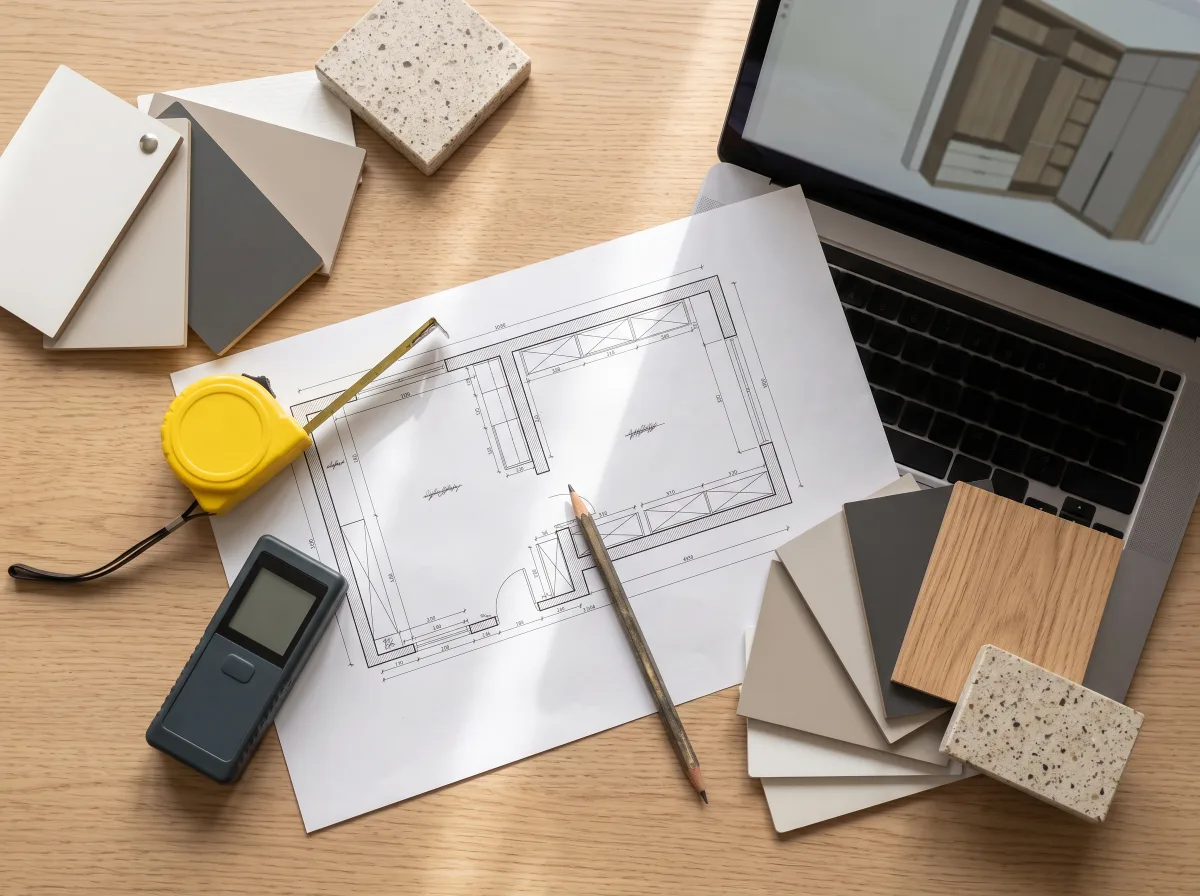
- Enquiry. You need a floor plan with dimensions, photographs of the walls and corners, and a list of built-in appliances. The discussion takes place by message and video call, and you do not have to travel anywhere.
- Preliminary estimate. From the plan the manufacturer gives a price range, and this is the moment to ask for separate lines for measuring, delivery and installation.
- Measuring. The manufacturer's surveyor comes out, a local tradesperson measures following the manufacturer's instructions, or you measure yourself. Whoever measured is responsible for the dimensions, and this is written into the contract.
- Design. You receive drawings and a visualisation and use them to check heights, the position of sockets and water connections, and which way the doors open. The approved sheets are signed.
- Contract and deposit. What the contract should contain is covered below in a separate nine-point list.
- Production. With us, production usually takes 2–4 weeks after the design is approved and the deposit paid. We write the specific date into the contract before production starts.
- Delivery and installation. Our team usually assembles a wardrobe in one day and a kitchen in one to two days. How long the journey to your city takes depends on the route, and there is no single timeframe for all countries.
- Handover. You inspect the furniture, note any remarks in the handover report, sign it and pay the balance.
At Grandis Trade the design with visualisation and the estimate are free and carry no obligation. We measure with a laser, and the furniture is installed by our in-house team. For orders abroad we agree the cost of travel and installation in advance and include it in the estimate.
If you are in Germany, France, Spain or another European country and would like an estimate for your own dimensions, you can send us a request on our website.
It helps to set out who is responsible for what in a single table and attach it to the contract.
| Stage | Manufacturer | Client | Local tradespeople |
|---|---|---|---|
| Measuring | measures or provides instructions | provides access, hands over the plan | measure, if the contract says so |
| Design | drawings, visualisation, specification | checks and signs | say where the pipes and cables will run |
| Preparing the room | states the requirements for walls and connections | orders the work | electrics, plumbing, finishes |
| Delivery | packaging, transport, risk of damage in transit | receives the goods, arranges access | not involved |
| Installation | assembly and adjustment | signs the handover report | connect appliances, water and gas |
No paperwork, no order. A seller who gives you no written quote and no receipt for the deposit leaves you without evidence. It is worth getting both documents before making any payment.
What the price is made up of and when the order makes sense
The price of furniture from another country has two parts. The first depends on the furniture itself, the second on the distance, and it barely changes with the size of the order. So a single cabinet carries the travel costs in full, while a kitchen together with wardrobes spreads them over a large volume.
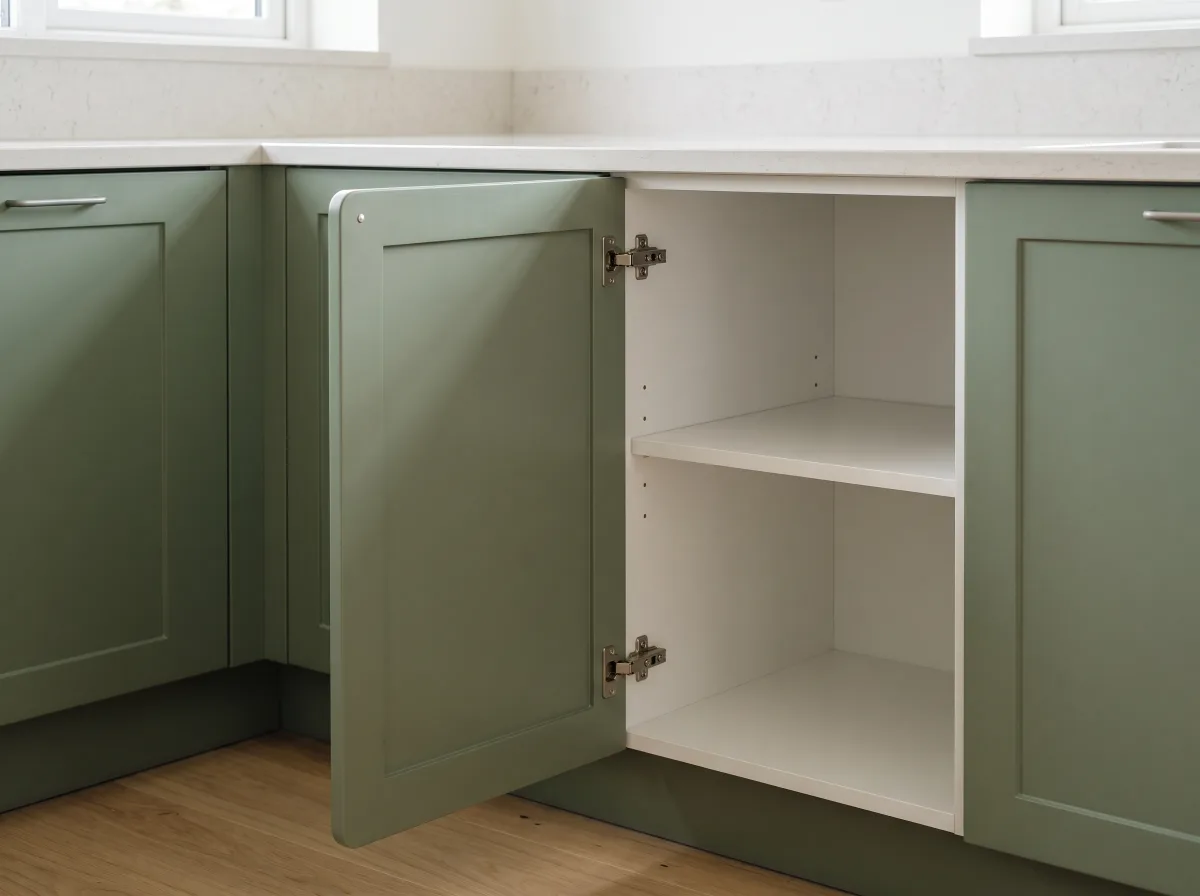
Three cost items depend on the furniture itself.
- Carcasses and fronts. The price is calculated per linear metre, that is, per metre of furniture length along the wall.
- Worktop, built-in appliances and lighting. In our estimate these are separate lines.
- Hardware and interior fittings.
Three more items depend on the distance.
- The trip to measure, if the manufacturer does the measuring.
- Transport, unloading and carrying up to your floor.
- Travel and accommodation for the fitting team.
The FAQ section of our website gives the following guide figures for 2026. A kitchen costs from 1 200 to 2 800 zł per linear metre, a wardrobe or walk-in wardrobe from 1 000 to 2 200 zł. We give the exact amount after measuring. The costs of travel, delivery and installation in another country are not included in these ranges and are calculated separately.
It is not possible to give a single final figure for an order to Germany or Spain. It depends on the route and the volume, and we found no verified average data on such orders in open sources.
Nor is there a threshold in euros at which the arrangement "starts to work", so you have to do the sums on your own project. Ask to see the costs of measuring, delivery and installation as separate lines and add them up. Then compare the full amount with a local manufacturer's quote for the same project and the same materials. If the travel lines eat up the difference, the order is too small for this arrangement.
VAT: whose rate ends up on the invoice
A private buyer in the EU pays VAT, value added tax, once, as part of the price. When you buy for yourself there is nothing extra to pay at the border and no customs declaration to file. Only the rate changes, and it depends on who installs the furniture.
Furniture installed by the seller. If the seller installs the goods itself or through its own people, the place of taxation is the country of installation. This is how the European Commission's tax portal sets out Article 36 of the EU VAT Directive. For a kitchen assembled in Germany that is 19%, in France 20%, in Spain 21%.
Furniture without installation. Delivery to a private individual in another country counts as a distance sale. The seller charges the VAT of the buyer's country if its sales to private individuals in other EU countries have exceeded 10 000 euros in a calendar year. Below that threshold it may charge Poland's 23%.
The rates are taken from the Your Europe table, checked on 13 July 2026. For companies with a VAT number the procedure is different, and here we are talking only about private buyers.
These rules do not cover delivery outside the EU, for example to Switzerland or the United Kingdom, and we do not go into that procedure here.
Ask for the price in one line. The quote should state the amount including VAT, the rate and the country under whose rules the tax is charged. That way two quotes from different countries can be compared without recalculating.
Buyer's rights and what to do if something goes wrong
A buyer from another EU country is protected by the same rules as a local one. The legal guarantee lasts at least two years from receipt, and the seller is responsible for damage in transit. There is one exception, and it concerns custom furniture specifically, because it cannot be returned without a reason. The rules below follow the official EU portal Your Europe; the pages are listed in the sources.
The fourteen-day cooling-off period does not apply. The right to withdraw from a purchase within 14 days does not extend to goods made to order. You cannot change your mind after signing and rely on this right, so all the checks are done before the contract.
Deadline. If the contract names no date, the seller must deliver the goods within 30 days. Custom furniture does not always fit into that period, so the date is agreed explicitly. If delivery is late, you give the seller a reasonable additional period, and if the furniture still has not arrived by then, you are entitled to end the contract and get your money back.
Damage in transit. The seller is responsible for the goods from dispatch until the moment you receive them. Inspect the packaging and the fronts while the team is present and record any damage in the handover report before signing.
Defect after handover. The seller must repair or replace the item free of charge, and the costs of shipping, labour and materials fall on the seller. If repair and replacement are impossible, you are entitled to a full or partial refund. Incorrect installation carried out by the seller also counts as the seller's defect.
Who has to prove it. A defect that appears in the first year is presumed to have existed at the time of delivery. In some EU countries this period lasts two years. This is how Your Europe describes the rule, and the page was checked on 20 August 2026. During this period you do not have to prove that the item was faulty from the start.
If the seller does not respond, the steps are as follows.
- A written complaint to the seller with photographs and a reference to the contract.
- An approach to the European Consumer Centre in your country. The network of these centres, ECC-Net, advises free of charge on disputes with sellers from other countries, and its 29 centres operate in the EU countries, Norway and Iceland.
- The European Small Claims Procedure for claims of up to 5 000 euros. It is a written procedure, so you do not have to travel to court, but it is not available in Denmark.
- A court in your own country. You can bring a claim at home if the company pursues commercial activities in your country or directs them at your country.
What to put in the contract
The contract replaces your ability to come and see how the work is going. It should state the dimensions and materials, the full amount including tax, the date, the handover procedure and the procedure for remedying defects. Treat anything promised in correspondence that did not make it into the text as not promised.
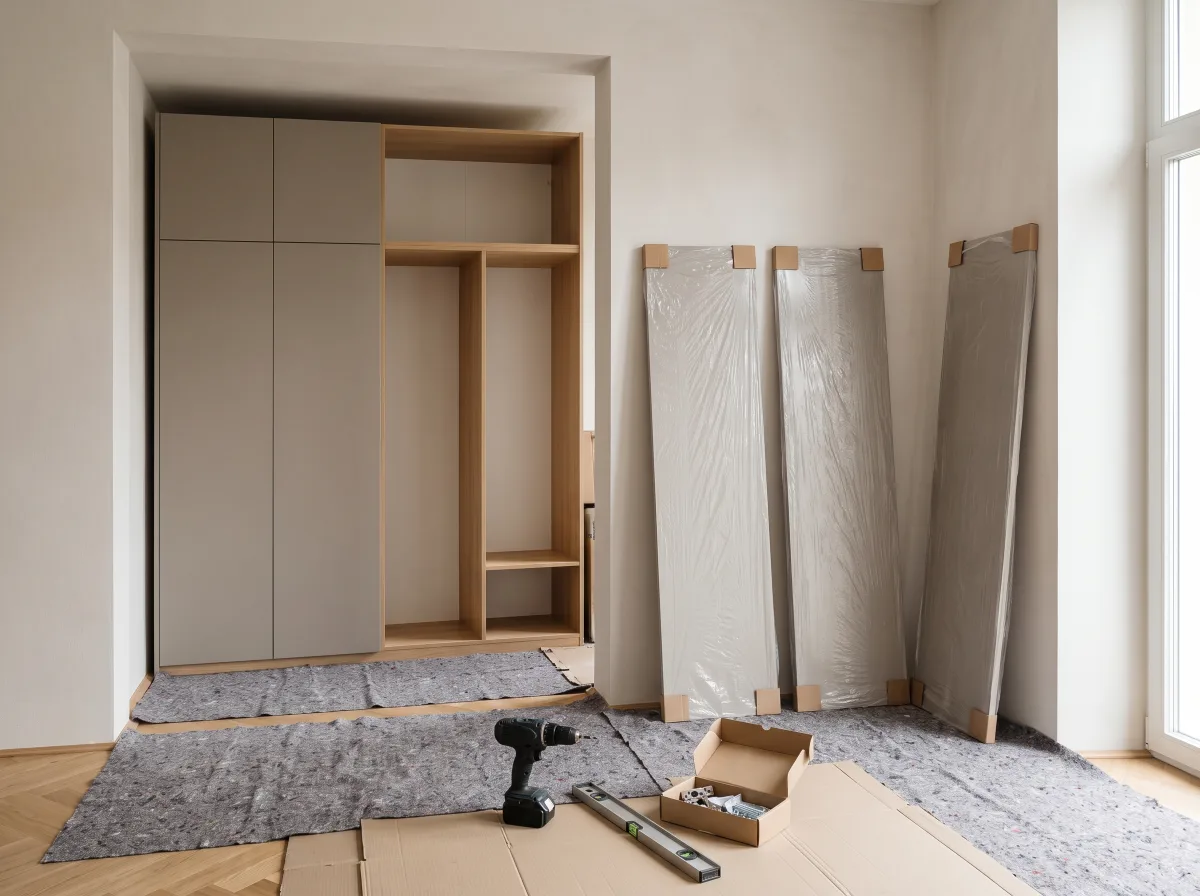
- Subject. The drawings and specification are attached and signed, and the carcass and front materials, hardware and thicknesses are named.
- Measuring. It states who did the measuring and who is responsible for an error in the dimensions.
- Price. One amount including VAT, the rate and the country of the tax, plus a list of what it includes out of delivery, carrying up, installation and the team's travel.
- Price changes. It records the conditions under which the amount may rise. With us the price is fixed and changes only if the client changes the scope.
- Payment. A deposit on signing and the balance on handover of the installation, with the shares stated in figures.
- Deadline. A calendar date for delivery and installation and the consequences of a delay.
- Handover. A report in which remarks are recorded, and the deadline for dealing with them.
- Guarantee. The period, the address for complaints and the answer to who comes out to remedy a defect and at whose expense. We give a guarantee of 1 to 5 years depending on the type of product, and we write the period into the contract.
- Language. A version of the contract in a language you understand, and a statement of which version prevails.
Poland, a local manufacturer or ready-made furniture
Ordering from Poland with the manufacturer's installation makes sense for a large made-to-measure job, when you need a kitchen, alcove wardrobes, a walk-in wardrobe or furniture for the whole flat. For a single piece, a local manufacturer or modular furniture is the more sensible choice. Ordering without installation is worth choosing only if you have a fitter you trust.
| Criterion | Poland, manufacturer's installation | Poland, your own fitter | Local manufacturer | Ready-made modular |
|---|---|---|---|---|
| Made to your dimensions | yes | yes | yes | standard modules only |
| Who is responsible for installation | the seller | you and the fitter | the seller | you or the shop |
| VAT for a private individual | country of installation | buyer's country or 23% | your own country | your own country |
| 14-day return | no | no | no | yes, when bought online |
| Service after handover | call-out from another country | call-out from another country | nearby | shop nearby |
| Travel costs | measuring, transport, team | measuring and transport | none | shop delivery |
The further you are from the seller, the more detailed the contract clause on guarantee call-outs should be.
If your designer or architect is running the project, bring them in at the drawings step so that any changes go through them.
Ten questions for the manufacturer before the deposit
Checking a manufacturer costs nothing and is done by correspondence. You need the company's registration details, a sample contract and straight answers to the questions below. A refusal to answer any of them in writing already tells you enough about the seller.
- What the legal entity is called and what its registration numbers are. For Polish companies these are the NIP (tax number) and the KRS (court register number).
- What the company's VAT number for intra-EU transactions is. It can be checked in the VIES system on the European Commission's website.
- Who does the measuring and who is responsible for an error in the dimensions.
- Who does the installation, an in-house team or a subcontractor.
- What the price includes and which lines are calculated separately.
- Which country's VAT is on the invoice and at what rate.
- What date will be in the contract and what happens if it is missed.
- How the payment is split and when the balance is paid.
- Who comes out under the guarantee, within what time, and who pays for the travel.
- Whether the company has had orders in your country and whether you can see completed projects.
We can answer the first questions straight away. The legal entity behind Grandis Trade is BOBIDI TRADE sp. z o.o., NIP 7011091688, KRS 0000975678. The office is in Warsaw, production covers 3 000 m², and installation is carried out by our in-house team. In 15+ years we have completed 300+ projects, and for many years we have worked with clients from different European countries, including Germany, France and Spain.
You can order a design and an estimate for the dimensions of your room through the form on our website.
This article is for information only and does not replace advice from a lawyer or a tax adviser in your country. Prices are given as a range, and we give the exact amount after measuring. The production time stated is the usual one, and we write the specific date into the contract, as we do the guarantee period. VAT rates and consumer protection rules are given as at 5 October 2026.
Sources
- Eurostat, database "Labour cost levels by NACE Rev. 2 activity" (lc_lci_lev), values for 2024 and 2025, updated 23 April 2026 — ec.europa.eu/eurostat, table code lc_lci_lev — accessed 5 October 2026
- Eurostat, news item "EU hourly labour costs ranged from €12 to €57 in 2025", 31 March 2026 — ec.europa.eu/eurostat, Eurostat News section — accessed 5 October 2026
- Your Europe, "Your rights when shopping in the EU", checked 1 April 2026 — europa.eu/youreurope, section Consumers, Shopping — accessed 5 October 2026
- Your Europe, "Guarantees on goods bought in the EU", checked 20 August 2026 — europa.eu/youreurope, section Consumers, Shopping, Guarantees — accessed 5 October 2026
- Your Europe, "Shipping and delivery", checked 17 August 2026 — europa.eu/youreurope, section Consumers, Shopping — accessed 5 October 2026
- Your Europe, "VAT when buying goods in another EU country", checked 1 July 2026 — europa.eu/youreurope, section Consumers, Shopping, VAT — accessed 5 October 2026
- Your Europe, "VAT rules and rates", checked 13 July 2026 — europa.eu/youreurope, section Business, Taxation, VAT — accessed 5 October 2026
- Your Europe, "Consumer guarantees" (business section), checked 12 July 2026 — europa.eu/youreurope, section Business, Dealing with customers — accessed 5 October 2026
- Your Europe, "Legal action for consumers", checked 11 August 2026 — europa.eu/youreurope, section Consumers, Dispute resolution — accessed 5 October 2026
- European Commission, Taxation and Customs Union, "Place of taxation" (Articles 32, 33, 36, 59c of Directive 2006/112/EC) — taxation-customs.ec.europa.eu, VAT Directive section — accessed 5 October 2026
- ECC-Net, website of the European Consumer Centres Network (composition of the network) — eccnet.eu — accessed 5 October 2026
- European Commission, VIES (VAT number validation) — ec.europa.eu/taxation_customs, VIES service — accessed 5 October 2026
- Grandis Trade, FAQ section of the website — grandis-trade.pl/faq