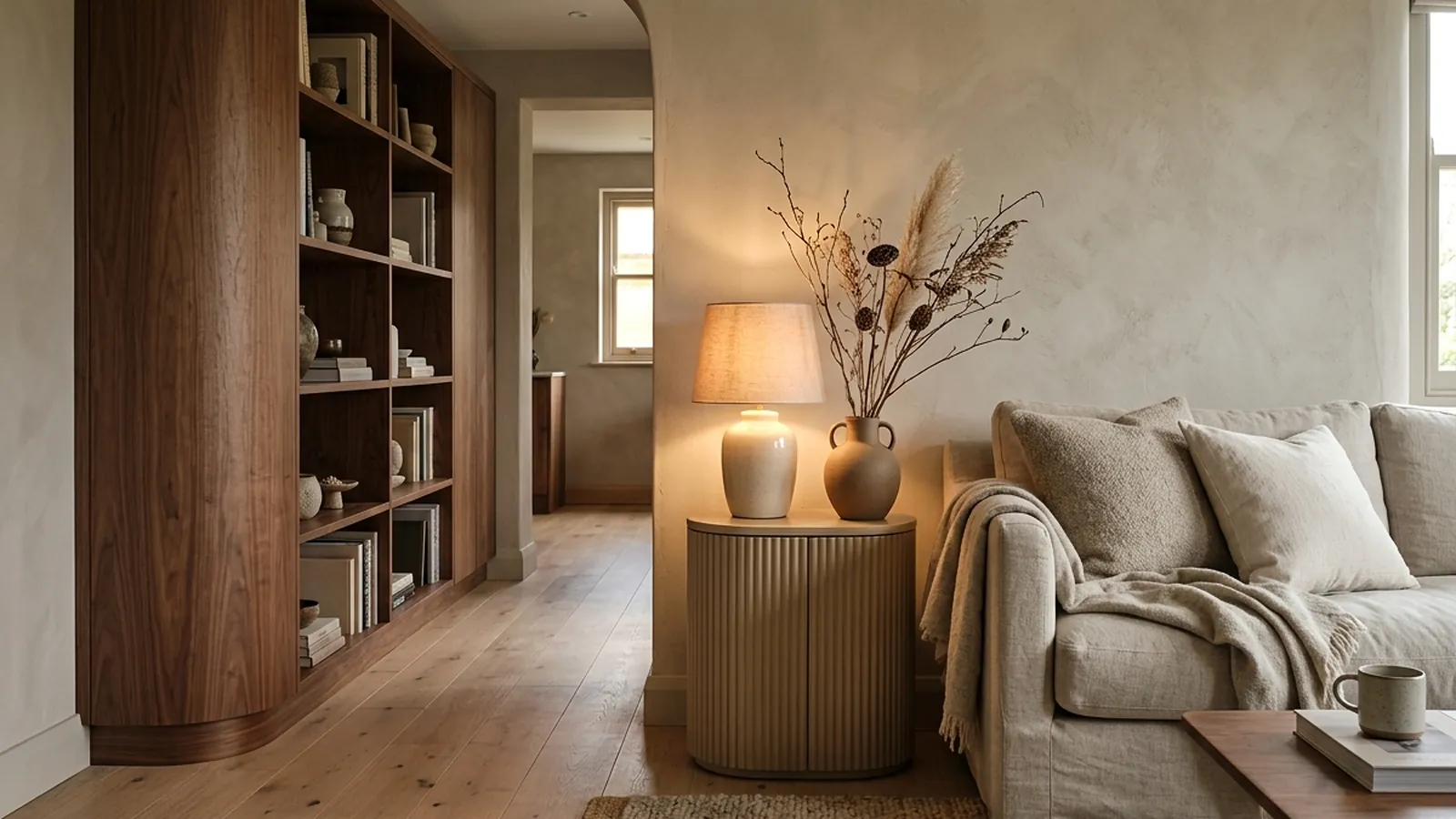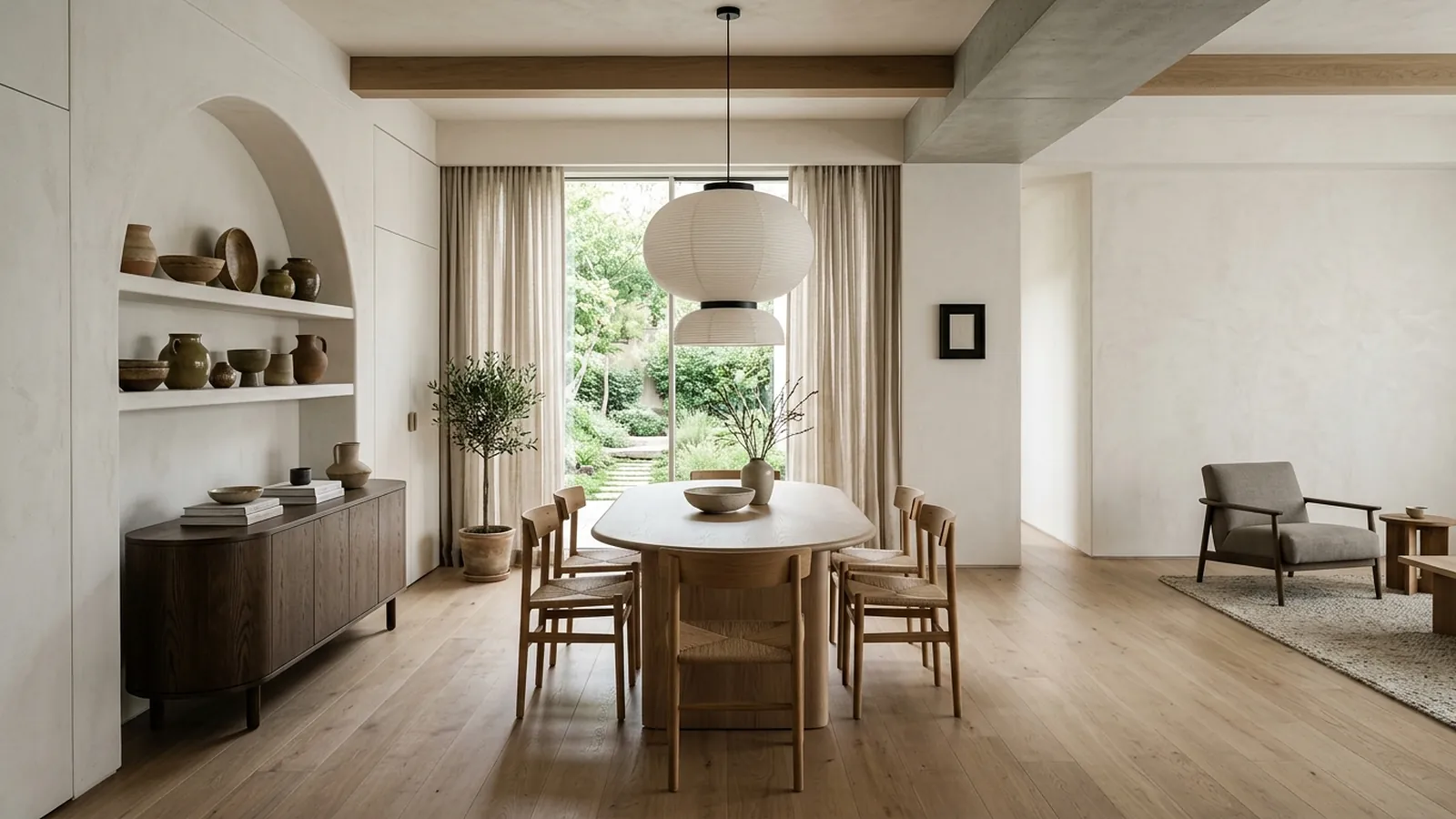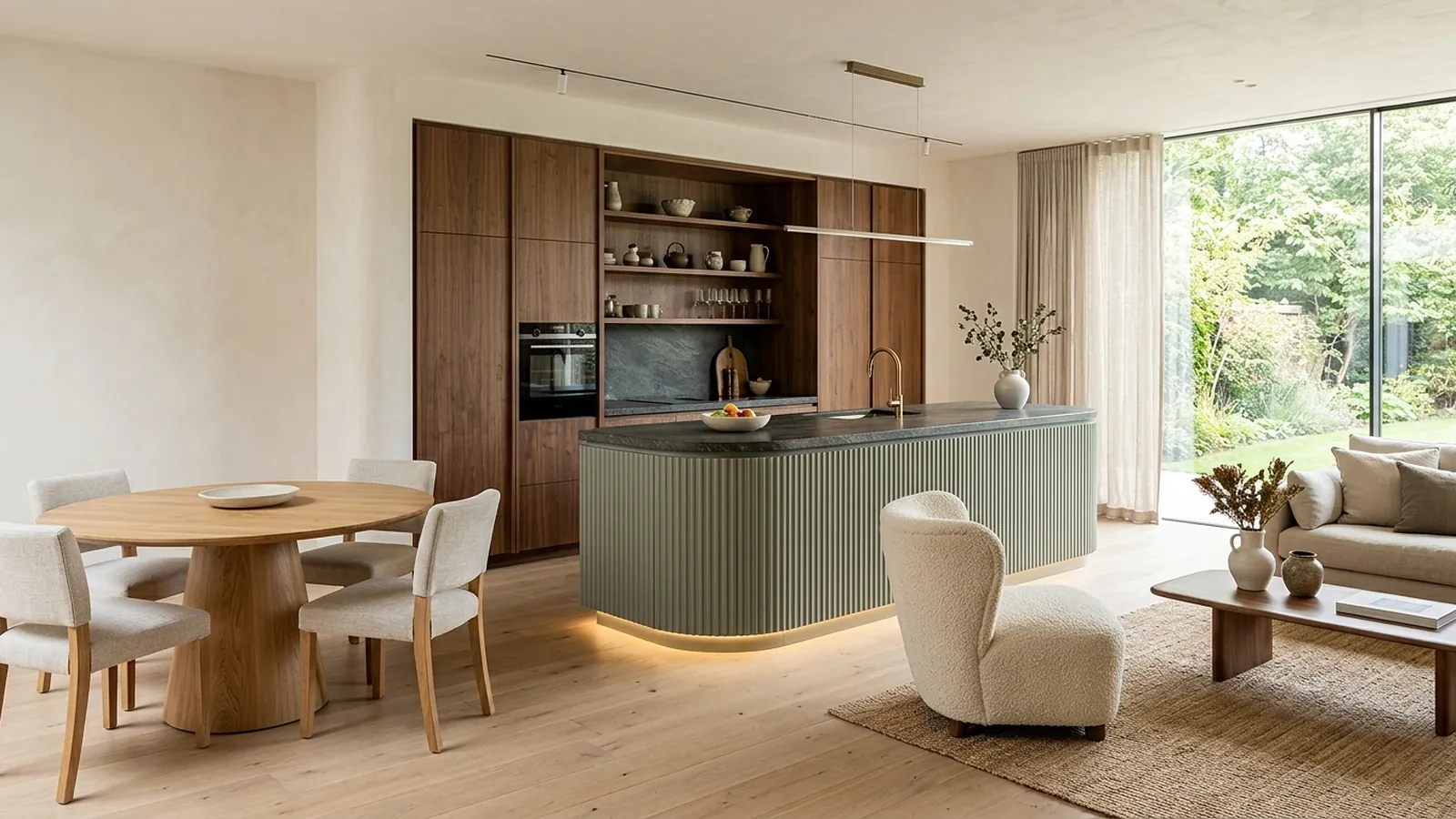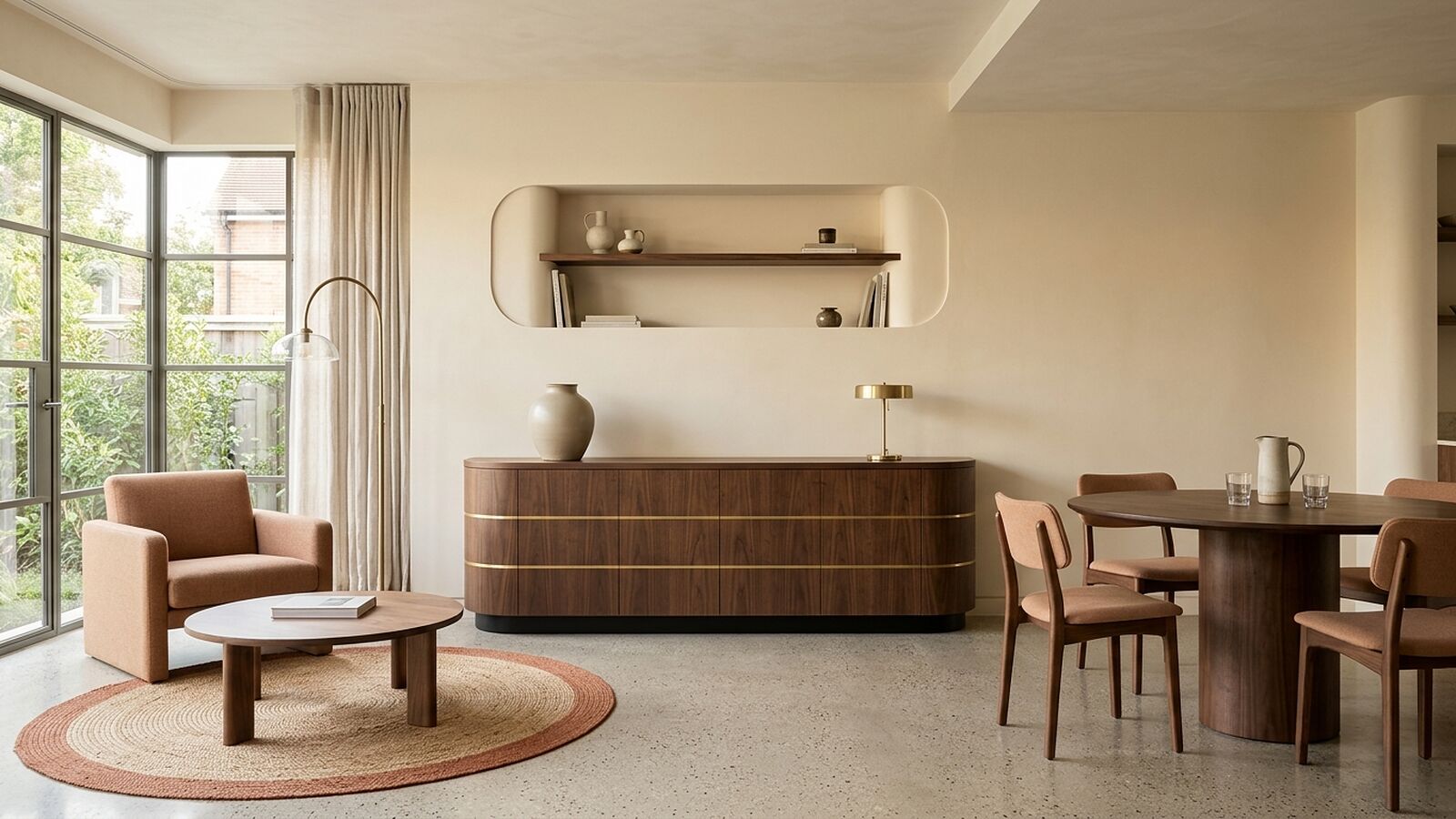
Streamline is a 1930s branch of art deco: furniture with rounded ends, horizontal lines, smooth fronts and fluting. Today it returns in islands, counters and sideboards – ideally made to measure, because the curve is designed for a specific room and the way people move through it.
In this article
Streamline furniture is easy to recognise by three things: rounded corners, horizontal lines and a smooth, "aerodynamic" body without sharp edges. The style borrowed its shapes from trains and aircraft in the 1930s, and today it is back in kitchen islands, counters, sideboards and living-room cabinetry – ideally made to measure, because a curve has to be designed for a specific interior.
What is the streamline style
Streamline, also called streamline moderne, is a late branch of art deco that developed in the 1930s. Designers of the time were fascinated by speed: aerodynamic locomotives, airships, ocean liners. That fascination produced a language of forms – bodies with rounded ends, long horizontal bands, chrome strips and surfaces that look as if air were flowing around them.
Unlike classic art deco, full of geometric ornament, gilding and stepped forms (more in our guide to art deco in custom furniture), streamline is more restrained. Instead of decoration it has movement: a line runs along the piece, wraps around the corner and continues on the other side. That is why it suits today's interiors so well – it adds character without overwhelming the room.
Streamline is returning together with the wider trend for soft, rounded shapes. The point is not to copy furniture from a hundred years ago, but to bring a few principles – the curve, the horizontal and the smooth surface – into kitchens, living rooms, bedrooms and reception areas.
Key features of streamline furniture
How do you tell that a piece is really "streamline" and not simply a cabinet with a rounded corner? The curve is part of the whole composition, not a detail added at the end.
- Rounded ends. An island, counter or sideboard ends in a semicircle or a gentle arc instead of a right angle. The front flows into the side without a visible edge.
- Horizontal rhythm. Long routed handles, strips, lighting lines and front divisions run horizontally and lead the eye along the piece.
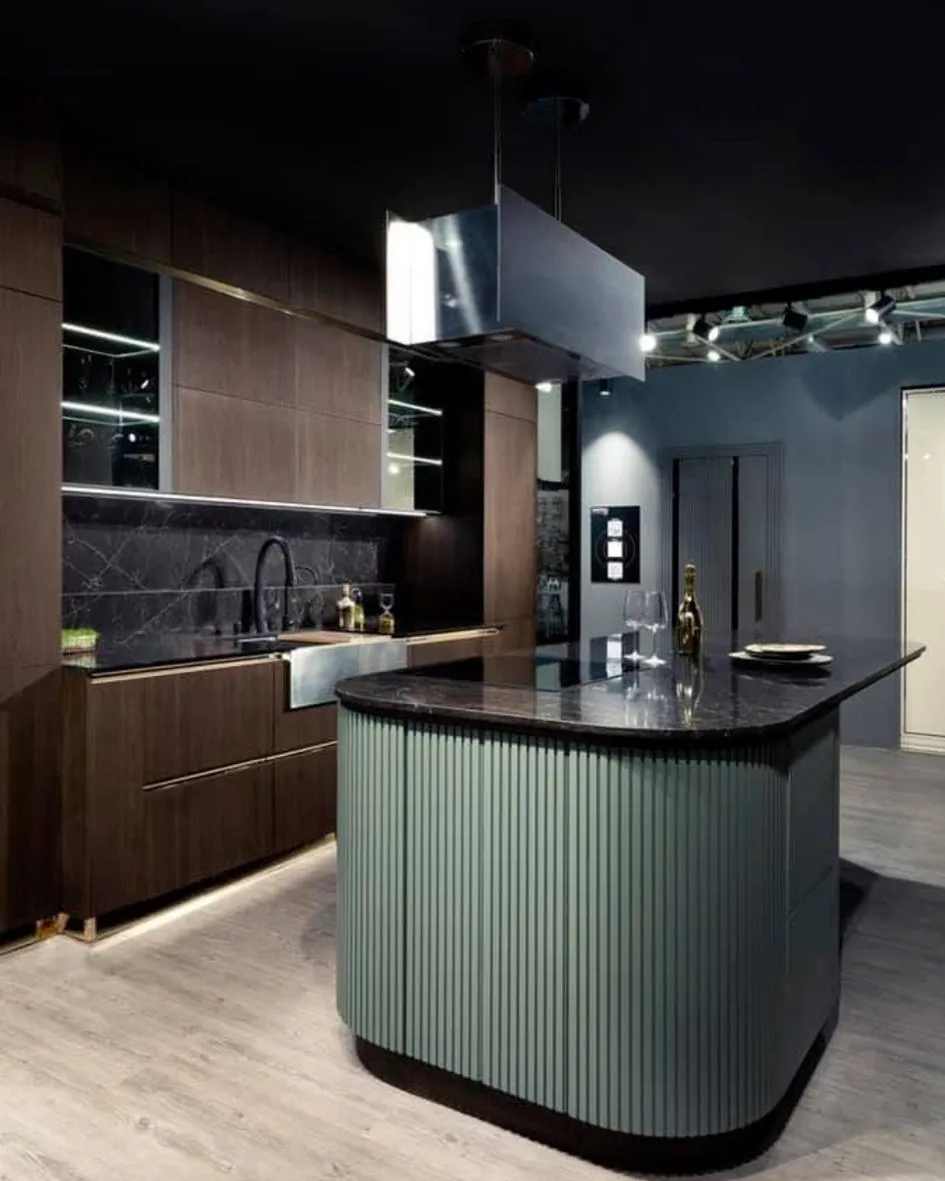
- Fluting and slats. Vertical grooves on a curved front are the contemporary way of showing the curve – light falls differently on each slat, so the arc becomes readable.
- Smooth, uniform surfaces. Matt paint, lacquer, veneer with a calm grain. Streamline does not like several decors on one body.
- Metal accents. Thin strips, plinths or handles in steel, brass or black – a nod to period chrome, in small doses.
- Floating plinth. LED lighting under the piece or a recessed plinth makes a heavy body look lighter, as if it were hovering above the floor.
Materials and colours
In streamline the material has to carry the curve. Not every decor or finish bends well, so the choice of material starts with geometry.
How a curve is made
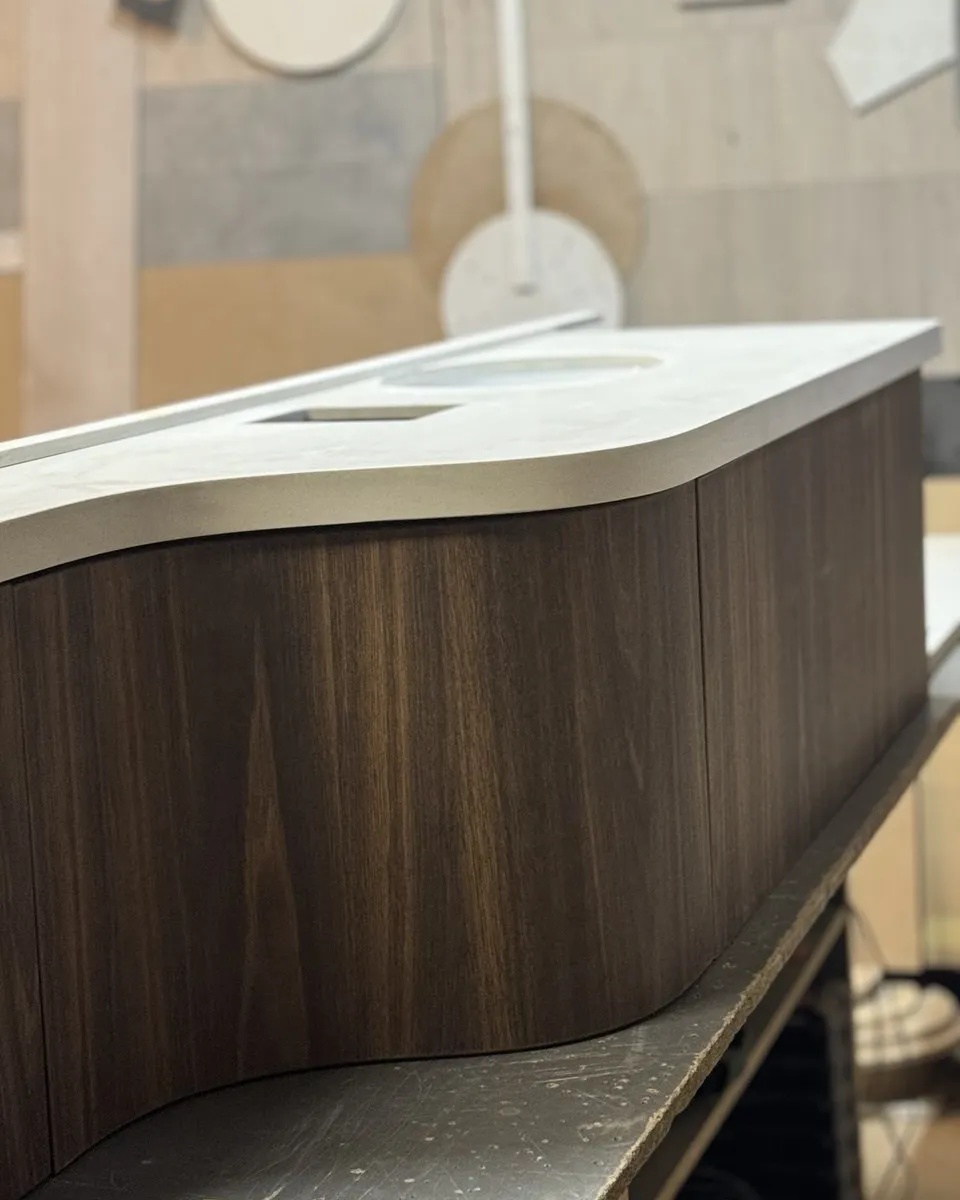
Rounded carcasses and fronts are usually made from bent MDF – laminated in layers over a form or kerf-cut on the back so it can bend – and then finished with lacquer, veneer or slats. Another route is CNC-cut elements glued in layers, such as MDF rings stacked into a round carcass. The technology – radii, edges, bending methods – is covered in our article on modern furniture with rounded corners.
Finishes that suit streamline
- Matt lacquer – a uniform, seamless surface over the whole curve, any colour from the RAL and NCS palettes.
- Natural veneer – a warm, noble wood grain that flows around the curve; it looks especially good in dark species such as walnut.
- Slats and fluting – the most recognisable motif of contemporary streamline, particularly on islands and counters.
- Metal details – strips, plinths and legs in steel, brass or black.
- Stone and quartz worktops – a worktop with a rounded corner that matches the radius of the carcass.
Colour palette
Classic streamline means creams, beiges, white, black and chrome. Contemporary versions like muted greens (sage, olive), terracotta, dark walnut and graphite. A good rule: one colour for the whole body and one contrast in the detail – the worktop, a strip or the lighting.
Where streamline furniture works best
Streamline works best where a piece is on display and where people walk around it. The curve then makes practical sense as well: there is no corner to catch your hip on.
| Piece | What the streamline form gives | What to watch |
|---|---|---|
| Kitchen island | Easy to walk around, no sharp corners at hip height, a striking fluted end | The worktop must have the same radius as the carcass |
| Counter, reception desk, bar | Invites people in, guides them along the front, looks great with lighting | Plan cabling and space for equipment on the staff side |
| Sideboard, chest of drawers, TV unit | Lightness of a long, low body, horizontal rhythm of fronts | Drawers in the curved part hold less |
| Bedside table, side table | A soft form by the bed and sofa, safer at night | Proportions – a small body with a large radius easily looks heavy |
| Bathroom vanity | A wavy front frames the basin and softens a tight room | A moisture-resistant finish |
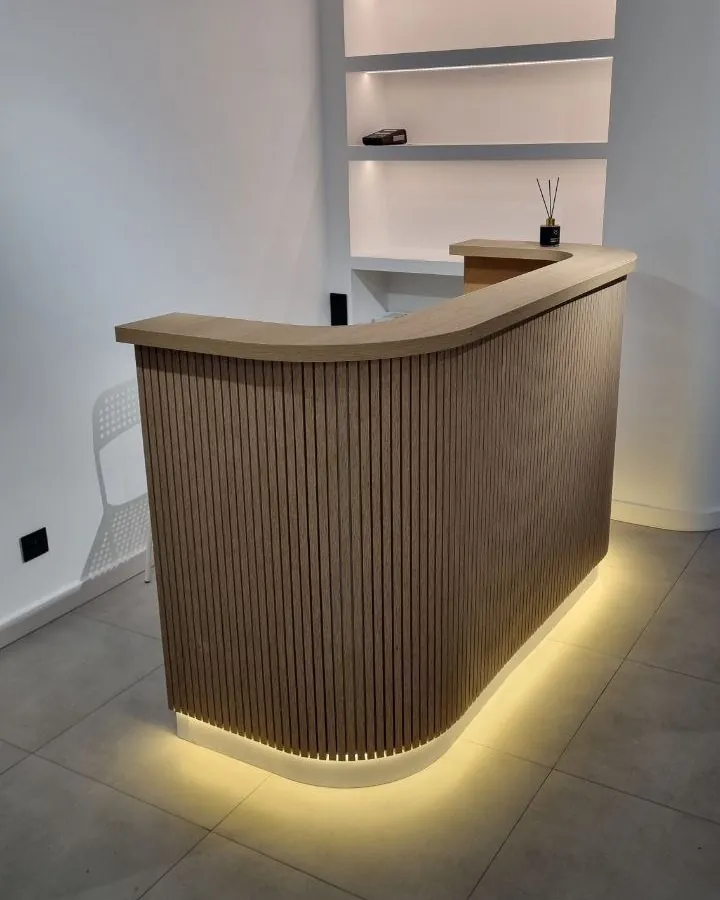
In the photo – a reception desk with slats and a rounded corner that we made for a service business. The curve leads guests along the front, and the lit plinth lifts the unit off the floor.
Rounded furniture in specific rooms is covered separately: rounded furniture for the living room and rounded furniture for the bedroom.
Streamline and other soft styles
Rounded shapes appear in several styles today and they are easy to confuse. The difference lies in mood and materials:
- Streamline – movement and horizontals: long lines, rounded ends, slats, metal details, often darker, elegant colours.
- Organic modern – nature: irregular, soft shapes, raw wood, stone, linen. More in our article on organic modern furniture.
- Japandi – calm and craft: low furniture, light wood, restrained curves. See rounded furniture in the japandi style.
- Soft minimalism – a minimum of elements and warm, light colours, with the curve as the only accent. Details in our piece on soft minimalism furniture.
Styles can be combined – for example a fluted streamline island in a calm, light japandi kitchen – as long as one of them leads and the other only supports.
How to design custom streamline furniture
Ready-made pieces in this style are usually freestanding and have fixed dimensions. Custom cabinetry lets you match the radius, length and front layout to the room. A few principles we start every project with:
- Movement first, form second. Round off where people walk: the end of the island by the passage, the corner of the counter by the entrance, the side of the sideboard by the door.
- One radius – one family. When the worktop, carcass, plinth and lighting share the same curve, the whole looks coherent. Different radii side by side look accidental.
- Horizontal lines at one height. The routed handle, the strip and the lighting gap should sit at the same height along the entire piece, including the curve.
- Function in the curved part. Drawers are harder to fit into a curve, so it often holds open shelves, a closed "blind" element or a cabinet with a bent front.
- Light. Plinth or worktop lighting emphasises the line and makes the piece the focal point – cabling is planned before renovation.
- Proportions. Streamline likes long, low bodies. A tall wardrobe with a rounded side needs a calm front so it does not look like a column.
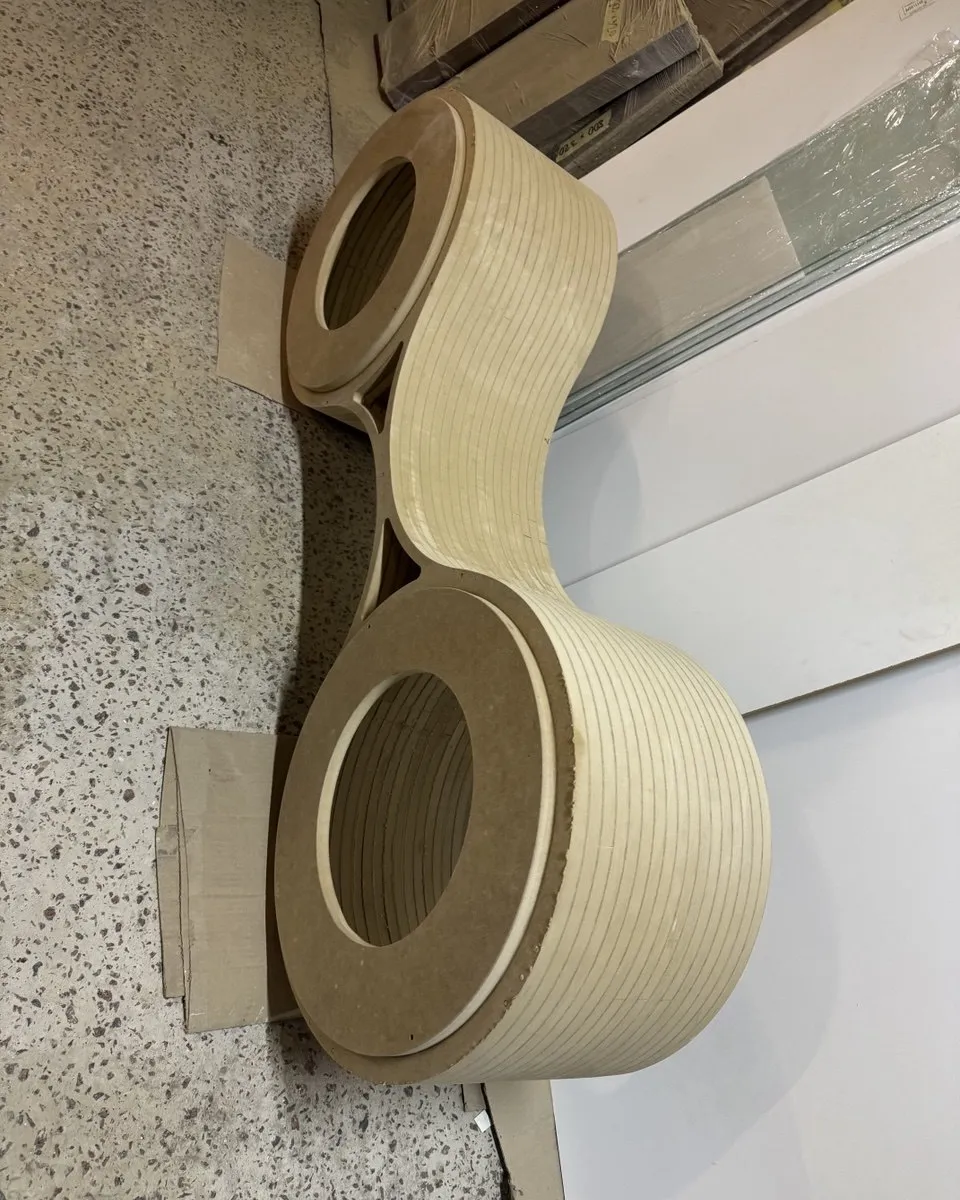
Cabinetmaker's tip: before you approve a curve in the design, ask for a 1:1 template printout and lay it on the floor. After walking past it a few times you will see whether the radius is comfortable or just looks good in the render.
Common mistakes
- Only the worktop is rounded. A curved worktop on a straight carcass sticks out and looks like an add-on – the whole body needs the curve.
- Too much style at once. Fluting, gold strips, curves on every piece and a patterned floor make the room theatrical. One or two "lead" pieces are enough.
- A curve in the wrong place. A rounded corner against a wall where nobody walks costs money and gives nothing.
- A decor that does not bend. Not every veneer or laminate suits a small radius – the finish is decided together with the geometry.
- No access to the inside. A beautiful round end with an empty space behind it and no door. Decide from the start what goes into the curve.
How we do it at Grandis
We make curved furniture to order and deliver it across Europe – from bending and gluing carcasses to lacquering and installation. Every project starts with a free laser measurement and a 3D visualisation showing the radii, the front layout and the lighting. The price in the contract is fixed, and the schedule is agreed in the same contract. Installation is done by our own in-house team. Home projects are on the custom furniture for home page, and counters and reception desks in our business projects.
Frequently asked questions
How is streamline different from art deco?
Streamline grew out of art deco in the 1930s but is simpler. Art deco relies on geometric ornament, stepped forms and gilding, while streamline focuses on rounded ends, horizontal lines and smooth surfaces inspired by aerodynamics.
Does streamline furniture suit a small flat?
Yes, if you limit it to one or two curved pieces, such as a sideboard or the end of an island. Rounded corners make it easier to move through a tight passage, and horizontal lines visually lengthen the room.
What are rounded fronts and carcasses made of?
Most often bent or layer-laminated MDF, finished with lacquer, veneer or slats. The finish is chosen together with the radius, because not every material can be bent to a small radius.
Is a curved piece more expensive than a straight one?
Usually yes, because bending, gluing over forms and finishing the curve take more work than a flat panel. How much more depends on the length of the curve, the radius and the finish – we give an exact price after measurement and design.
Can streamline be combined with another style?
Yes. It works best with minimalism, japandi or soft minimalism: a calm background with one streamline piece as the main accent.
Thinking about a streamline island, counter or sideboard? Fill in a short design quiz and we will come back with a proposal and an estimated budget. Measurement and 3D design are free and non-binding.