Rounded furniture in japandi style means low, calm wooden forms where the curve is subtle: a softly rounded tabletop edge, a cylindrical bedside table, an arched niche, an oval table. The rule is simple – the curve should calm, not draw attention, so it is paired with straight lines, matt wood and plenty of empty space.
In this article
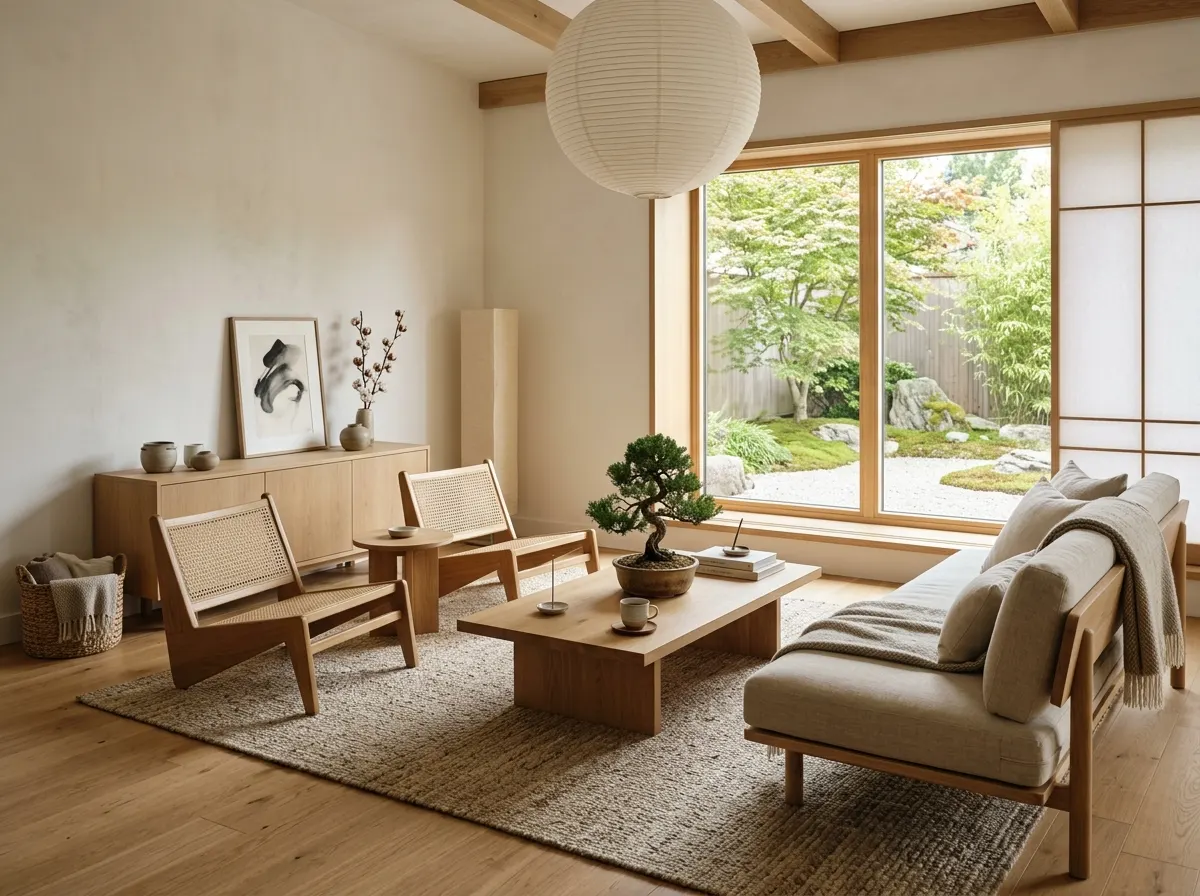
Rounded furniture in japandi style means low, calm forms in wood and natural materials where curves appear gently: as a softly rounded edge, an arched niche, an oval top or a cylindrical cabinet. In japandi the curve is not decoration – it quiets the room and makes a piece feel closer to the hand.
Why japandi likes rounded forms
Japandi combines Japanese restraint with Scandinavian comfort. A general guide to the style is in our article on japandi in Poland; here we focus on one aspect of it – the curve.
Japanese tradition values forms that look shaped by hand: a bowl with a not-quite-round rim, a stone edge smoothed by water, wood with a softly rounded arris. The Scandinavian side adds function – rounded edges are pleasant to touch and safer in a home with children. That is why japandi has few sharp corners, but also few bold, sculptural curves. The curve should be quiet.
This sets japandi apart from styles where roundness is the hero. In streamline the curve adds dynamism, in organic modern it emphasises natural material, and in soft minimalism it softens a light, uniform volume. In japandi, the curve is above all a way to create calm.
Which pieces to round in a japandi interior
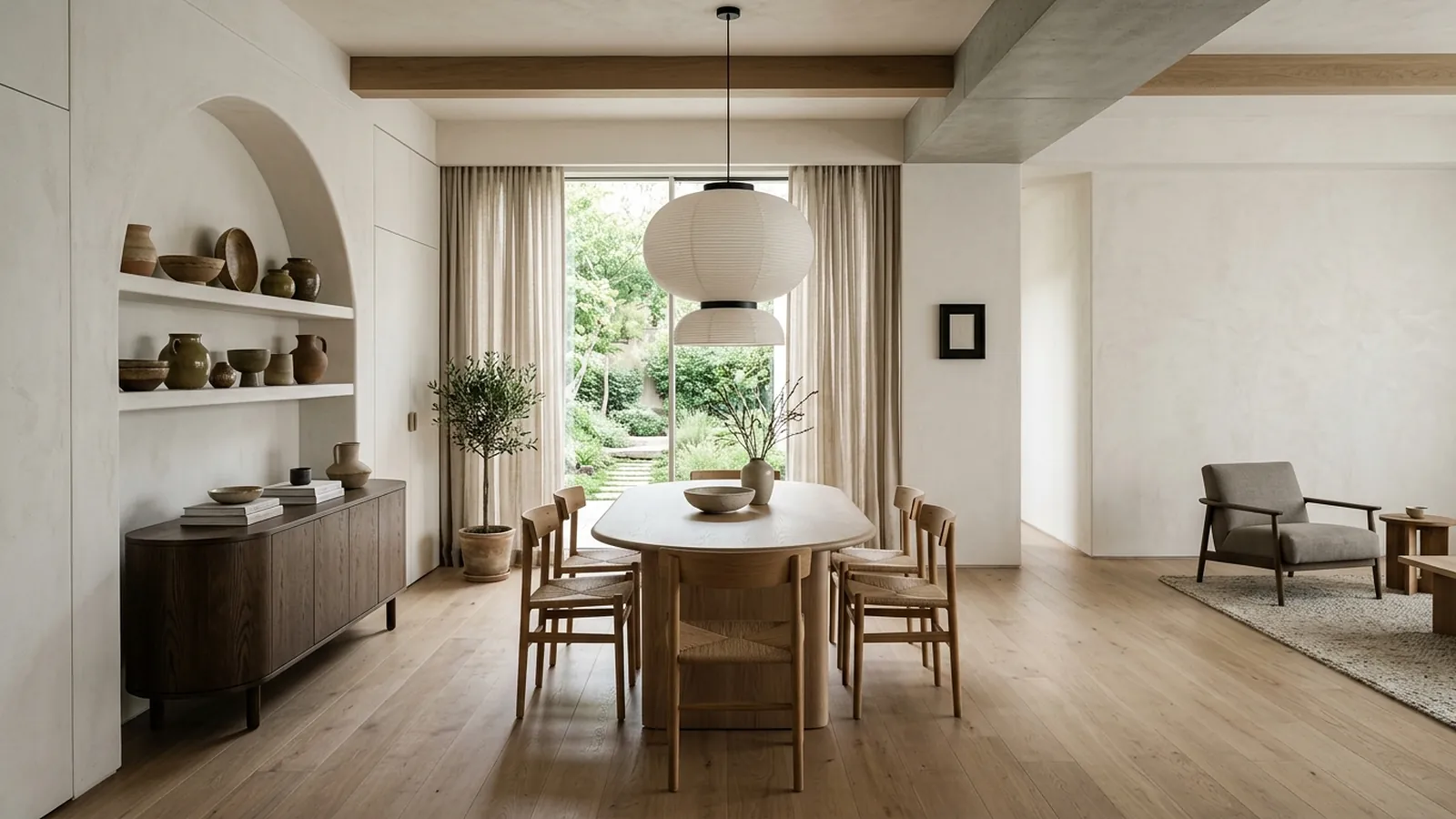
- Tabletop. An oval or round wooden table is the simplest way to introduce a curve. A table without corners seats more people comfortably and makes the room feel less crowded.
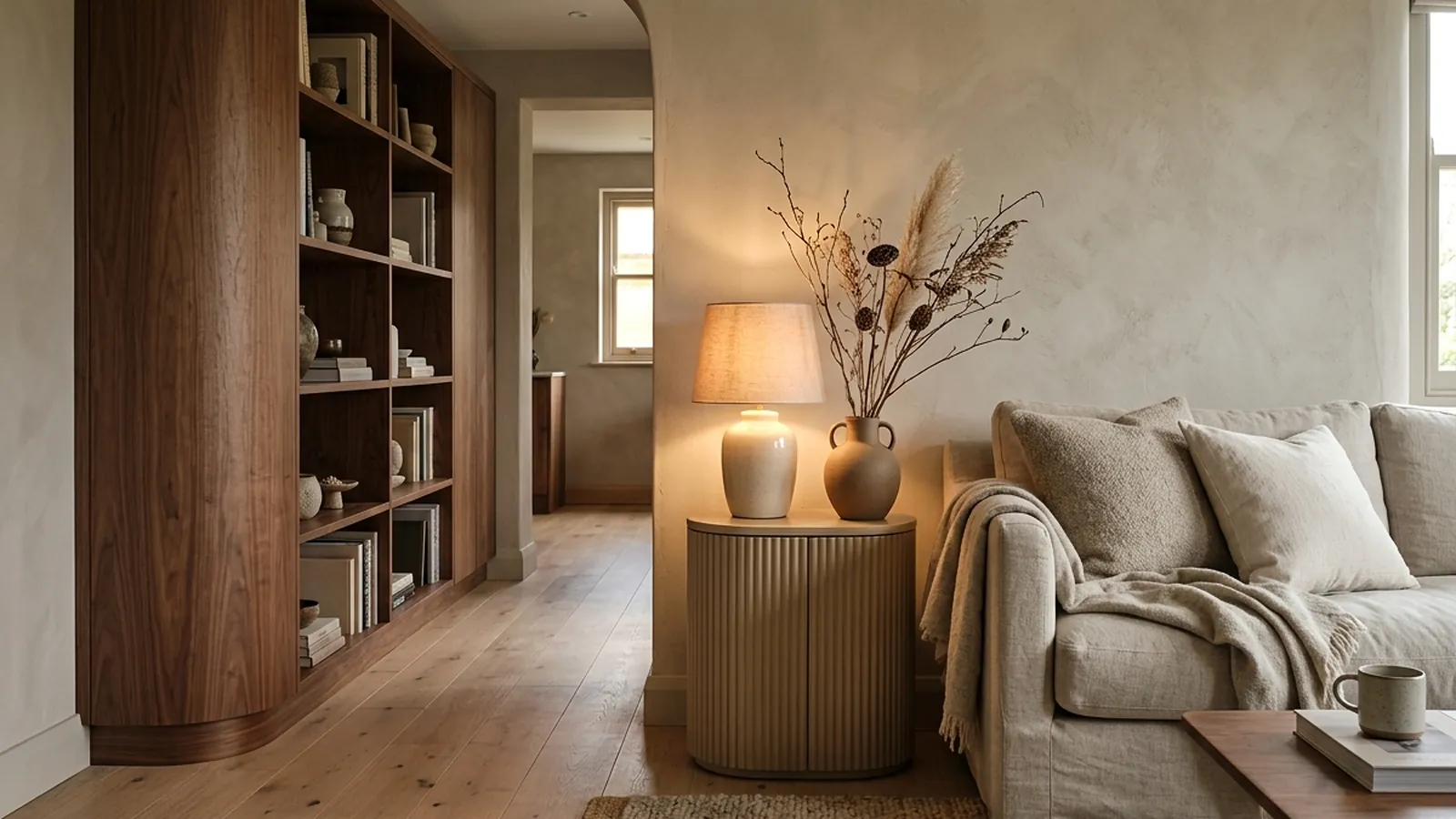
- Bedside and side tables. Low cylindrical forms or pieces with strongly rounded corners, usually in wood or matt clay-coloured lacquer.
- Edges of tops and shelves. A gentle rounded edge instead of a sharp arris – a detail you feel more than see.
- Arched niches and open shelving. A bookcase with a semicircular top or an arched niche in a wall unit frames ceramics or plants.
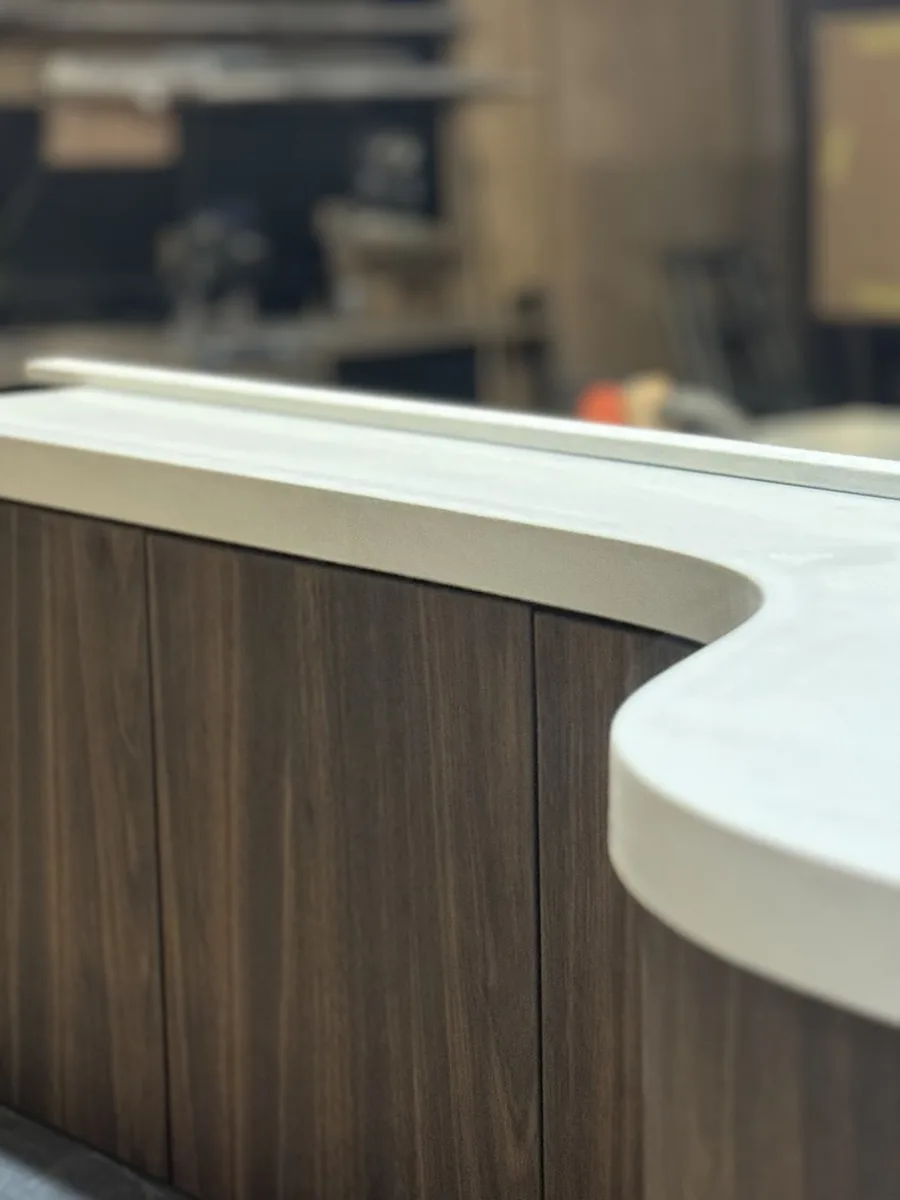
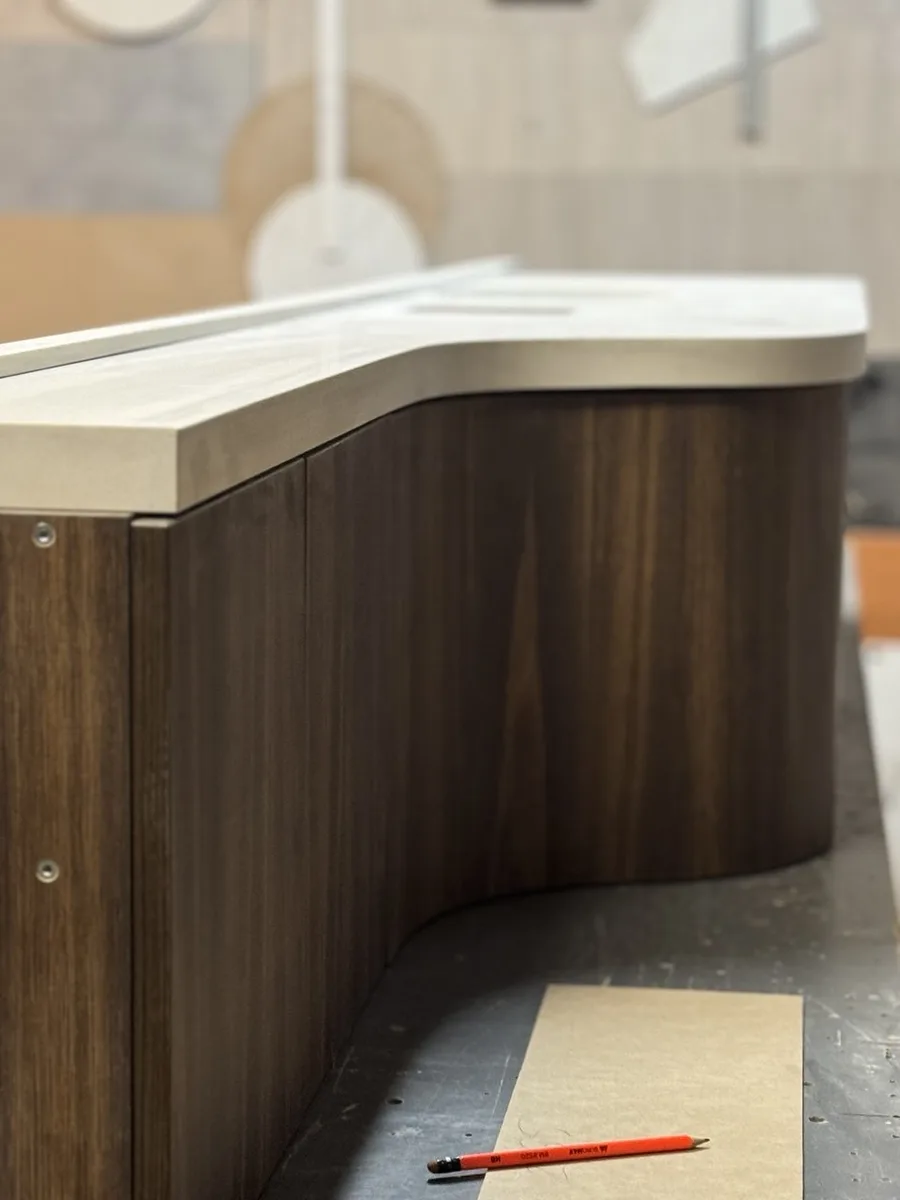
- Vanity unit. In a japandi bathroom a wavy veneer front and a light top cut along a curve soften a small space full of hard tiles.
- Headboard. Low, wide, with rounded corners – ideally upholstered in linen or finished in wood.
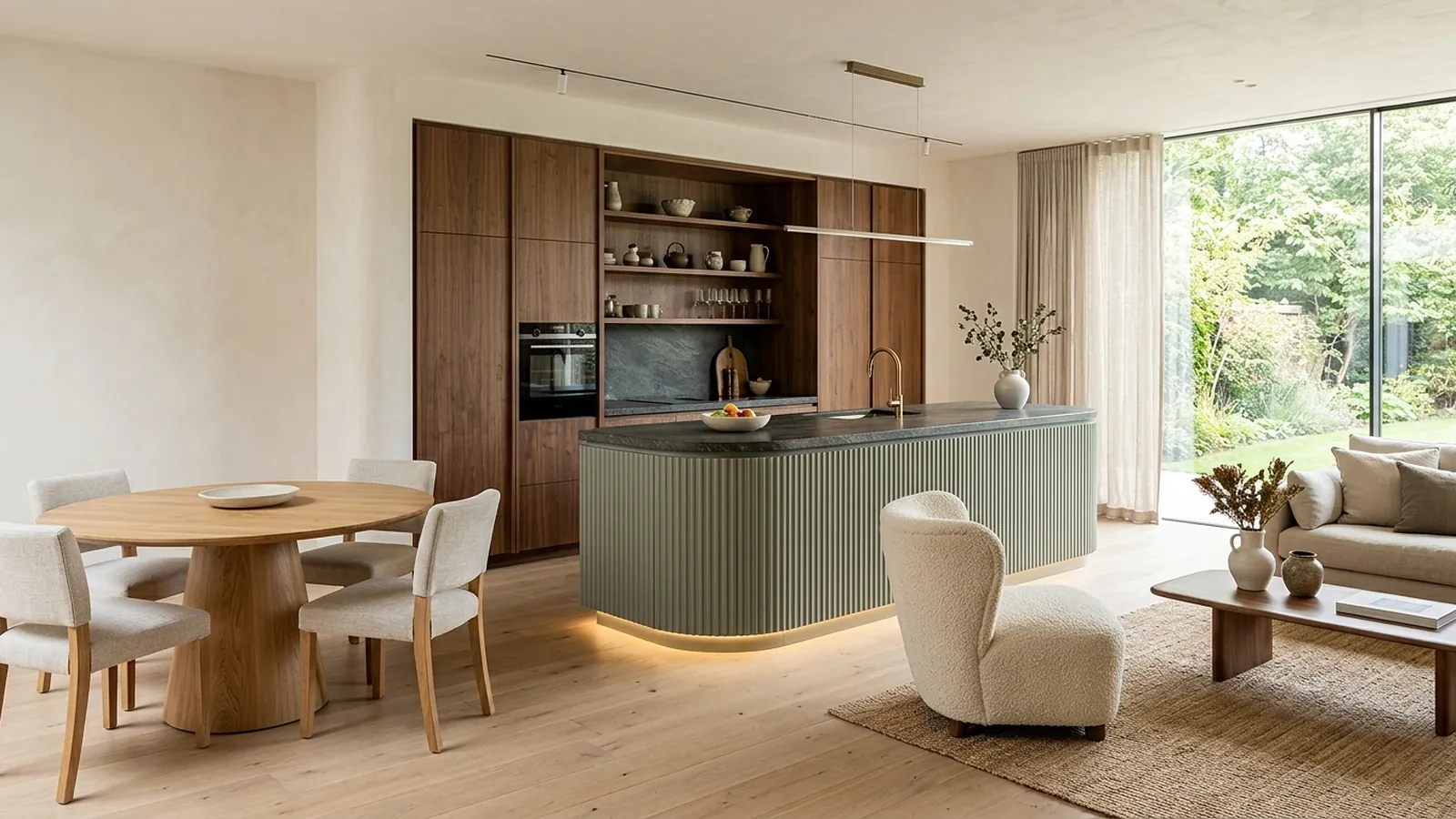
What japandi usually keeps straight: tall wall units, wardrobes and kitchen fronts. The style needs flat planes so that the curves have something to rest against.
Materials and colours
Wood is the leading material in japandi and it usually forms the curves. Oak, ash and walnut in matt or oiled finishes work well, as does dark, stained or charred wood as a contrast to light walls. On curved sides, natural veneer on a bent substrate is normally used instead of solid wood – it keeps real grain and can follow the curve.
| Element | Japandi-friendly material | Notes |
|---|---|---|
| Tabletop | Solid wood or oak, ash, walnut veneer | Rounded edge, matt or oiled finish |
| Curved fronts and sides | Veneer on a bent substrate, matt lacquer | Grain following the curve or vertical |
| Bathroom top | Mineral composite, stone, sintered stone in a light matt shade | The curved outline is cut from a template |
| Upholstery | Linen, cotton, wool in natural colours | No sheen, no bold patterns |
| Details | Black steel, ceramics, paper, bamboo | Handles ideally hidden or routed |
The japandi palette is narrow: warm whites, beiges, warm greys, clay, olive, wood browns and black as an accent. The more rounded the form, the calmer its colour should be – a bold curve in a bold colour quickly stops being japandi.
Proportions: how not to overdo the curves
The most common problem with rounded furniture in japandi is excess. When the table, bookcase, bedside table, headboard and mirror are all rounded, the room starts to look like a collection of trendy objects rather than a calm space. A few rules help keep the balance:
- One clear curve per room. For example an oval dining table or an arched niche in the living room. Other curves should be details – rounded edges.
- A curve against a straight line. A round table next to a straight, low sideboard looks better than next to an equally rounded one.
- Keep it low. Japandi likes furniture close to the floor. A low rounded form looks calm; a tall one looks monumental.
- Empty space around. A rounded piece needs breathing room; squeezed into a tight corner it loses its point.
- Asymmetry over perfect geometry. An oval, an arc of varying radius or a slightly irregular outline is closer to the spirit of japandi than a perfect circle.
Rounded japandi furniture room by room
In the living room curves work best in a coffee table, a low sideboard with rounded sides and an arched niche for ceramics. In the bedroom – in bedside tables, a low headboard and a dressing table with an oval mirror. In the bathroom – in a vanity unit with a wavy front and a light top with a soft outline. Detailed ideas are in our articles on rounded furniture for the living room and rounded furniture for the bedroom.
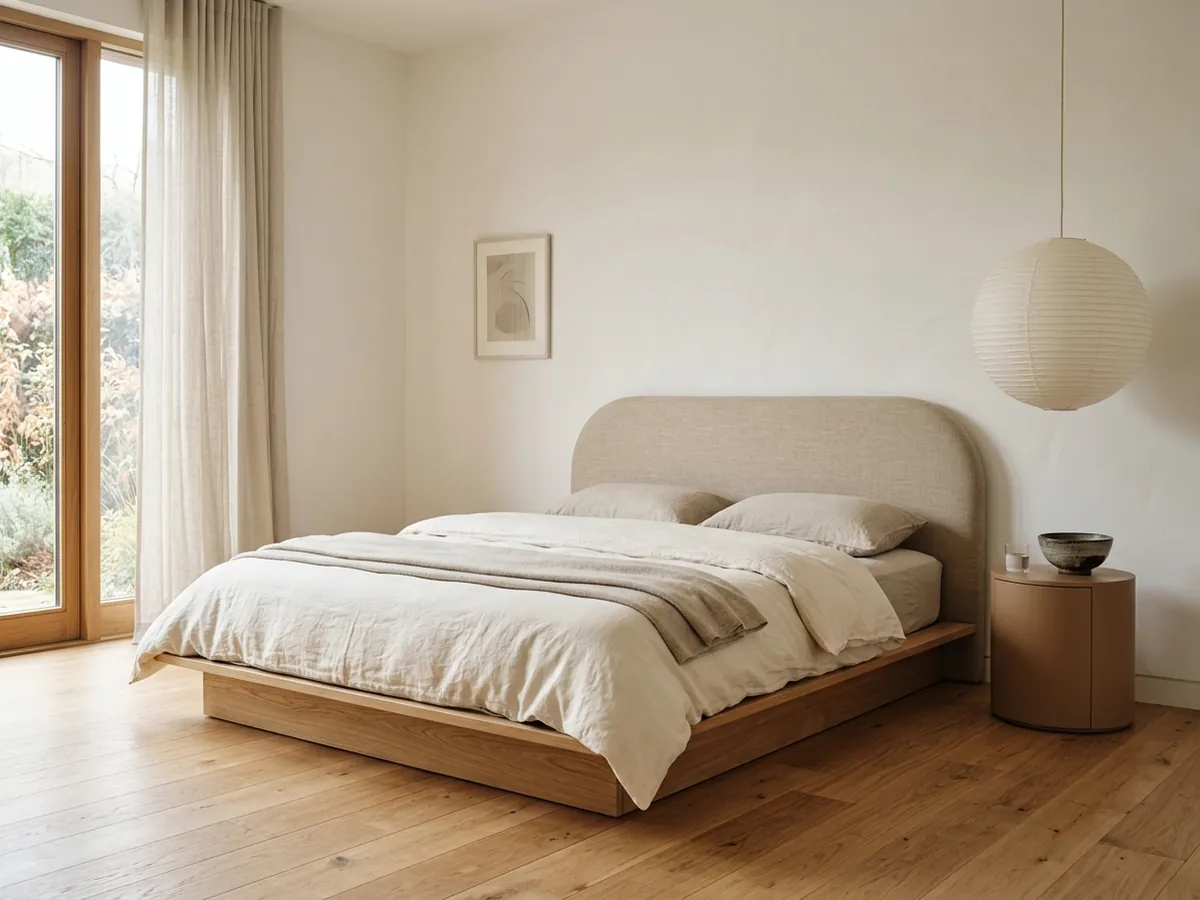
Visualisation – a japandi bedroom needs only two curves: the soft arc of the headboard and a round bedside table. Everything else stays straight and uncluttered.
In a japandi kitchen roundness is usually limited to the rounded end of an island or worktop. Cabinets stay straight, with handleless fronts in matt wood or lacquer.
Joiner's tip: on curved furniture grain direction matters. On a bent front, vertical grain looks calm and natural, while horizontal grain can "wave" along with the curve. Look at both options in the visualisation before deciding.
How to order rounded japandi furniture made to measure
A curve cannot be "added at the end" of a custom project – it determines carcass construction, materials and installation. That is why it is settled at the very start. With us it works like this: a free laser measurement, a 3D visualisation showing every curve and the chosen veneer, written approval of the design, delivery across Europe and installation by our in-house team. The price in the contract is fixed.
How bent carcasses and rounded corners are made technically is covered in our article on modern furniture with rounded corners. See our home projects in the portfolio.
See our projects: a wall-hung vanity with a wave front in walnut décor and a light curved top, and a reception desk with light-oak-tone slats – curves that calm rather than draw attention.
Our series on rounded furniture – read next:
Frequently asked questions
Should all furniture be rounded in a japandi interior?
No. Japandi is about balance. One clear rounded piece per room plus rounded edges on the rest is enough. Wardrobes and tall units usually stay straight.
Which wood suits rounded japandi furniture best?
Most often oak, ash and walnut in a matt or oiled finish, with dark or charred wood as a contrast. Curved surfaces are usually made from natural veneer on a bent substrate.
How does rounded japandi furniture differ from organic modern?
Japandi is more restrained: lower furniture, fewer textures, more empty space and subtler curves. Organic modern more readily shows contrasting materials and a bold, sculptural curve.
Is a curved bathroom top practical?
Yes, if it is well made. A soft outline makes it easier to move around a small bathroom, and a mineral composite or stone top can be cut from a template with a carefully finished edge.
Does rounded japandi furniture work in a small flat?
Yes. In a smaller flat curves actually help – an oval table or a cabinet without sharp corners makes it easier to move around and the room feels calmer.
Want to see how rounded japandi furniture would fit your home? Fill in a short design quiz and we will come back with a proposal and an indicative budget. Measurement and the 3D design are free and non-binding.