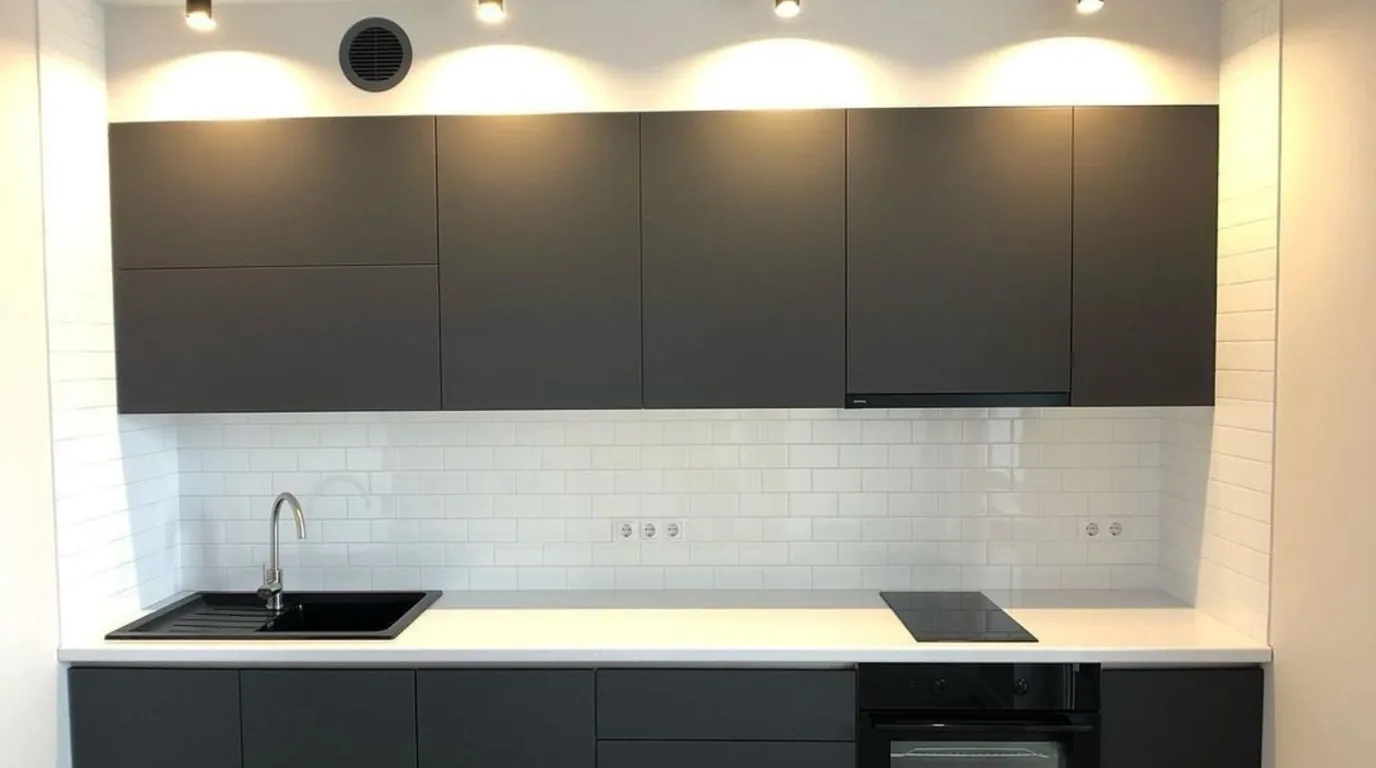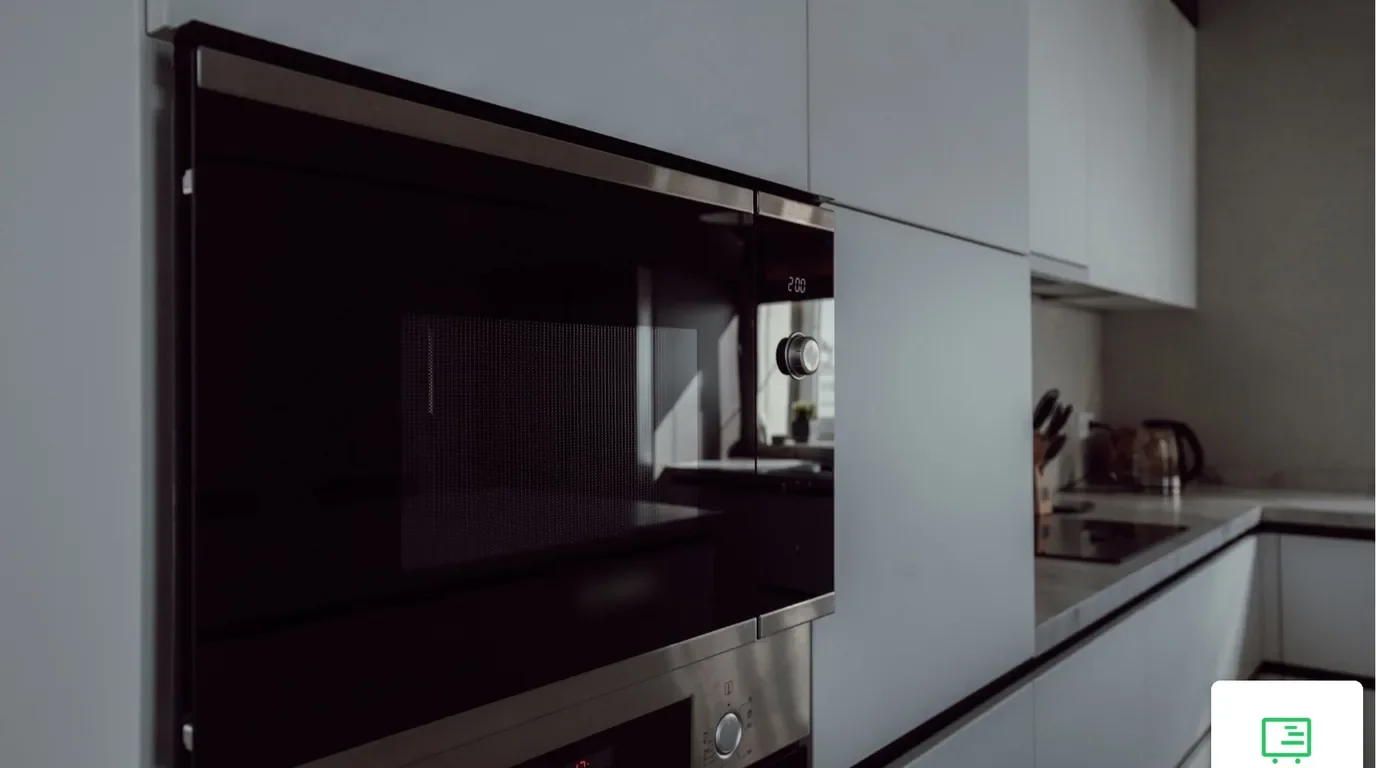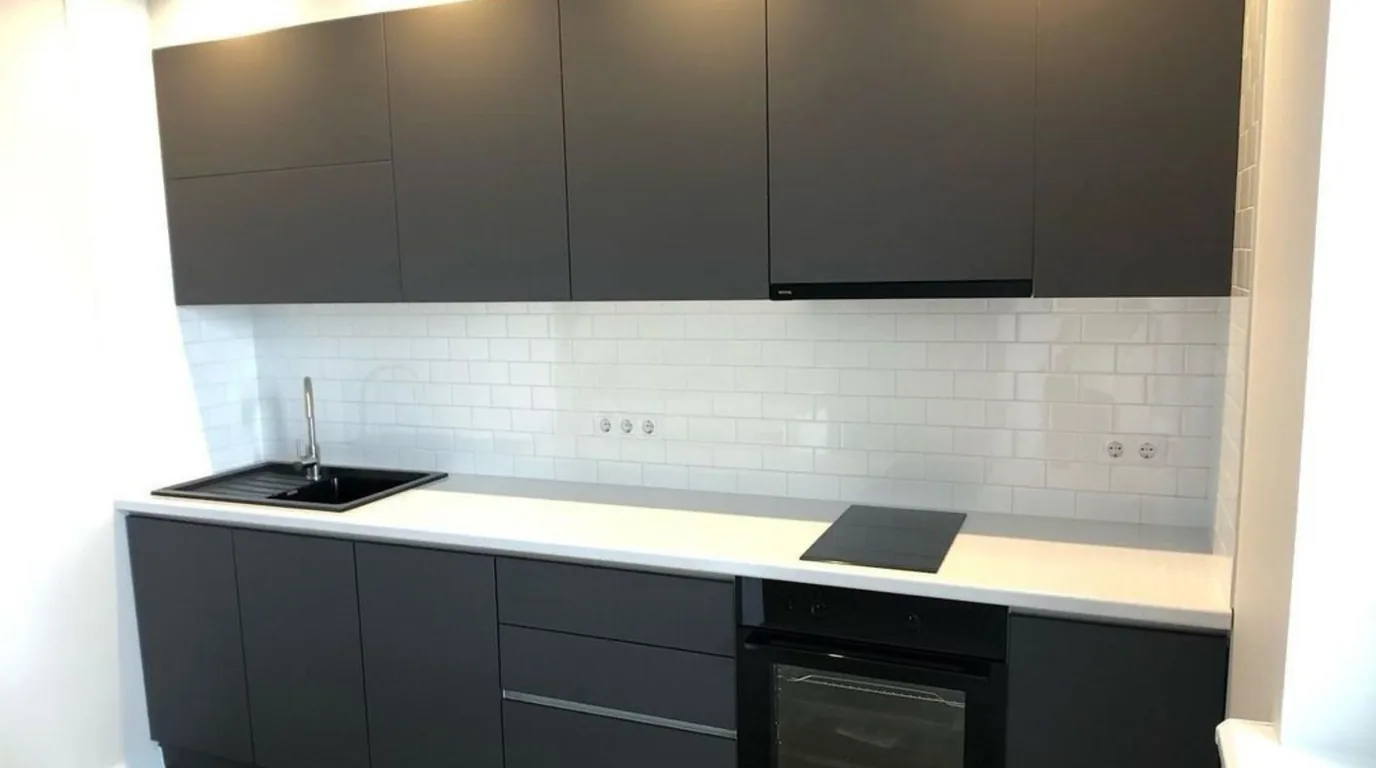
Acrylic kitchen doors are MDF boards faced with acrylic less than a millimetre thick. They give deep gloss or smooth matt, do not yellow in sunlight and cope well with household chemicals. The downsides: a limited colour range, in practice flat doors only, and sensitivity to dry wiping. They suit a sleek, modern kitchen without decorative profiles.
In this article
Acrylic kitchen doors are MDF boards faced with acrylic less than a millimetre thick. They give deep gloss or smooth matt, do not yellow in sunlight and cope well with household chemicals. The downsides: a limited colour range, in practice flat doors only, and sensitivity to dry wiping. They suit a sleek, modern kitchen without decorative profiles.
Acrylic is most often compared with lacquer, because from a distance the two look alike. The difference shows in daily use and at the first scratch. Acrylic is a finished board with a factory surface, while lacquer is sprayed onto MDF in a paint shop. That decides how many colours you can choose from, whether the door can be routed and how damage is repaired.
What an acrylic door is made of
An acrylic door has three layers. The core is MDF, a board made of fine wood fibres, most often 18 mm thick. The face gets a layer of acrylic: usually 0.6–0.8 mm in gloss and 0.35–0.5 mm in matt. The back gets a thin plastic film that keeps the board stable. In some boards the acrylic layer itself is coloured through, with no clear coat on top.
Besides the 18 mm core you will also find 15, 17 and 24 mm boards. These two numbers, a thick core and a thin acrylic layer, explain most of the pros and cons below.
The boards arrive at the workshop with a protective film on the face, and on finished doors it is only peeled off after installation. The surface is then ready straight away, with no sanding or painting. The edges are banded in the board colour. Laser edging gives the best result, with no visible glue line between the face and the edge.
Acrylic board and acrylic paint. An acrylic door is a board with a layer of acrylic plastic. MDF painted with acrylic paint is a different product with different properties. When comparing quotes, ask which one sits behind the word "acrylic".
Pros of acrylic doors
The main strengths of acrylic are lasting colour, gloss without a paint shop and good resistance to everyday kitchen life. The colour stays stable in sunlight for years. The surface is non-porous and uniform, so it is easy to clean.
The colour does not fade. Acrylic is UV-resistant. After 200 hours under a xenon lamp the colour changes only slightly. That matters in a kitchen with a large window, where the sun hits the same doors for years.
Handles heat and steam well. Short exposure to dry and moist heat at 70°C leaves the surface unchanged. A finished door with edging also went through four weeks at 50°C. Longer heating can, however, make the gloss wavy, so next to the oven acrylic needs a heat shield too.
Resists household liquids. After 16 hours of contact with vinegar, citric acid, wine, coffee, tea, olive oil, butter and a cleaning agent, the surface showed no marks at all. Mustard left a barely visible change.
Scratches can be polished out. Marks left after years of use are removed by sanding and polishing the acrylic layer. With a layer only a fraction of a millimetre thick, that is a job for a professional, but the door does not have to be replaced right away.
Deep gloss without a paint shop. High-gloss acrylic gives a mirror-like shine. Such a door is also cheaper to produce than a gloss lacquered one, because there is no multi-coat spraying.
Cons and limitations
Acrylic has three clear weaknesses: a closed colour range, a flat shape and cleaning requirements. None of them rules it out in a kitchen, but each narrows the design. Better to know them before choosing the colour than after installation.
Colours from the catalogue only. Acrylic boards are made in the colours of a given collection. Lacquer on MDF can be matched to any colour chart, including your wall colour. If you have a specific, unusual shade in mind, you are more likely to get it in lacquer. We write about choosing a kitchen colour in which kitchen colour to choose.
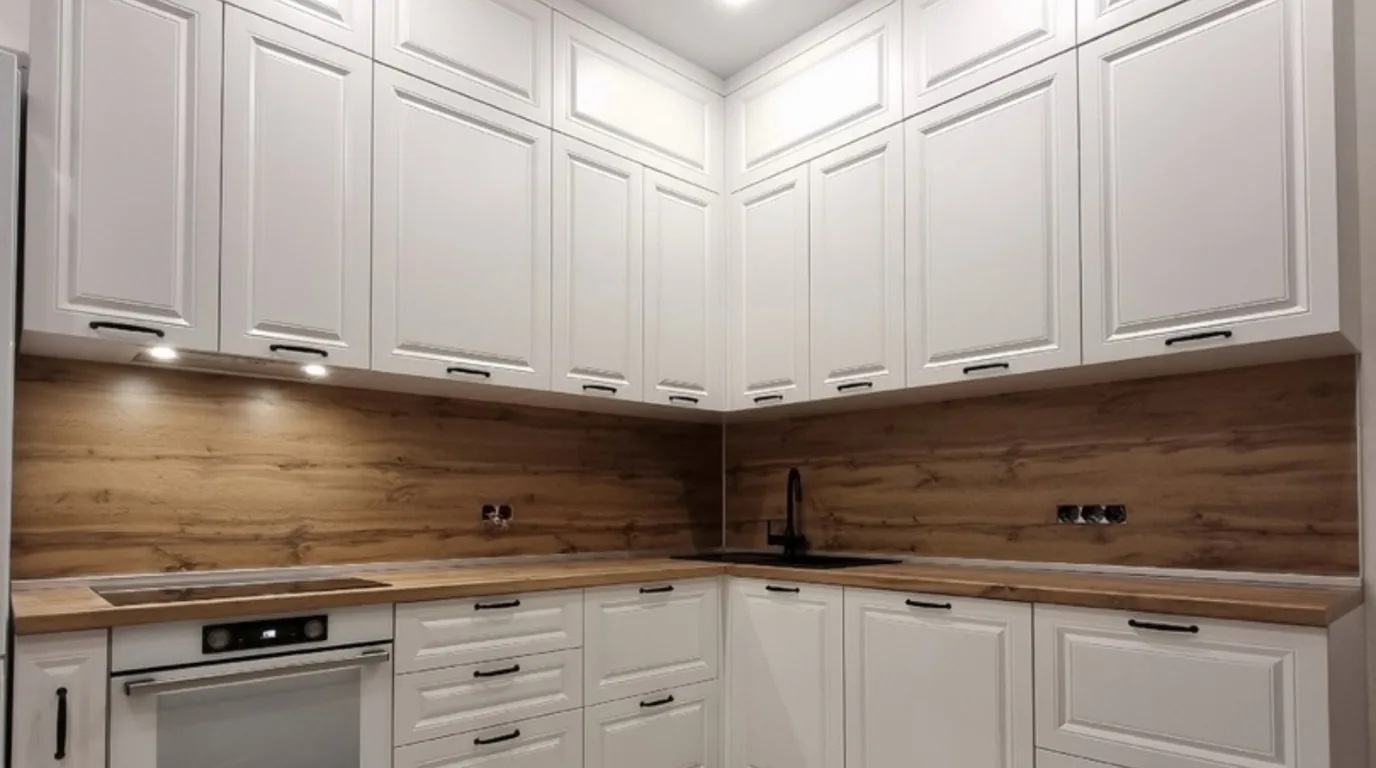
Flat shape. Acrylic is a material for flat doors: the layer is a fraction of a millimetre thick, so routing the face would expose the board. Frames, raised panels and fluting are usually done in lacquer or in wrap. Acrylic can be cut, edge-banded and, to a limited extent, bent with heat. Bending needs a precisely set temperature, though, or unevenness and cracks appear.
Mainly for vertical surfaces. Acrylic board is meant for vertical indoor surfaces, that is doors and panels. It is not used for worktops or windowsills.
Sensitive to solvents. Acetone and acetates, the solvents found in nail polish remover and thinners, left clear marks on acrylic after 16 hours and changed the surface texture. Disinfectants caused a slight change in gloss or colour.
Gloss shows marks. Like any smooth, shiny surface, gloss acrylic shows fingerprints and fine scratches against the light. Matt boards with an anti-fingerprint coating ease the problem.
A dry cloth scratches acrylic. Acrylic is not wiped dry, nor with paper towels, brushes or abrasive sponges. Hard dirt pushed across a dry surface works like sandpaper.
Acrylic, lacquer, melamine and vinyl wrap compared
Acrylic wins on colour durability and the cost of gloss, lacquer on freedom of colour and shape, melamine-faced chipboard on budget, and vinyl-wrapped MDF on routed designs at a lower cost. The table sums up the differences that matter when ordering a kitchen.
| Criterion | Acrylic | Lacquer on MDF | Melamine-faced chipboard | Vinyl-wrapped MDF |
|---|---|---|---|---|
| Made of | MDF + acrylic under 1 mm | MDF sprayed in several coats | chipboard with a melamine layer | MDF wrapped in heated film |
| Finish | high gloss or matt | from deep matt to high gloss | decors, matt, gloss shallower than lacquer | matt, gloss, decors |
| Colours | from the board catalogue | any shade | from the decor catalogue | from the film catalogue |
| Routing and shapes | in practice flat doors only | yes, frames, fluting, arches | no, flat doors only | yes, the film follows routed patterns |
| Scratches and repair | small marks can be polished out | chip goes for repair to a paint shop | hard to repair | hard to repair |
| Heat next to the oven | takes 70°C briefly, longer heating can make the gloss wavy, needs a shield too | depends on the lacquer grade | sensitive, a shield is advised next to the oven | sensitive, needs a heat shield |
| Relative cost | usually cheaper than gloss lacquer | usually dearer than acrylic | usually the cheapest | usually cheaper than lacquer |
A few rows need a word of explanation. Vinyl-wrapped and melamine doors are especially sensitive to heat. That is why a heat shield is fitted next to the oven, and the warranty on melamine doors may depend on it. Melamine-faced chipboard has a tough surface, but moisture gets in through the edges, so its lifespan depends on how well the edging is sealed. We explain the difference between the boards in MDF vs chipboard.
Lacquer has the edge wherever the kitchen needs a routed door, an arch or a colour outside the catalogue. Acrylic has it in a flat gloss kitchen where lasting colour and easy cleaning count. We cover matt versus gloss within lacquer separately in matt or gloss lacquer.
When to choose acrylic and when something else
Acrylic is a good choice for a sleek, modern kitchen in a single colour, especially in gloss. Lacquer works better in a classic kitchen and wherever you need an unusual colour or routing. Melamine and vinyl wrap come into play on a smaller budget.
- Acrylic — flat doors without profiles, gloss or matt, a kitchen with a large window, a catalogue colour is enough.
- Lacquer — a kitchen with routed doors, fluting, arches, a colour matched to the wall or other furniture.
- Melamine-faced chipboard — wood decor, simple doors, a tight budget, lots of cabinets.
- Vinyl-wrapped MDF — a routed pattern at a lower cost, with a heat shield next to the oven.
Finishes can be mixed in one kitchen. An example is our floor-to-ceiling kitchen with white gloss above and grey matt below. The wall cabinets there are in white gloss, which reflects light from the window. The base row, touched most often, is in light grey matt, because fingerprints show less on it. The same logic works with acrylic, which comes in both versions.
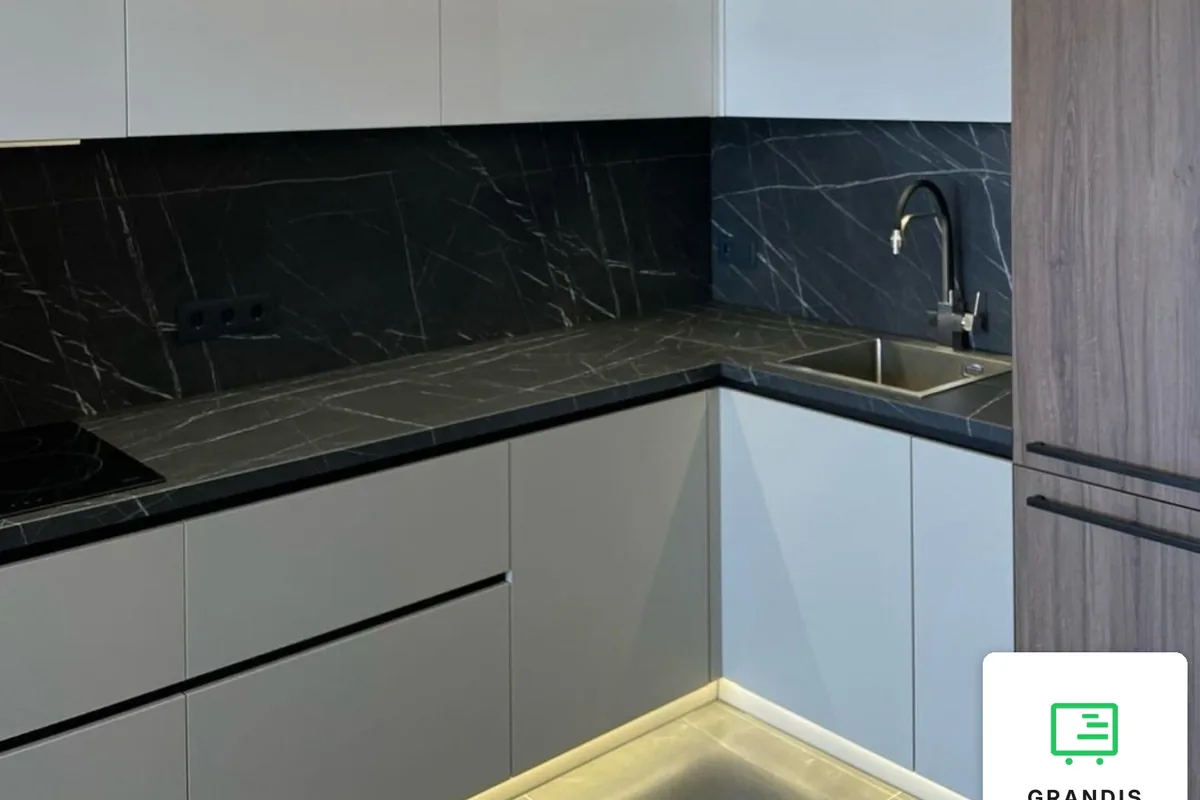
It is worth planning how the doors open together with the material. Flat acrylic doors go well with handle profiles and handleless mechanisms, because nothing has to be routed into the face of the door. We describe the pros and cons of both in handles or a handleless kitchen.
If you are torn between acrylic and lacquer, the simplest way is to compare them on a visualisation. After a free laser measurement we prepare a design with a visualisation and a quote for the finish you choose. The first step is to book a measurement.
How to clean acrylic and matt kitchen doors
Acrylic doors are cleaned with a damp microfibre cloth, with mild soap if needed. Do not wipe them dry and do not use solvent-based cleaners, cream cleaners or abrasive sponges. Wipe off dirt as you go, before it dries.
Soften a heavily soiled spot with a damp microfibre cloth first, because hard dirt scratches when rubbed. Warm water with mild soap is enough; keep nail polish remover, thinners and acetone away from the doors.
For matt doors made of other materials, such as melamine-faced chipboard, dust can be wiped with a dry microfibre cloth. Apply the cleaner to the cloth rather than the door, and wipe in straight lines rather than circles. For greasy marks, water with washing-up liquid and a small dash of spirit, up to 15%, is enough. Acrylic, though, is always cleaned wet. Keep the care sheet from your maker, because advice differs between collections.
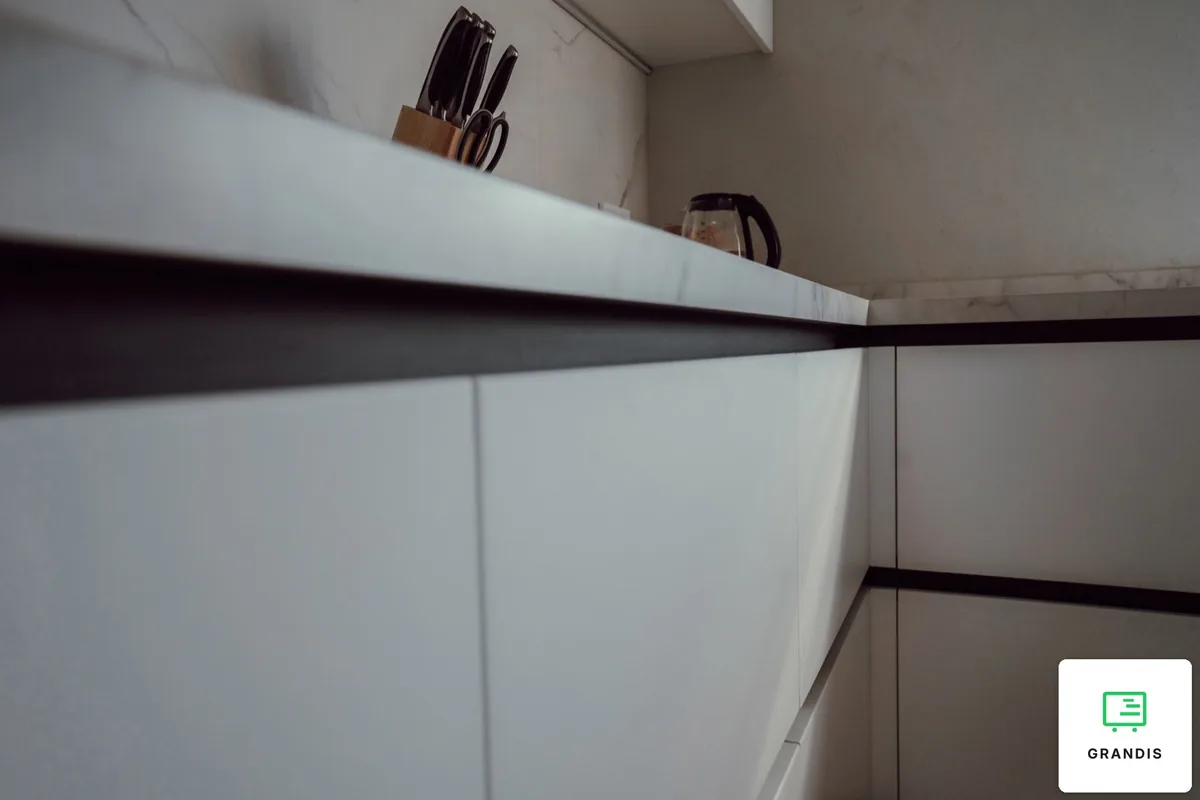
A cloth by the dishwasher. Most fingerprints gather on the base cabinet doors next to the dishwasher and sink. A damp microfibre cloth kept in that area lets you wipe a mark off right away, before it dries.
Frequently asked questions
Acrylic or melamine kitchen doors: which to choose?
Melamine-faced chipboard if budget or a wood decor matters and the doors are simple. Acrylic if the kitchen should have a deep gloss or a smooth matt in one colour that does not fade in the sun. Melamine has a shallower gloss and moisture gets in through its edges, so next to the sink and dishwasher a well-sealed edge is key.
Can acrylic kitchen doors be routed?
Patterns, frames and fluting are usually not done on acrylic doors. The acrylic layer is a fraction of a millimetre thick, so routing the face would expose the MDF underneath. The door can be cut to size, edge-banded and drilled for hinges. A routed pattern is usually done in lacquer or vinyl-wrapped MDF.
Acrylic or lacquered kitchen doors: which to choose?
Acrylic if the kitchen has flat doors in a catalogue colour and you want lasting gloss at a lower cost. Lacquer if you need any colour, routing, an arch or fluting. Both materials can be combined in one kitchen.