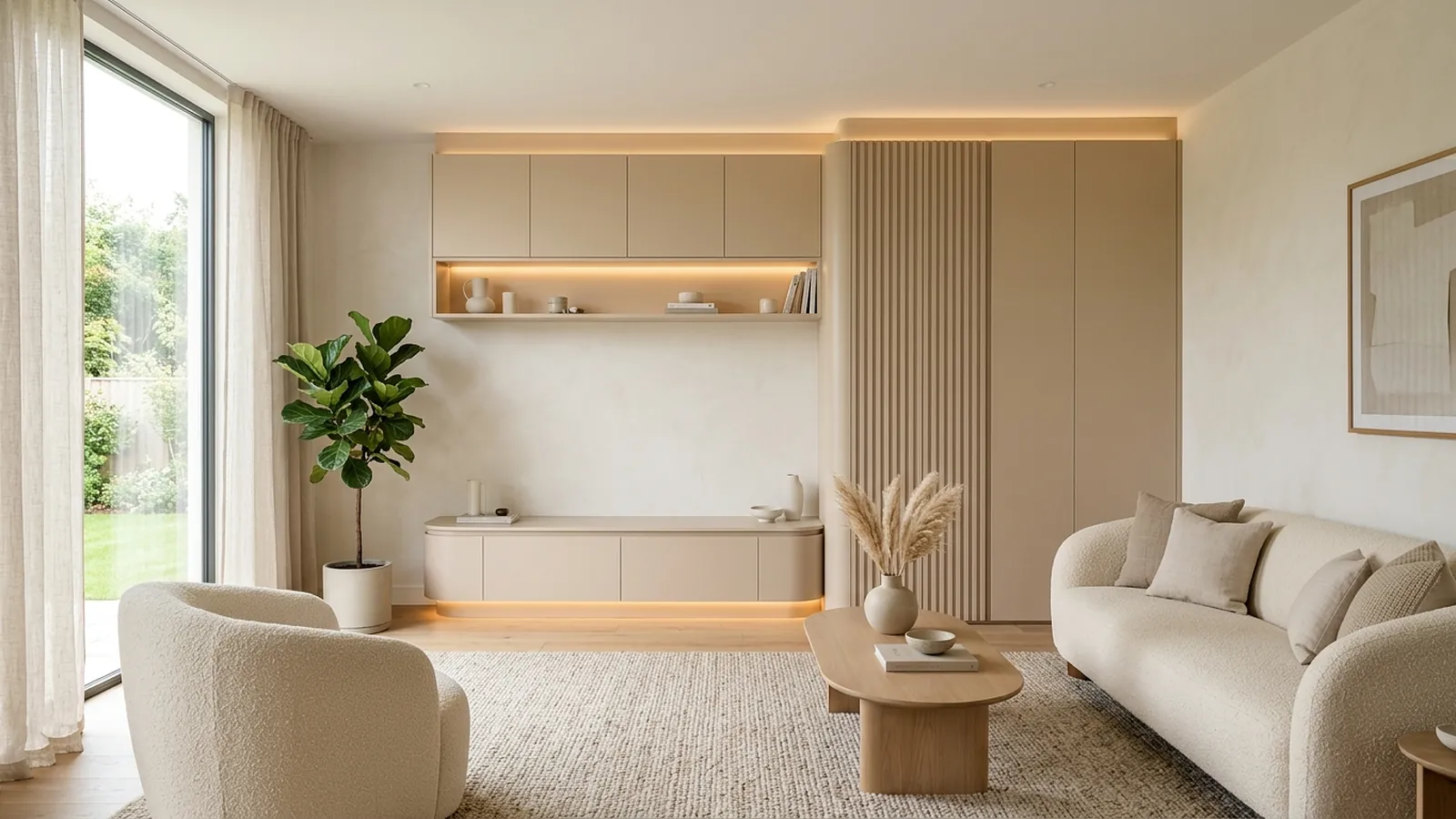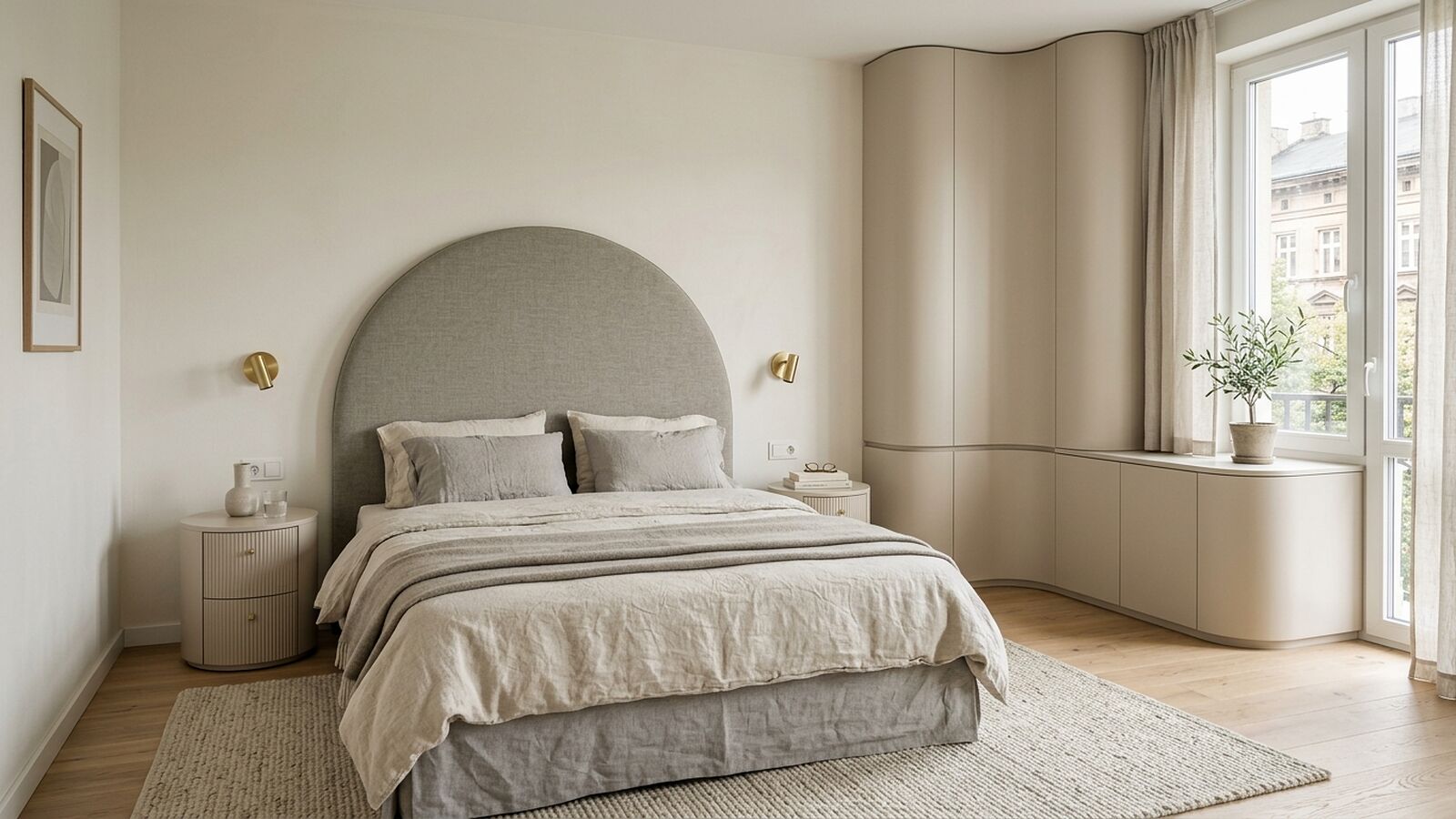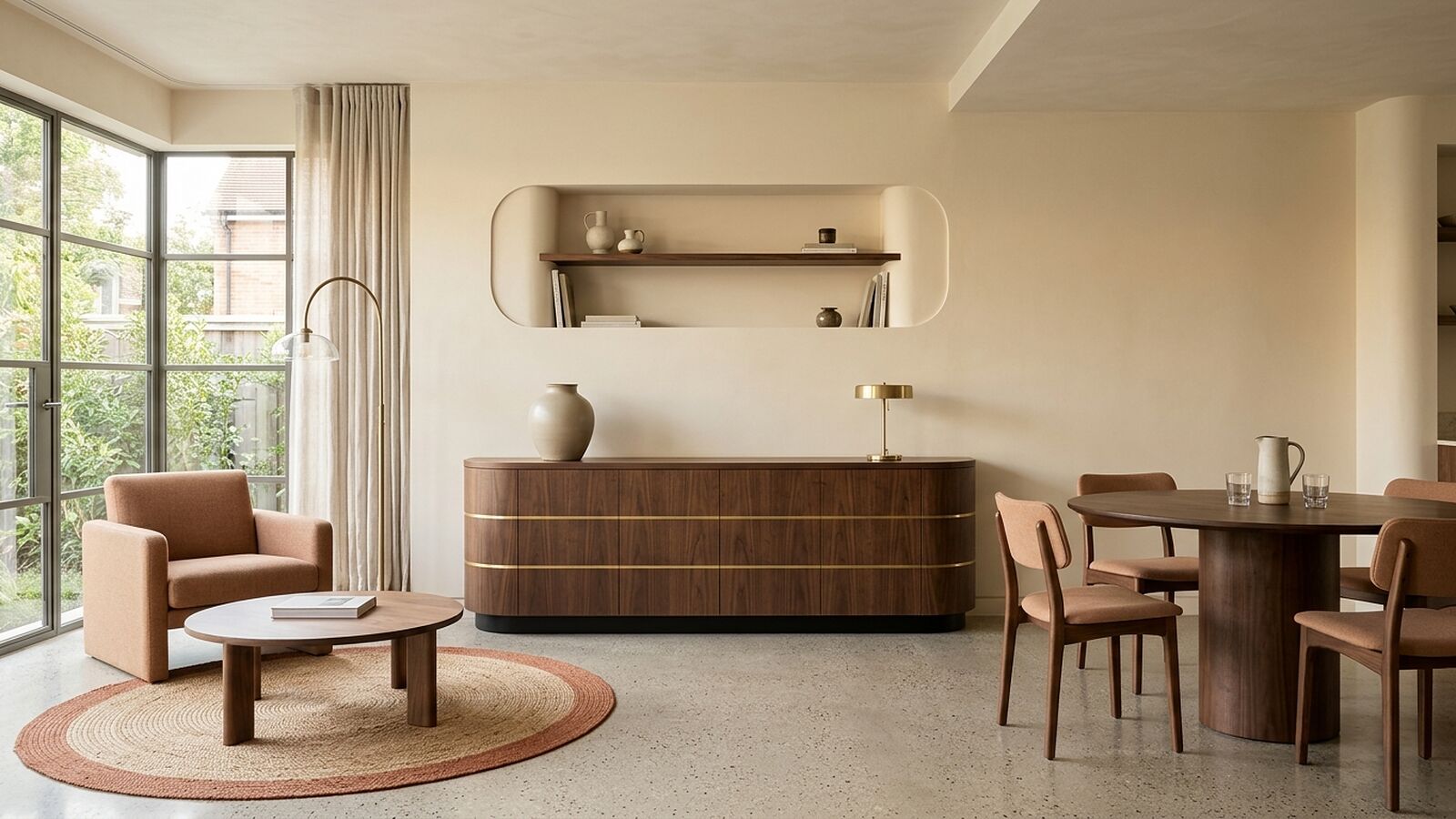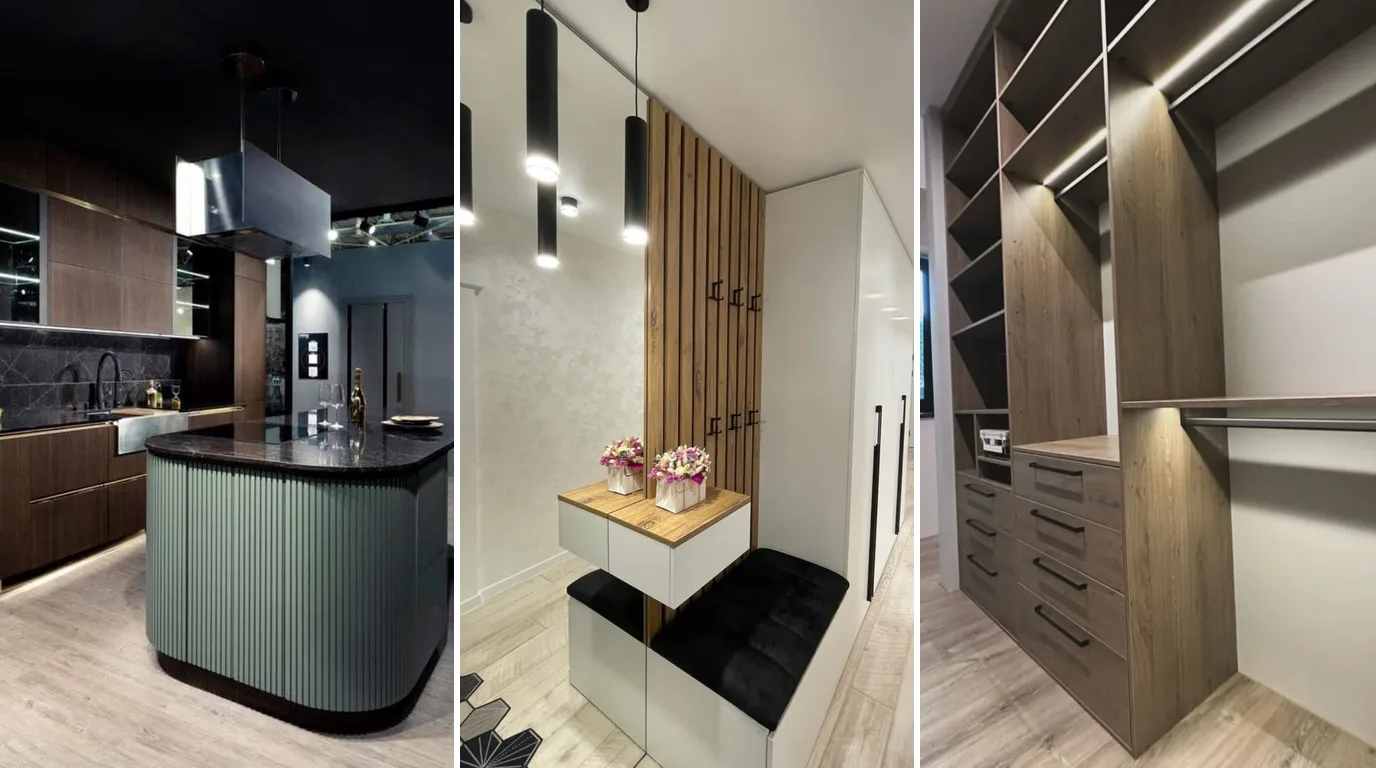
Furniture trends for 2026 follow three directions, visible both at the spring fairs in Milan and in made-to-measure kitchens, wardrobes and walk-ins. The first is texture: fluting, slats, matt finishes and a clear wood grain. The second is warm colours and curved forms. The third is technology hidden inside the units. Take from a trend whatever makes everyday life easier.
In this article
This is not legal advice. The text is our review of publicly available sources, prepared with the help of AI. Before deciding, check the current requirements in official sources.
Furniture trends for 2026 follow three directions, visible both at the spring fairs in Milan and in made-to-measure kitchens, wardrobes and walk-ins. The first is texture: fluting, slats, matt finishes and a clear wood grain. The second is warm colours and curved forms. The third is technology hidden inside the units. Take from a trend whatever makes everyday life easier.
Exhibitors and observers at the April 2026 fairs described a similar picture. Grey, cool kitchens are giving way to earthy shades, and smooth surfaces are gaining grooves, routed lines and reeded glass. Lighting has moved into shelves, drawers and plinths. According to available materials, since 6 August 2026 a new, lower limit on formaldehyde emissions has also been applied to furniture sold in the European Union. Official sources state that it covers new indoor furniture.
Below we describe each trend as it looks in an actual order. What it means for your furniture, where it works and where it is better to skip it.
Texture you can feel with your fingertips
Tactility means furniture you want to touch. In 2026 that means matt surfaces, fluted fronts and slats, natural veneer and wood with a visible grain. A front like this brings an interior to life without an extra colour or decoration. It does, however, need more cleaning than a flat, smooth one.
Reports from the 2026 fairs explicitly list matt natural textures, striped and grooved surfaces, and asymmetric details. Reviews of the kitchen fairs from the same year add reeded and tinted glass in display cabinet doors. Light oak and ash also appear alongside wood in smoked and coffee tones.
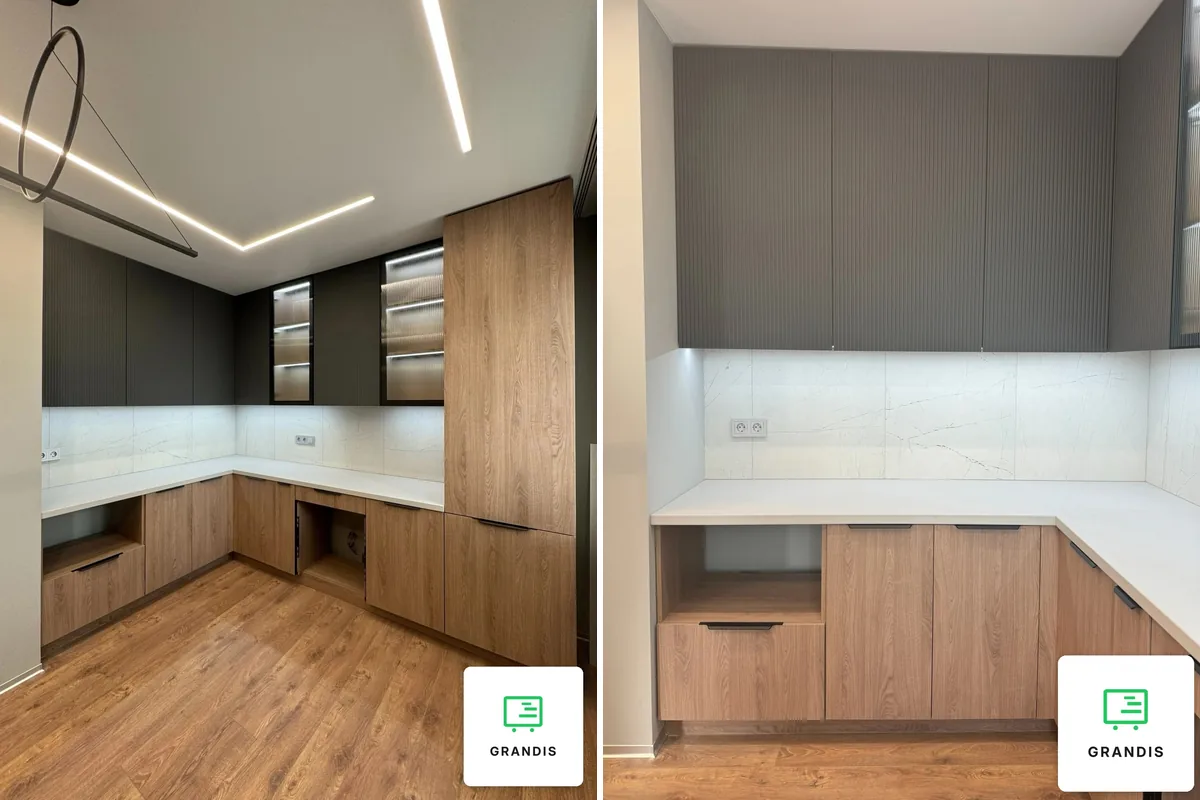
In our graphite and wood kitchen, the dark matt upper run is fluted. The grooved front adds interest to the graphite surface without a second colour. We built two display cabinets with reeded glass and a light on every shelf into the run of units. The glass blurs what is inside, and in the evening the cabinets work like lamps.
Slats work well beyond the kitchen. In the hallway with slats, vertical battens in oak decor on a black backing run from the seat to the ceiling. Hooks hang on them in two rows, the upper one for adults and the lower one for children. Soft and porous surfaces have a second advantage: they change the acoustics of a room. We cover this in more detail in our piece on acoustic solutions in the interior.
Where should you avoid texture? Next to the hob and the worktop, shallow grooves work better, because grease settles in deep ones.
Fluting on one element. A fluted front works best as an accent: an island, a run of wall cabinets or a tall appliance housing. Next to the hob, choose shallow grooves or a plain surface, because grease is harder to wash out of deep channels.
It is worth knowing what lies beneath the texture. Wood decor is a print on board, durable and identical on every front. Veneer is a thin sheet of real wood, so each front has its own pattern. Solid wood can be sanded and refinished. The choice depends on what matters more: a hard-wearing kitchen surface or a natural grain on a living room front.
Warm colours and curved forms
The 2026 palette is warmer than a few years ago. Ochre, terracotta, apricot and warm brown dominated the fairs, alongside muted green, clay and greyish brown. Shapes are getting rounder. Islands end in an arc, worktops have soft edges, and fronts can bend into a wave.
One point needs explaining. The best-known colour of the year for 2026 is a soft, calm off-white. Reports from the fairs, on the other hand, talk about rich earth tones and dark accents. These two pieces of information do not contradict each other. In practice, it works best to plan a light, calm base for large surfaces and one piece of furniture in a warm, deep shade. A base like this is easier to refresh with accessories a few years later.
The sage island combines both trends. Its rounded body has vertical fluting, and the dark worktop with a marble pattern ends softly in an arc. This single piece brings colour into a kitchen finished in dark walnut decor. With no corner, it is easier to walk around.
A curve can also be a practical solution. In the vanity unit with a wavy front, the section next to the toilet is shallow and the part under the basin is deeper. The wave joins both sections without a corner at hip height. We explain how to plan curves in a bedroom in our article on rounded bedroom furniture.
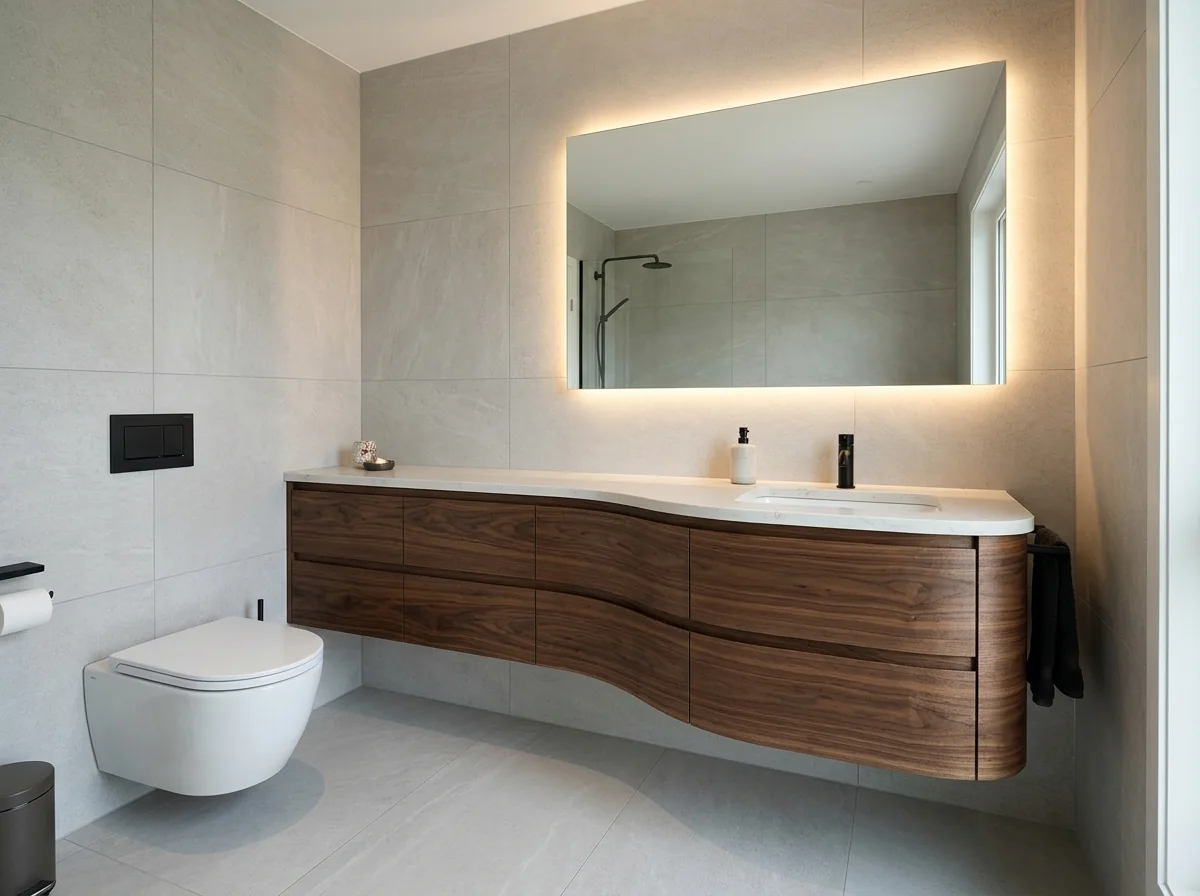 AI-generated
A front is harder to repaint than a wall. That is why a strong colour is best given to an element you can replace on its own. An island, a single cabinet front or a tall unit are good places for it. Floor-to-ceiling units in a fashionable shade are a decision for many years.
Eco-design: durability instead of replacement
Eco-friendly made-to-measure furniture in 2026 is, above all, built to last. What counts are materials of known origin, low emissions from boards and a construction in which a front, hinge or runner can be replaced. Recycling is the last step, not the first.
Official sources state that since 6 August 2026 furniture and wood-based materials placed on the market in the European Union usually emit no more than 0.062 mg/m³ of formaldehyde. This compound can be released from the adhesives in boards. According to available materials, the limit applies to new indoor furniture, including pieces without an eco label. When you order, ask the maker which boards will go into your units and whether they have documents confirming the emission level.
In 2025 the European Union announced ecodesign requirements for furniture: durability, spare parts and a share of recycled raw materials. No specific figures have been published yet. The direction is clear, though, and it matches what already pays off for the customer today.
What does this mean when you order?
- A construction in which the front and the carcass are separate elements. Years later, only the fronts are replaced and the carcasses stay.
- Fittings that can be adjusted and replaced without cutting anything out. These are hinges, drawer runners and opening mechanisms.
- Timber with a certificate of origin, if that matters to you. We explain how this works in our article on timber certification in Poland.
- A timeless base and a fashionable accent. This is the simplest way to keep the furniture from ageing faster than its material.
Smart comfort: technology you cannot see
"Smart" furniture in 2026 rarely means an app on your phone. It means technology built in so that you do not see it. The light sits in shelves and drawers, and sockets are hidden in the units. Handleless fronts open with a push or with electric assistance.
Reports from the 2026 fairs point to layered light: separate indirect, accent and zone sources. They also mention furniture with integrated power. Kitchen reviews describe lights in shelves and under wall cabinets, including sensor-activated ones. Handleless kitchens are still in demand, often with an integrated profile.
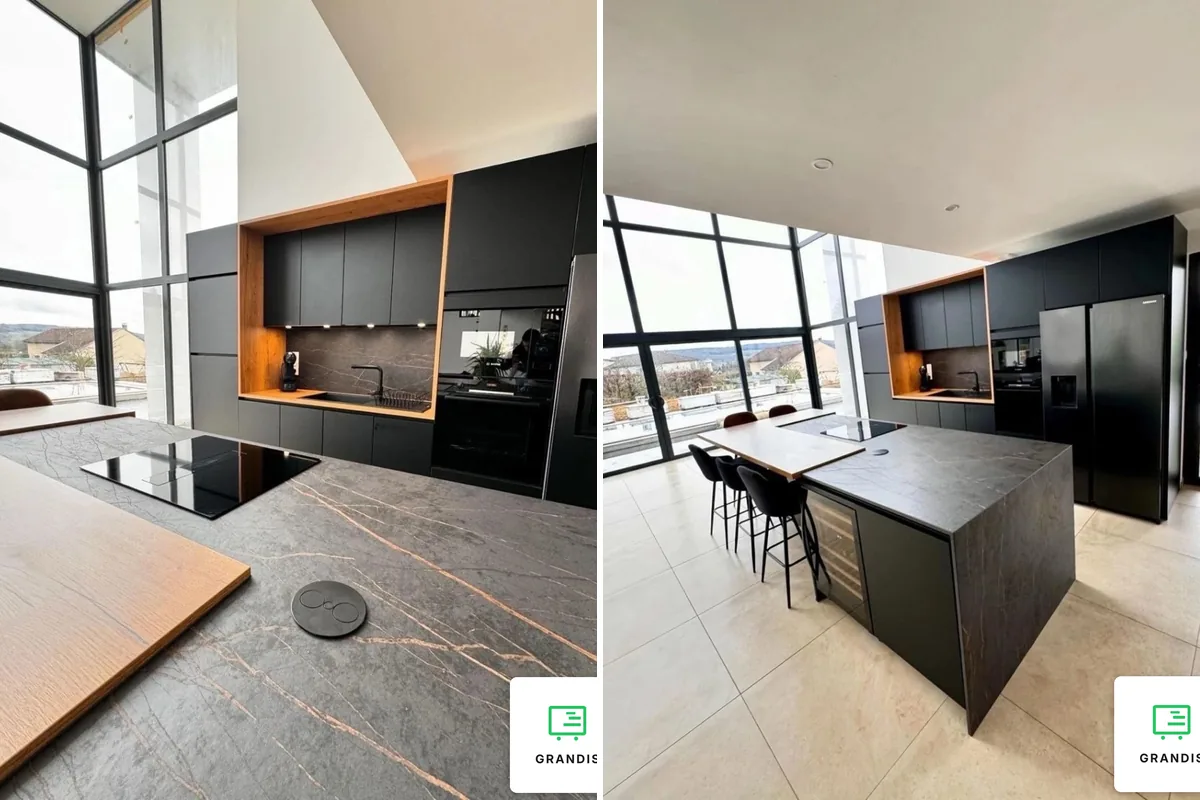
In the black matt kitchen with an island, the hob has a built-in extractor. So there is no hood hanging over the island, and the view of the windows stays open. We hid the sockets in a pull-out block. The fronts are smooth, handleless and match the colour of the window frames.
In the U-shaped walk-in wardrobe, the light is recessed into the shelves above the rails. The walk-in has no doors, only the drawers are closed, and the lighting shows every item of clothing from the entrance. We cover chargers, sensors and furniture connected to a home network separately in our article on smart furniture.
Plan the wiring before the furniture. A socket in a drawer, lit shelves and electric front opening all need power in a specific place. Agree the power points with an electrician at the design stage, before the carcasses are made.
Push-to-open, where a front opens when pressed, has its weak points. A child can easily open such a door by accident. Under the sink, where you touch the front with a wet hand or a knee, a profile or handle works better. More on this choice in our piece on handleless kitchens.
How to order on-trend furniture that will not bore you in a year
A trend will date faster than a well-made carcass. That is why, with made-to-measure furniture, it is best to start with function and pick the fashionable element last. Four decisions taken in the right order are enough.
- Function and dimensions. What needs to fit, who opens the fronts and how often, where the appliances stand.
- Technology. Power points, built-in lighting, appliances, opening method. You need to know this before the carcasses are designed.
- Base. A calm colour and smooth or matt fronts on large surfaces.
- Accent. One texture or one colour on one piece. A fluted island, a wavy front, slats by the entrance.
The cost of such units depends on the number of fronts, the type of finish and how much technology goes inside. Veneer, fluting and curves need more machining than a flat board front. Every light and every socket means extra work during design and installation. We give the exact amount after a free measurement, in the quote attached to the design with visualisation. The price is written into the contract.
A design like this shows straight away how a trend looks in a specific interior. We have more than 300 completed projects behind us, including ones with fluting, curves and built-in lighting. Read more about how we work on our furniture for the home page. You can book a free measurement right away.
This article is for information only and describes trends and regulations as of October 2026. It does not replace legal advice. Furniture must be connected to the power supply by a qualified electrician.
Frequently asked questions
What furniture is in fashion in 2026?
Furniture with a distinct texture, warm colours and soft, rounded forms is in fashion. The most common features are fluted fronts, slats, matt surfaces, natural veneer and wood with a visible grain. Lighting and sockets are increasingly hidden in the units, and fronts do without handles.
What furniture colours should you choose in 2026?
For large surfaces, a calm warm white, beige or light wood works well. The 2026 accent is earth tones such as ochre, terracotta, warm brown and muted green, or a deep black. A strong colour is best kept to one piece that can later be replaced on its own.
Will fluted fronts go out of fashion quickly?
That cannot be predicted. In 2026, fluting was one of the clearest motifs at the kitchen fairs. Restraint reduces the risk. Grooves on an island or a run of cabinets are easier to change than a whole ribbed kitchen.
Are fluted fronts hard to keep clean?
Harder than smooth ones, because dust and grease collect in the grooves. Next to the hob, choose shallow grooves or a plain front. For everyday cleaning, a slightly damp, soft cloth without abrasive products is enough.
Are white kitchens still in fashion?
Yes, but white in 2026 is warmer and softer, not cold and clinical. A white base is often combined with wood, stone or a single front in a warm colour. A layout like this is easy to refresh without replacing the units.
Is furniture with hidden LED lighting practical?
Yes, if the light has a specific job. Lit shelves in a wardrobe help you find clothes, and a lamp under the wall cabinets gives you a bright work area on the worktop. This lighting needs power inside the units, so plan it together with the design, not after installation.