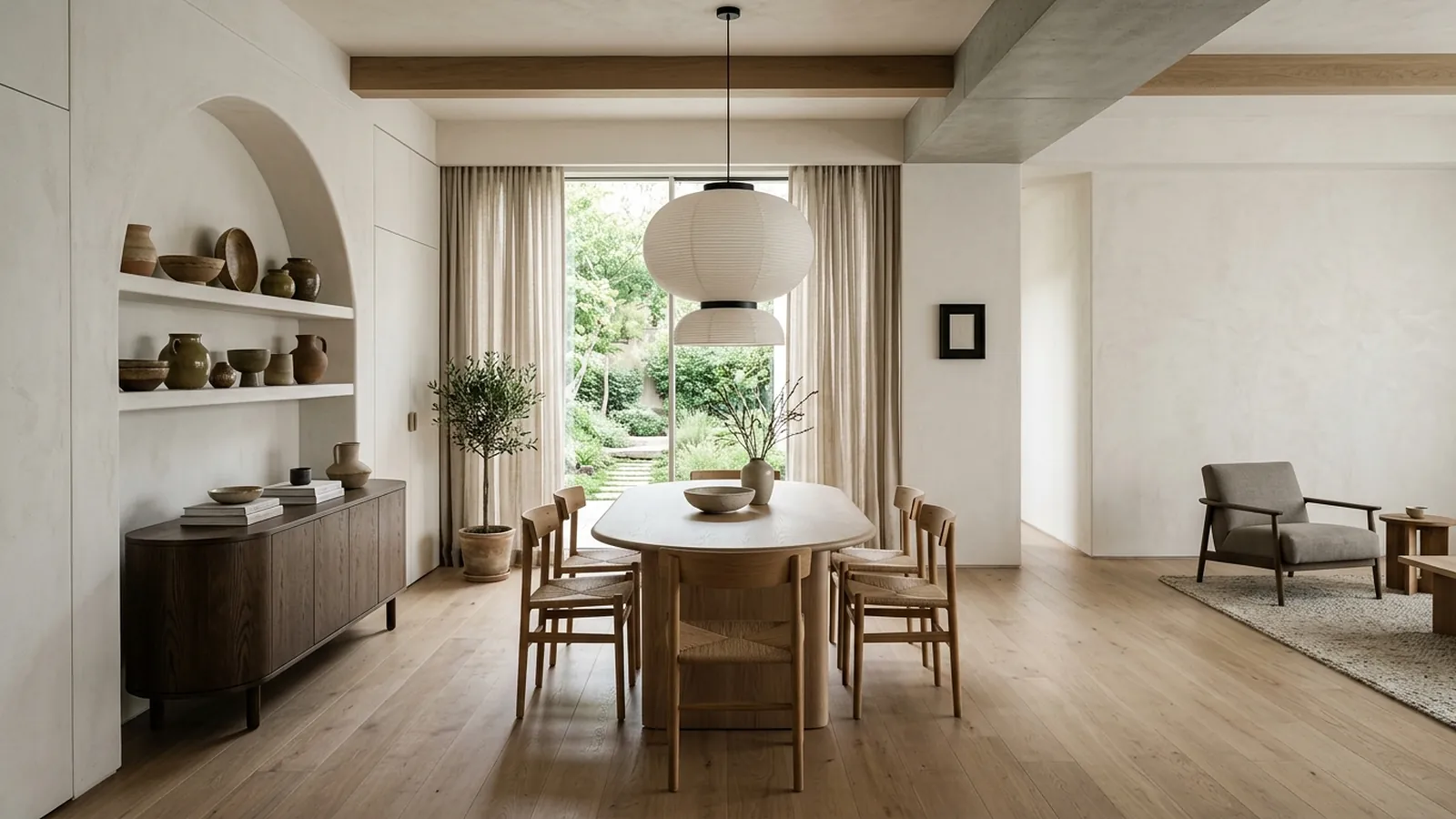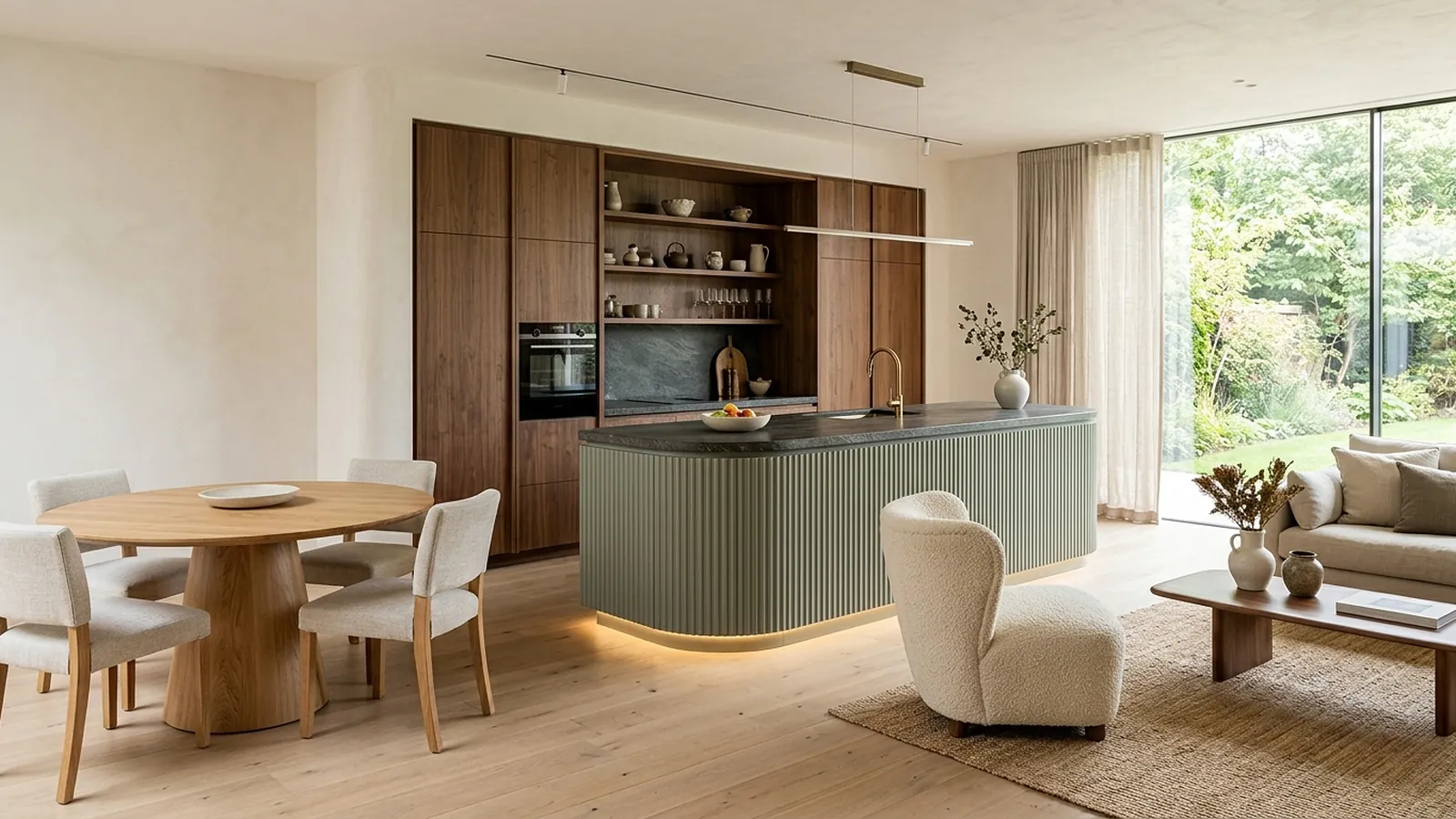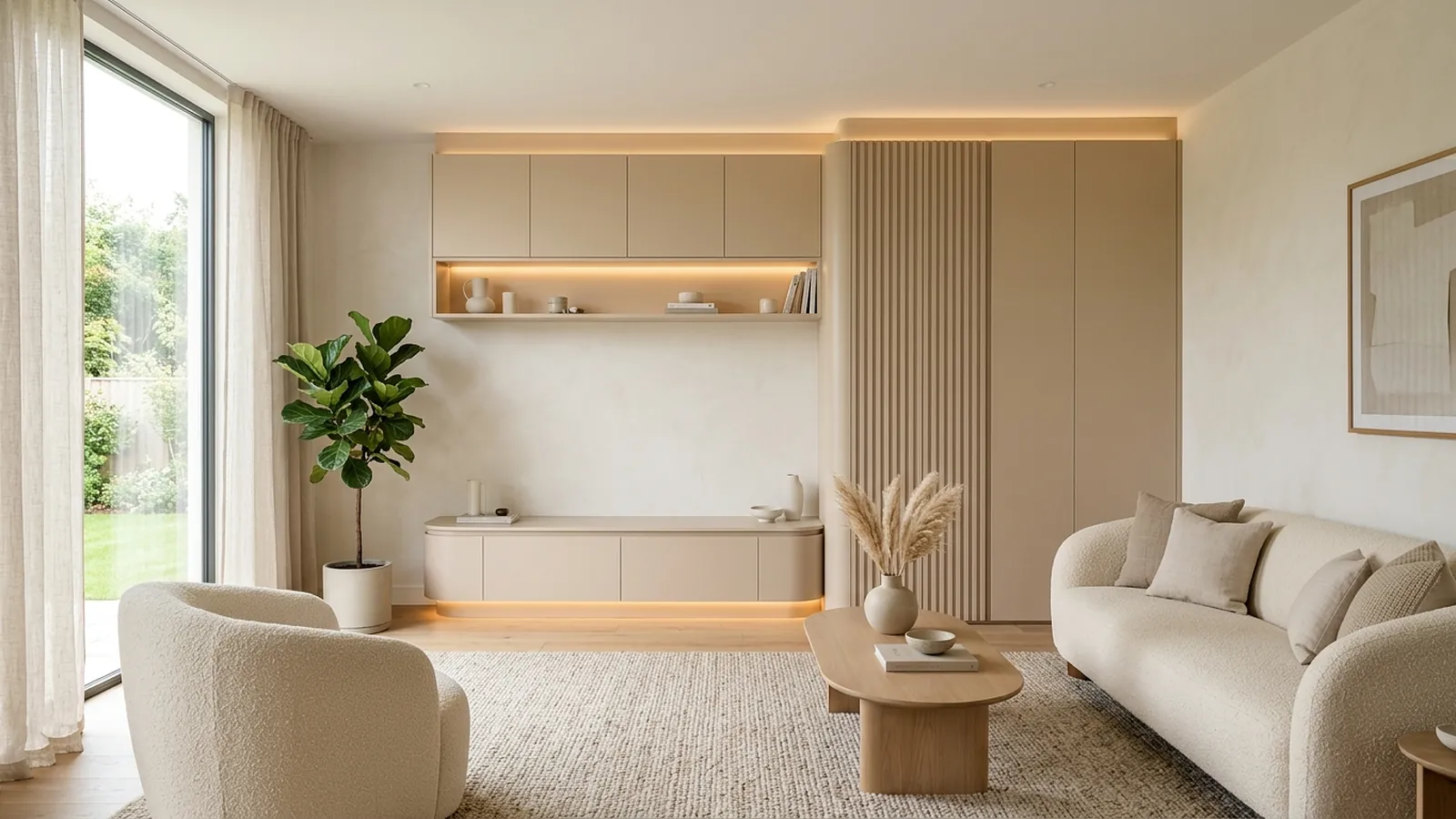
Soft minimalism furniture keeps the rules of minimalism – few objects, smooth fronts, hidden storage – but drops its coldness. Rounded edges and gentle curves replace sharp angles, warm light shades replace clinical white, and matt, pleasant-to-touch surfaces and diffused light replace gloss.
In this article
Soft minimalism furniture is minimalism that has stopped being austere. Order, few objects and calm fronts remain, but rounded edges and gentle curves replace sharp angles, and warm light shades with matt, pleasant-to-touch surfaces replace cold white.
What soft minimalism is
Classic minimalism, described in our guide to minimalist style, is built on reduction: only what you need, simple volumes, uniform planes. Its weakness can be coldness – the room looks clean but it is hard to relax in. Soft minimalism keeps the discipline and adds what was missing: softness of form, warmth of colour and the pleasure of touch.
It is not a decorative style. A soft minimalism interior is still sparing, but every element is a little gentler: a cabinet corner has a radius, the dining table is oval, the counter has a rounded end, and instead of pure white you get cashmere, oat or light sand.
Soft minimalism vs japandi and organic modern
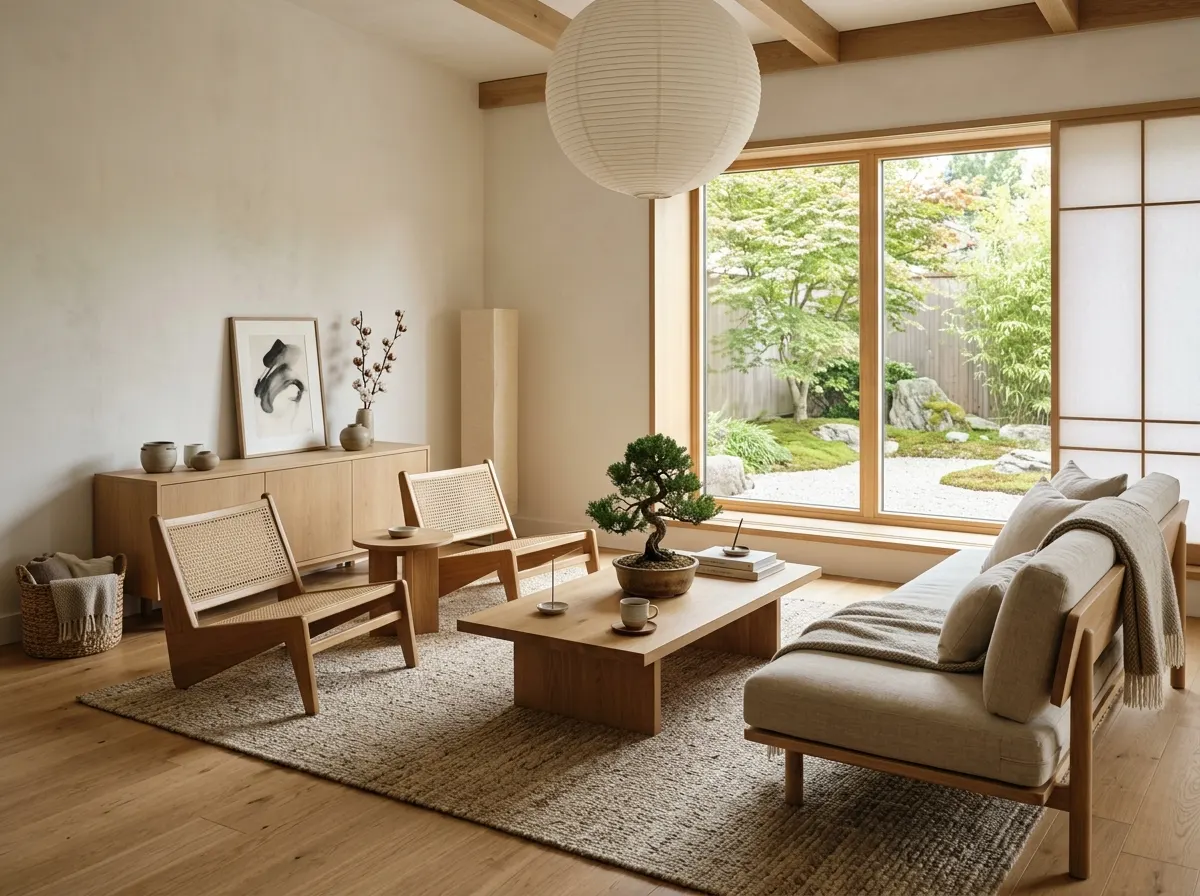
All three styles like calm and rounded forms, but their centre of gravity differs. Japandi relies on wood, craft and low furniture. Organic modern plays with a contrast of natural materials – walnut, stone, texture. Soft minimalism is the lightest and most uniform: large smooth planes in one warm shade, few textures, and curves that come from the volume rather than the material.
A simple test: if the first thing you notice in a room is wood and texture, it is probably organic modern or japandi. If the first thing you feel is the calm of a light, uniform space with soft outlines, it is soft minimalism.
Key features of soft minimalism furniture
- Rounded edges and corners. From a subtle radius on a front edge to a clear curve at the end of a counter, island or bookcase.
- Handleless fronts. Routed grips, push-to-open or a recessed rail in the plinth. The plane should be uninterrupted.
- A light, warm palette. Off-whites, cashmere, oat, light sand, warm grey, powdery tones.
- Matt. Matt lacquer, lightly textured lacquer, veneer in a light, calm finish. Gloss is the exception.
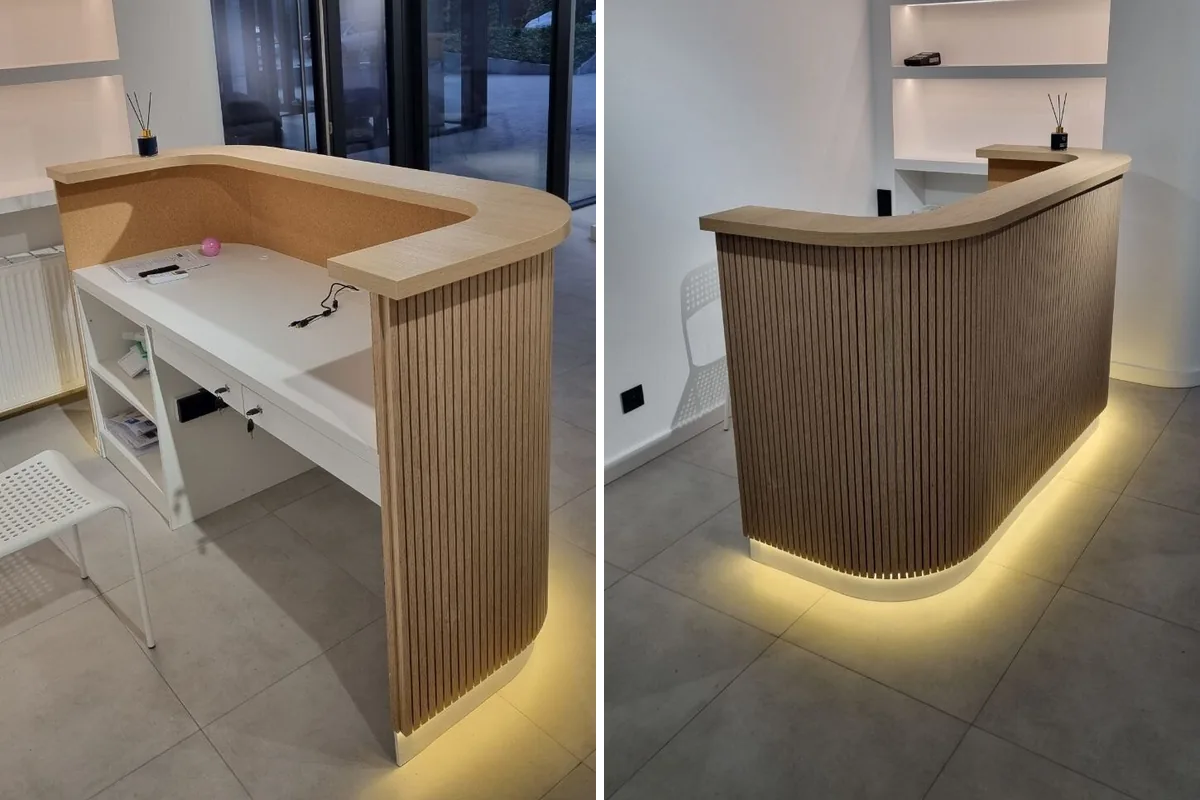
- Subtle texture in one place. For example slats on a counter front or a fluted island – as the only rhythm in a calm room.
- Hidden storage. Floor-to-ceiling units, wardrobes with fronts in the wall colour, storage in plinths. The fewer things on display, the softer the room looks.
- Diffused light. Lit plinths, niches and shelves instead of sharp spotlights.
Colours and materials
Soft minimalism works best when furniture and walls share a similar shade and differ in texture rather than colour. Rounded volumes then seem to grow out of the space instead of being placed into it.
| Element | What to choose | Why |
|---|---|---|
| Fronts and curved carcasses | Matt lacquer in a warm light shade (RAL/NCS) | Lacquer follows a curve without visible joints |
| Texture accent | Slats or fluting in lacquer or light veneer | Adds rhythm and light-and-shadow without adding colour |
| Tops | Light mineral composite, sintered stone, oak veneer | A calm matt surface with a soft edge |
| Cabinet interiors | Laminated board in a light décor | Durable and practical where fronts are not seen |
| Fabrics | Bouclé, linen, wool in white and beige tones | They reinforce the softness of the room |
A well-chosen white in soft minimalism is never clinical. Compare several warm shades on large samples in daylight and artificial light – on a curved front colour changes with the angle of light, so choosing from a small swatch can be misleading.
Where soft minimalism furniture works
Homes
A kitchen with smooth handleless fronts and an island with a rounded end, a living room with a light TV unit with arched sides, a bedroom with a wardrobe in the wall colour and bedside tables without sharp corners. Room-by-room ideas are in our articles on rounded furniture for the living room and rounded furniture for the bedroom.
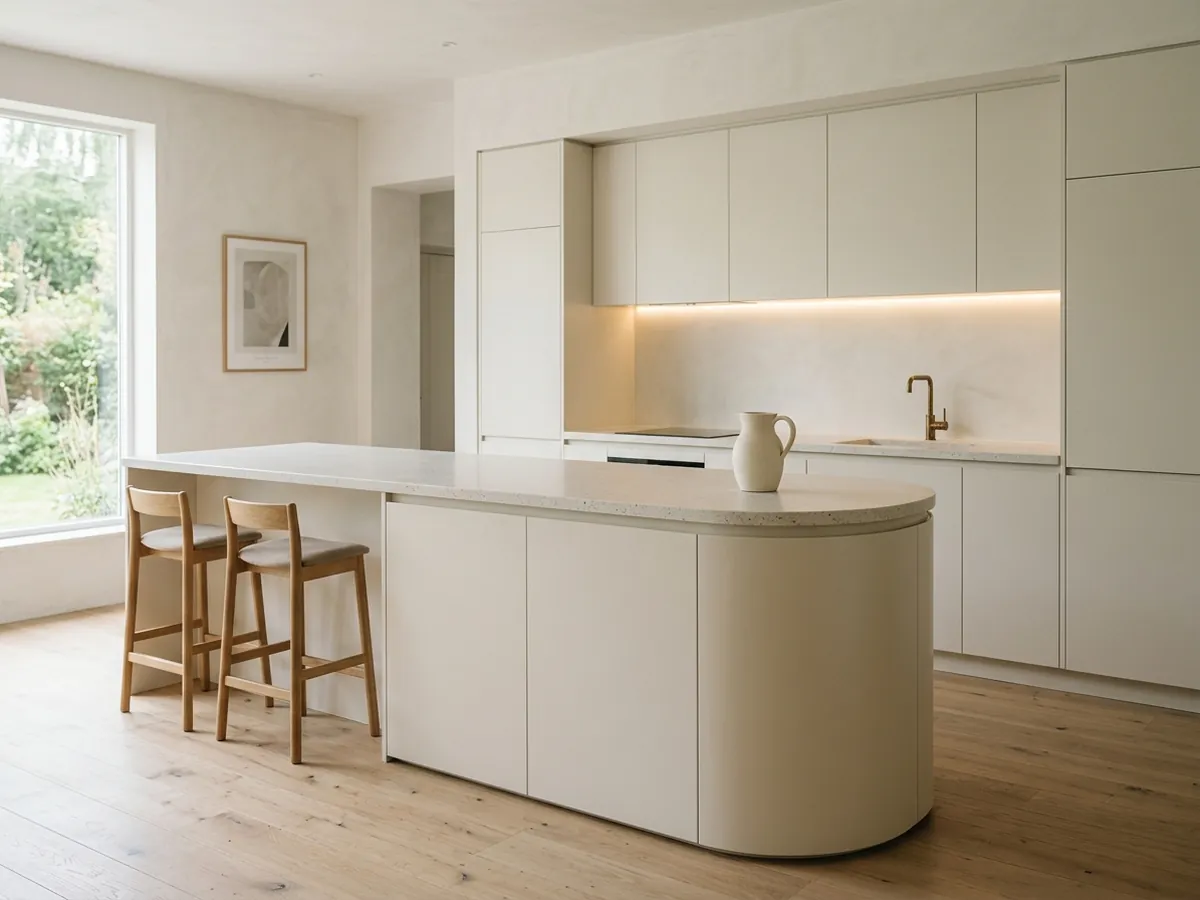
Visualisation – in a soft minimalism kitchen the curve appears only at the end of the island, by the walkway. Fronts, lighting and wall colour stay calm.
Service spaces and offices
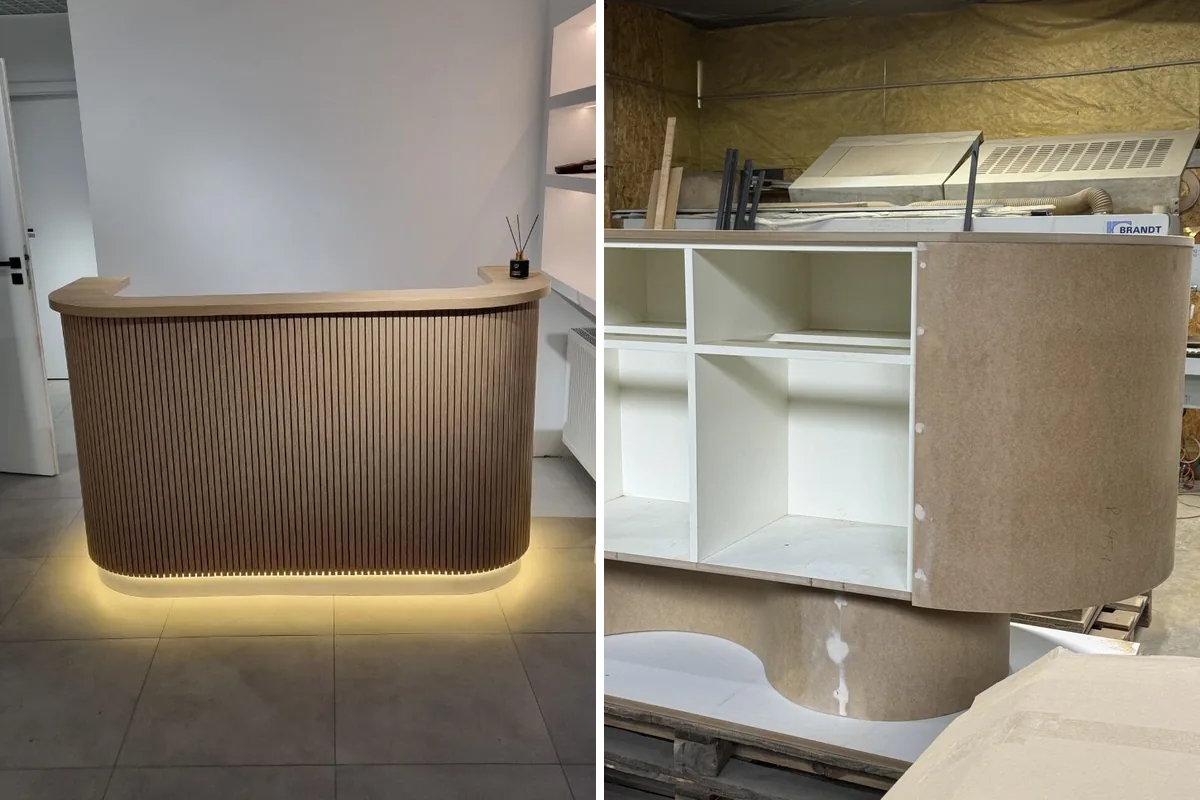
Soft minimalism works very well in receptions, clinics, beauty salons and spaces where clients should feel at ease. A rounded reception desk has no sharp corner by the entrance, guides movement along a curve and looks friendlier than a rectangular block. Slats on the front and a lit plinth make a heavy piece feel lighter. Read more on the custom furniture for business page.
How to design soft minimalism made to measure
- Plan storage first. Minimalism, soft or not, starts with where things will disappear. Floor-to-ceiling units and wardrobes in the wall colour do more than any decoration.
- Choose one warm base colour. Furniture, walls and tops in similar shades, without strong contrasts.
- Set the scale of rounding. A subtle radius on all front edges and one clear curve – on an island, counter or bookcase – as the main accent.
- Add one texture. Slats, fluting or light veneer on one element. More textures push the room towards organic modern.
- Design the light with the furniture. Lit plinths, niches and shelves have to be planned before production because they need routing and cable passages in the carcasses.
Joiner's tip: in soft minimalism furniture, the joints are what you notice most. The counter's curve meets a straight top, a front meets the plinth, slat meets slat. Look at these places up close in the visualisation – a uniform light surface will not hide an uneven gap.
Common mistakes
- Cold white. White gloss cabinetry with chrome accessories is classic minimalism, not soft minimalism.
- Curves without storage. A rounded volume with nothing behind it soon loses to everyday life – things end up on the tops.
- Too many beiges. Five different beiges in one room look accidental. Two, chosen deliberately, are better.
- No contrast of textures. A completely smooth single-colour interior without any rhythm can be monotonous. One textured plane is enough.
- Handles "for later". How fronts open has to be decided in the design – routing and hardware depend on it.
How we work at Grandis
We make furniture with curves and rounded edges – from bent carcasses to lacquering and installation. We start with a free laser measurement, show a 3D visualisation with every curve and colour, and start production after written approval of the design. The price in the contract is fixed, and installation is done by our in-house team. How such furniture is made technically is described in our article on modern furniture with rounded corners. See our projects in the portfolio.
See our projects: a reception desk with rounded corners, light-oak-tone slats and a lit plinth, and a round cabinet with handleless drawers and a fluted front in warm beige.
Our series on rounded furniture – read next:
- Organic modern furniture
- Rounded furniture in japandi style
- Modern furniture with rounded corners
- Streamline-style furniture
- Rounded furniture for the living room
- Rounded furniture for the bedroom
Frequently asked questions
How is soft minimalism different from regular minimalism?
The rules are the same: few objects, smooth fronts, hidden storage. Soft minimalism adds rounded edges and curves, warm light colours instead of cold white, matt finishes and diffused light.
Is soft minimalism just white furniture?
No. More often it means off-whites, cashmere, oat, light sand or warm grey. What matters is that the colours are light, warm and close to each other.
Which fronts suit soft minimalism furniture?
Most often matt lacquer, because it can follow a curve without visible joints, and handleless fronts. Slats or fluting work as an accent. More on finishes in our article matt or gloss lacquer.
Does soft minimalism suit an office or reception?
Yes. A rounded counter, light colours and soft light create a calm, friendly first impression. Rounded corners are also practical in high-traffic areas.
Can soft minimalism be combined with wood?
Yes, ideally with light wood – oak or ash in a matt finish – on one or two elements. With more wood the room starts to look like japandi.
Want to design a calm interior with soft forms? Fill in a short design quiz or, for a business space, our project brief. We will come back with a proposal and an indicative budget; the measurement is free, and the next step is a design with 3D visualisation and a quote.